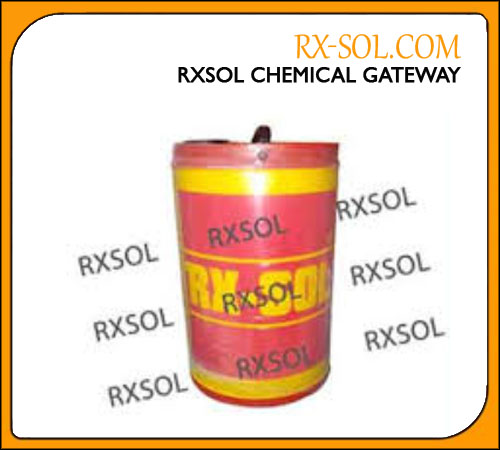
Nitrite Borax RoccorRX NB Liq
Part No: RXSOL-40-4001-210
Industrial Cleaner , Thinner for termination kit (cable cleaner)
Industrial Cleaner , Thinner for termination kit (cable cleaner)
Application
For Machine Clean
Dosage
Clear, colourless, mobile, highly polar liquid, Hazard: Flammable, dangerous fire risk. Toxic by ingestion (causes blindness). Used as an antifreeze, solvent for nitrocellulose, chemical synthesis, fuel for utility plants, etc.
Technical Specification
| Purity | : | 99.89 |
| Odour | : | CHARACTERISTIC |
| Solubility in water | : | COMPLETE |
| Density | : | 0.792 at 20 oC |
| Boiling point | : | 65 oC |
| Melting point | : | -94 oC |
| Viscosity | : | 0.62 cp at 15oC |
| Flashpoint | : | 12 oC |
|
Explosive limits |
: | 5.5 – 37 Vol% |
| Vapour pressure | : | 127 mbar at 20 oC |
| Skin absorption/irritation | : | YES |
| TLV Country NL Year 1995 | : | 200 S ppm 260 S mg/m3 |
| Pollution category 1994 | : |
D |
MSDS

| Product Name | RXSOL-19-1364 |
| Product Type | INDUSTRIAL Alcohol |
Company Details:
RX MARINE INTERNATIONAL
105, A wing , BSEL , TECH PARK.
VASHI ,NEW BOMBAY 400703 INDIA
| Phone | +91 22 27815540 / 41 / 42 |
| Fax | +91 22 2781 1318 :::AOH :0091 9821214367 |
| mail @ rxmarine.com | |
| Website | www.rxmarine.com |

| Chemical Name | CAS# | Percent | EINECS/ELINCS |
| Methyl alcohol | 67-56-1 | 99+ | 200-659-6 |

| EMERGENCY OVERVIEW | |
| Appearance | clear, colorless. Flash Point: 11 deg C. Poison! Cannot be made non-poisonous. Causes eye and skin irritation. May be absorbed through intact skin. This substance has caused adverse reproductive and fetal effects in animals. Danger! Flammable liquid and vapor.Harmful if inhaled. May be fatal or cause blindness if swallowed. May cause central nervous system depression. May cause digestive tract irritation with nausea, vomiting, and diarrhea. Causes respiratory tract irritation. May cause liver, kidney and heart damage.Target Organs: Kidneys, heart, central nervous system, liver, eyes. |
| Potential Health Effects | |
| Eye | Produces irritation, characterized by a burning sensation, redness, tearing, inflammation, and possible corneal injury. May cause painful sensitization to light |
| Skin | Causes moderate skin irritation. May be absorbed through the skin in harmful amounts. Prolonged and/or repeated contact may cause defatting of the skin and dermatitis. |
| Ingestion |
May be fatal or cause blindness if swallowed. May cause gastrointestinal irritation with nausea, vomiting and diarrhea. May cause systemic toxicity with acidosis. May cause central nervous system depression, characterized by excitement, followed by headache, dizziness, drowsiness, and nausea. Advanced stages may cause collapse, unconsciousness, coma and possible death due to respiratory failure. May cause cardiopulmonary system effects. |
| Inhalation | Harmful if inhaled. May cause adverse central nervous system effects including headache, convulsions, and possible death. May cause visual impairment and possible permanent blindness. Causes irritation of the mucous membrane. |
| Chronic | Prolonged or repeated skin contact may cause dermatitis. Chronic inhalation and ingestion may cause effects similar to those of acute inhalation and ingestion. Chronic exposure may cause reproductive disorders and teratogenic effects. Laboratory experiments have resulted in mutagenic effects. Prolonged exposure may cause liver, kidney, and heart damage. |

| Eyes | Immediately flush eyes with plenty of water for at least 15 minutes, occasionally lifting the upper and lower eyelids. Get medical aid immediately. |
| Skin | Immediately flush skin with plenty of soap and water for at least 15 minutes while removing contaminated clothing and shoes. Get medical aid if irritation develops or persists. Wash clothing before reuse. |
| Ingestion | If victim is conscious and alert, give 2-4 cupfuls of milk or water. Never give anything by mouth to an unconscious person. Get medical aid immediately. Induce vomiting by giving one teaspoon of Syrup of Ipecac. |
| Inhalation | Get medical aid immediately. Remove from exposure to fresh air immediately. If breathing is difficult, give oxygen. Do NOT use mouth-to-mouth resuscitation. If breathing has ceased apply artificial respiration using oxygen and a suitable mechanical device such as a bag and a mask. |
| Notes to Physician | Effects may be delayed. Ethanol may inhibit methanol metabolism. |

| General Information |
Containers can build up pressure if exposed to heat and/or fire. As in any fire, wear a self-contained breathing apparatus in pressure-demand, MSHA/NIOSH (approved or equivalent), and full protective gear. Water runoff can cause environmental damage. Dike and collect water used to fight fire. Vapors can travel to a source of ignition and flash back. During a fire, irritating and highly toxic gases may be gen -erated by thermal decomposition or combustion. Flammable Liquid. Can release vapors that form explosive mixtures at temperatures above the flashpoint. Use water spray to keep fire-exposed containers cool. Water may be ineffective. Material is lighter than water and a fire may be spread by the use of water. Vapors may be heavier than air. They can spread along the ground and collect in low or confined areas. May be ignited by heat, sparks, and flame. |
| Extinguishing Media |
For small fires, use dry chemical, carbon dioxide, water spray or alcohol-resistant foam. Use water spray to cool fire exposed containers. Water may be ineffective. For large fires, use water spray, fog or alcohol-resistant foam. Do NOT use straight streams of water. |

| General Information | Use proper personal protective equipment as indicated in Section 8. |
| Spills/Leaks | Scoop up with a nonsparking tool, then place into a suitable container for disposal. Use water spray to disperse the gas/vapor. Remove all sources of ignition. Absorb spill using an absorbent, non-combustible material such as earth, sand, or vermiculite. Do not use combustible materials such as saw dust. Provide ventilation. A vapor suppressing foam may be used to reduce vapors. Water spray may reduce vapor but may not prevent ignition in closed spaces. |

| Handling |
Wash thoroughly after handling. Remove contaminated clothing and wash before reuse. Ground and bond containers when tran -sferring material. Do not breathe dust, vapor, mist, or gas. Do not get in eyes, on skin, or on clothing. Empty containers retain product residue, (liquid and/or vapor), and can be dangerous. Keep container tightly closed. Avoid contact with heat, sparks and flame. Do not ingest or inhale. Use only in a chemical fume hood. Do not pressurize, cut, weld, braze, solder, drill, grind, or expose empty containers to heat, sparks or open flames. |
| Storage | Keep away from heat, sparks, and flame. Keep away from sources of ignition. Store in a cool, dry, well-ventilated area away from incompatible substances. Flammables-area. Keep containers tightly closed. Do not store in aluminum or lead containers. |

Engineering Controls:
Use explosion-proof ventilation equipment. Facilities storing or utilizing this material should be equipped with an eyewash facility and a safety shower. Use adequate general or local exhaust ventilation to keep airborne concentrations below the permissible exposure limits. Use only under a chemical fume hood.
Exposure Limits
|
Chemical Name |
ACGIH |
NIOSH |
OSHA - Final PELs |
|
Methyl alcohol |
200 ppm TWA; 250 ppm STEL; skin - potential for cutaneous absorption |
200 ppm TWA; 260 mg/m3 TWA 6000 ppm IDLH |
200 ppm TWA; 260 mg/m3 TWA |
OSHA Vacated PELs: Methyl alcohol: 200 ppm TWA; 260 mg/m3 TWA; 250 ppm STEL; 325 mg/m3 STEL Personal Protective Equipment
Eyes: Wear chemical goggles.
Skin: Wear appropriate protective gloves to prevent skin exposure.
Clothing: Wear appropriate protective clothing to prevent skin exposure.
Respirators: A respiratory protection program that meets OSHA's 29 CFR ?1910.134 and ANSI Z88.2 requirements or European Standard EN
149 must be followed whenever workplace conditions warrant a respirator's use.

| Physical State | Liquid |
| Appearance | clear, colorless |
| Odor | alcohol-like - weak odor |
| pH | Not available |
| Vapor Pressure | 128 mm Hg @ 20 deg C |
| Vapor Density | 1.11 (Air=1) |
| Evaporation Rate | 5.2 (Ether=1) |
| Viscosity | 0.55 cP 20 deg C |
| Boiling Point | 64.7 deg C @ 760.00mm Hg |
| Freezing/Melting Point | 98 deg C |
| Autoignition Temperature | 464 deg C ( 867.20 deg F) |
| Flash Point | 11 deg C ( 51.80 deg F) |
| Decomposition Temperature | Not available |
| NFPA Rating | (estimated) Health: 1; Flammability: 3; Reactivity: 0 |
| Explosion Limits, Lower | 6.0 vol % |
| Upper | 36.00 vol % |
| Solubility |
miscible |
| Specific Gravity/Density | 7910g/cm3 |
| Molecular Formula | CH4O |
| Molecular Weight | 32.04 |

| Chemical Stability | Stable under normal temperatures and pressures. |
| Conditions to Avoid | High temperatures, incompatible materials, ignition sources, oxidizers. |
| Incompatibilities with Other Materials | Acids (mineral, non-oxidizing, e.g. hydrochloric acid, hydrofluoric acid, muriatic acid, phosphoric acid), acids (mineral, oxidizing, e.g. chromic acid, hypochlorous acid, nitric acid, sulfuric acid), acids (organic, e.g. acetic acid, benzoic acid, formic acid, methanoic acid, oxalic acid), azo, diazo, and hydrazines (e.g. dimethyl hydrazine, hydrazine, methyl hydrazine), isocyanates (e.g. methyl isocyanate), nitrides (e.g. potassium nitride, sodium nitride), peroxides and hydroperoxides (organic, e.g. acetyl peroxide, benzoyl peroxide, butyl peroxide, methyl ethyl ketone peroxide), epoxides (e.g. butyl glycidyl ether), Oxidants (such as barium perchlorate, bromine, chlorine, hydrogen peroxide, lead perchlorate, perchloric acid, sodium hypochlorite)., Active metals (such as potassium and magnesium)., acetyl bromide, alkyl aluminum salts, beryllium dihydride, carbontetrachloride, carbon tetrachloride + metals, chloroform + heat, chloroform + sodium hydroxide, cyanuric chloride, diethyl zinc, nitric acid, potassium-tert-butoxide, chloroform + hydroxide, water reactive substances (e.g. acetic anyhdride, alkyl aluminum chloride, calcium carbide, ethyl dichlorosilane). |
| Hazardous Decomposition Products | Carbon monoxide, irritating and toxic fumes and gases, carbon dioxide, formaldehyde. |
| Hazardous Polymerization | Will not occur. |

RTECS#:
CAS# 67-56-1: PC1400000
LD50/LC50:
CAS# 67-56-1:
| Draize test, rabbit, eye | 40 mg Moderate; |
| Draize test, rabbit, eye | 100 mg/24H Moderate; |
| Draize test, rabbit, skin | 20 mg/24H Moderate; |
| Inhalation, rat | LC50 = 64000 ppm/4H; |
| Oral, mouse | LD50 = 7300 mg/kg; |
| Oral, rabbit | LD50 = 14200 mg/kg; |
| Oral, rat | LD50 = 5628 mg/kg; |
| Skin, rabbit |
LD50 = 15800 mg/kg; |
| Carcinogenicity | CAS# 67-56-1: Not listed by ACGIH, IARC, NIOSH, NTP, or OSHA. |
| Epidemiology | Methanol has been shown to produce fetotoxicity in the embr yo or fetus of laboratory animals. Specific developmenta l abnormalities include cardiovascular, musculoskeletal, and urogenital systems. |
| Teratogenicity | Effects on Newborn: Behaviorial, Oral, rat: TDLo=7500 mg/kg (female 17-19 days after conception). Effects on Embryo or Fetus: Fetotoxicity, Inhalation, rat: TCLo=10000 ppm/7H (female 7-15 days after conception). Specific Developmental Abnormalities: Cardiovascular, Musculoskeletal, Urogenital, Inhalation, rat: TCLo=20000 ppm/7H (7-14 days after conception). |
| Reproductive Effects | Paternal Effects: Spermatogenesis: Intraperitoneal, mouse TDLo=5 g/kg ( male 5 days pre-mating). Fertility: Oral, rat: TDLo = 35295 mg/kg (female 1-15 days after conception). Paternal Effects: Testes, Epididymis, Sperm duct: Oral, rat: TDLo = 200 ppm/20H (male 78 weeks pre-mating). |
| Neurotoxicity | No information available. |
| Mutagenicity |
DNA inhibition: Human Lymphocyte = 300 mmol/L. DNA damage: Oral, rat = 10 umol/kg. Mutation in microorganisms: Mouse Lymphocyte = 7900 mg/L. Cytogenetic analysis: Oral, mouse = 1 gm/kg. |
| Other Studies | Standard Draize Test(Skin, rabbit) = 20 mg/24H (Moderate) S tandard Draize Test: Administration into the eye (rabbit) = 40 mg (Moderate). Standard Draize test: Administration int o the eye (rabbit) = 100 mg/24H (Moderate). |

| Ecotoxicity | Fish: Fathead Minnow: 29.4 g/L; 96 Hr; LC50 (unspecified) Goldfish: 250 ppm; 11 Hr; resulted in death Rainbow trout: 8000 mg/L; 48 Hr; LC50 (unspecified) Rainbow trout: LC50 = 13-68 mg/L; 96 Hr.; 12 degrees C Fathead Minnow: LC50 = 29400 mg/L; 96 Hr.; 25 degrees C, pH 7.63 Rainbow trout: LC50 = 8000 mg/L; 48 Hr.; Unspecified ria: Phytobacterium phosphoreum: EC50 = 51,000-320,000 mg/L; 30 minutes; Microtox test No data available. |
| Environmental | Dangerous to aquatic life in high concentrations. Aquatic toxicity rating: TLm 96>1000 ppm. May be dangerous if it enters water intakes. Methyl alcohol is expected to biodegrade in soil and water very rapidly. This product will show high soil mobility and will be degraded from the ambient atmosphere by the reaction with photochemically produced hyroxyl radicals with an estimated half-life of 17.8 days. Bioconcentration factor for fish (golden ide) < 10. Based on a log Kow of -0.77, the BCF value for methanol can be estimated to be 0.2. |
| Physical | No information available. |
| Other | None. |

|
Chemical waste generators must determine whether a discarded chemical is classified as a hazardous waste. US EPA guidelines for the classification determination are listed in 40 CFR Parts 261.3. Additionally, waste generators must consult state and local hazardous waste regulations to ensure complete and accurate classification. |

|
|
US DOT |
IATA |
RID/ADR |
IMO |
CanadaTDG |
|
Shipping Name: |
METHANOL |
|
|
|
METHANOL |
|
Hazard Class: |
3 |
|
|
|
3(6.1) |
|
UN Number: |
UN1230 |
|
|
|
UN1230 |
|
Packing Group: |
II |
|
|
|
II |
|
Additional Info: |
|
|
|
|
FLASHPOINT 11 C |

|
SARA Section 302 (RQ) |
CAS# 67-56-1: final RQ = 5000 pounds (2270 kg) |
|
Section 302 (TPQ) |
None of the chemicals in this product have a TPQ. |
| SARA Codes | CAS # 67-56-1: acute, flammable. |
| Section 313 |
This material contains Methyl alcohol (CAS# 67-56-1, 99%),which is subject to the reporting requirements of Section 313 of SARA Title III and 40 CFR Part 373. |
| Clean Air Act | CAS# 67-56-1 is listed as a hazardous air pollutant (HAP). This material does not contain any Class 1 Ozone depletors. This material does not contain any Class 2 Ozone depletors. |
| Clean Water Act | None of the chemicals in this product are listed as Hazardous Substances under the CWA. None of the chemicals in this product are listed as Priority Pollutants under the CWA. None of the chemicals in this product are listed as Toxic Pollutants under the CWA. |
| OSHA |
None of the chemicals in this product are considered highly hazardous by OSHA. |
|
STATE |
CAS# 67-56-1 can be found on the following state right to know lists: California, New Jersey, Florida, Pennsylvania, Minnesota, Massachusetts.California No Significant Risk Level: None of the chemicals in this product are listed. |
European/International Regulations
European Labeling in Accordance with EC Directives
Hazard Symbols:
T F
Risk Phrases:
R 11 Highly flammable.
R 23/24/25 Toxic by inhalation, in contact with skin and if swallowed.
R 39/23/24/25 Toxic : danger of very serious irreversible effects through inhalation, in contact with skin and if swallowed.
Safety Phrases:
S 16 Keep away from sources of ignition - No smoking.
S 36/37 Wear suitable protective clothing and gloves.
S 45 In case of accident or if you feel unwell, seek medical advice immediately (show the label where possible).
S 7 Keep container tightly closed.

|
MSDS Creation Date: 7/21/2008 DISCLAIMER OF LIABILITY :The information in this SDS was obtained from sources which we believe are reliable. However, the information is provided without any warranty, express or implied, regarding its correctness. The conditions or methods of handling, storage, use or disposal of the product are beyond our control and may be beyond our knowledge. For this and other reasons, we do not assume responsibility and expressly disclaim liability for loss, damage or expense arising out of or in any way connected with the handling, storage, use or disposal of the product. This MSDS was prepared and is to be used only for this product. If the product is used as a component in another product, this MSDS information may not be applicable. |