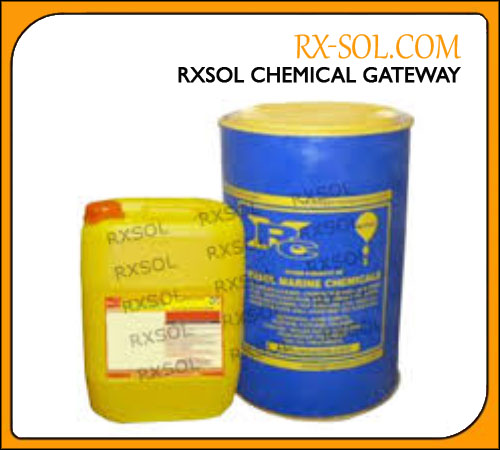
Scale Inhibitor 170
Part No: RXSOL-81-8193-210
Applications include food processing, starch modification, pharmaceuticals, and potable water treatment.
Sodium Trimetaphosphate (STMP) is a Sodium Phosphate salt (NaPO3)3, supplier and exporter. Sodium Trimetaphosphate, Anhydrous (STMP) Powder is a clean, white powder. Sodium Trimetaphosphate. Applications include food processing, starch modification, pharmaceuticals, and potable water treatment.
Application
Sodium Trimetaphosphate (STMP) is a Sodium Phosphate salt (NaPO3)3, that when added to gypsum can help to optimize the setting time while enhancing the structural integrity of the wallboard. STMP is an important additive in the production of high throughput and high quality wallboard for use by businesses and individuals in the construction and home remodeling industry.
Dosage
sodium trimetaphosphate (“STMP”) can be utilized in the wallboard manufacturing process to increase the quality of wallboard. But note STMP is ineffective in high pH level environments (i.e., greater than 10). In all other environments, STMP can be used to increase the core quality of wallboard and allow manufacturers to reduce the amount of natural polymer (i.e., starch) used to produce wallboard of suitable quality.
Technical Specification
It is believed that the addition of STMP to the slurry promotes long crystal growth. Such crystals add the most strength to the core of the wallboard and also serve to form stronger bonds between the core and paper. While in theory, STMP can be used by manufacturers to decrease costs by increasing the core quality of wallboard, it has been discovered in practice that the current methods of adding STMP leads to further problems and delays.
| Form | Powder |
| Colour | White |
| Odour | Odourless |
| Odor Threshold | Not Applicable |
| pH | 6-8 at 100 g/l 20 °C |
| Melting Point | 1670°C (3038°F) (decomposition) |
| Boiling Point | Not Applicable |
| Solubility | Partially soluble |
| Ignition temperature | No information available. |
MSDS

| Product Name | Sodium Trimetaphosphate STMP |
| Part Number | RXSOL-67-6707-025 |
Company Details:
RX MARINE INTERNATIONAL
105, A wing , BSEL , TECH PARK.
VASHI ,NEW BOMBAY 400703 INDIA
Branch :: Kandla , Hazira, Mumbai, Chennai, Vizag, Kolkata, Fujairah, Muscat, CANADA Nairobi
| Phone | +91 22 20871200 - 1400 |
| Fax | +91 22 2761 2100 :::AOH :0091 9821214367 |
| 123 @ rxmarine.com | |
| Website | www.rxmarine.com |

| Name of Substance | Cas Number | EC Number | Wight % |
| Sodium Trimetaphosphate STMP | 7785-84-4 | 232-088-3 | 100% |

| Signal Word | None |
| Hazard Statements | Not a hazardous substance or mixture according to Regulation (EC) No 1272/2008 |
| Precautionary statements - prevention | Not Applicable |
| Precautionary statements - response |
Not a hazardous substance or mixture according to Regulation (EC) No 1272/2008 |

| Eye Contact |
Check for and remove any contact lenses. In case of contact, immediately flush eyes with plenty of water for at least 15 minutes. Cold water may be used. Get medical attention. |
| Skin Contact | In case of contact, immediately flushes skin with plenty of water for at least 15 minutes while removing contaminated clothing and shoes. Cover the irritated skin with an emollient. Cold water may be used.Wash clothing before reuse. Thoroughly clean shoes before reuse. Get medical attention. |
| Inhalation: | Move to fresh air. If breathing is difficult, give oxygen. Get medical attention immediately if symptoms occur. |
| Ingestion: | Do not induce vomiting. Obtain medical attention.If vomiting occurs, lean patient forward or place on left side (head-down position, if possible) to maintain an open airway and prevent aspiration. |
| Notes to Physician | Treat symptomatically |

| Suitable extinguishing media | Use extinguishing measures that are appropriate to local circumstances and the surrounding environment. |
|
Hazardous combustion products |
Oxides of phosphorus Sodium oxides |
| Protective Equipment | Use personal protective equipment. |
| Further information | The product itself does not burn. |

| Spillage | Spilled product should be removed immediately to avoid formation of dust. Remove by mechanical means (i.e. vacuuming). Dilute remainder with plenty of water (avoid formation of aerosols). Ensure sufficient ventilation. Wash contaminated clothing. |
| Personal Protection | To prevent skin and eye contact under the foreseeable conditions of use, wear appropriate protective clothing and safety eyewear. When handling, do not eat, drink, or smoke. Wash thoroughly after handling. Handle in a wellventilated work area. |
| Enviromental Precaution | If possible, prevent entry to sewers, storm drains, surface waters, and soils. |
| Methods and materials for containment and cleaning | Cover drains. Collect, bind, and pump off spills. Observe possible material restrictions (see sections 7 and 10). Take up dry. Dispose of properly. Clean up the affected area. Avoid generation of dust |

| Handling |
To prevent skin and eye contact under the foreseeable conditions of use, wear appropriate protective clothing and safety eyewear. When handling, do not eat, drink, or smoke. Wash thoroughly after handling. Handle in a wellventilated work area. |
| Storage | Keep away from incompatible materials. Keep in a dry, well-ventilated area in closed containers. Protect containers from physical damage. |
| Hygiene Measure |
Handle in accordance with good industrial hygiene and safety practice. Wash hands before breaks and at the end of workday. |

| Engineering Control | Use process enclosures, local exhaust ventilation, or other engineering controls to keep airborne levels below recommended exposure limits. If user operations generate dust, fume or mist, use ventilation to keep exposure to airborne contaminants below the exposure limit. | ||||||||||
| Personal Protection |
Eye/face protection |
||||||||||
| Other Protection Measure | Handle in accordance with good industrial hygiene and safety practice. | ||||||||||
| Exposure Limit |
|


Gloves Suit

| Form | Powder |
| Colour | White |
| Odour | Odourless |
| Odor Threshold | Not Applicable |
| pH | 6-8 at 100 g/l 20 °C |
| Melting Point | 1670°C (3038°F) (decomposition) |
| Boiling Point | Not Applicable |
| Flash Point | Not Applicable |
| Evaporation Rate | Not Applicable |
| Flammability (solid, gas) | No Data Available |
| Explosive limits | No Data Available |
| Vapour pressure | No Data Available |
| Vapour Density | No Data Available |
| Relative Density | No Data Available |
| Partition coefficient | No data available |
| Explosive properties | None |
| Solubility | Partially soluble |
| Ignition temperature | No information available. |

| Reactivity | No data available. |
| Stability | The product is chemically stable under standard ambient conditions (room temperature). |
| Possibility of hazardous reactions | No data available |
| Conditions to avoid | No data available |
| Incompatible materials | Strong oxidizing agents |
| Hazardous Polymerization | Hazardous polymerization does not occur. |

| Acute toxicity |
LD50 Oral - Mouse - 10.300 mg/kg Inhalation: No data available Acute toxicity estimate Dermal - 2.500 mg/kg (Calculation method) LD50 Dermal - Rabbit - > 4.640 mg/kg |
| Skin corrosion/irritation | No data available |
| Serious eye damage/eye irritation | No data available |
| Germ cell mutagenicity |
No data available |
| Carcinogenicity | No data available |
| Reproductive toxicity | No data available |
| Specific target organ toxicity - single exposure | No data available |
| Specific target organ toxicity - repeated exposure | No data available |
| Aspiration hazard | No data available |

| Toxicity | No data available |
| Persistence and degradability | No data available |
| Bioaccumulative potential | No data available |
| Mobility in soil | No Information available |
| Results of PBT and vPvB assessment |
PBT/vPvB assessment not available as chemical safety assessment not required/not conducted |
| Endocrine disrupting properties | No data available |
| Other adverse effects | No data available |

| Waste treatment Method | Waste material must be disposed of in accordance with the national and local regulations. Offer surplus and non-recyclable solutions to a licensed disposal company. Contact a licensed professional waste disposal service to dispose of this material. |
| Contaminated packaging | Dispose of as unused product |

DOT
| UN Number | Not Applicable |
| Proper shipping name | Not danerous good. Not regulated for Transport. |
| Hazard Class | Not Applicable |
| Packing group | Not Applicable |
TDG
| UN Number | Not Applicable |
| Proper shipping name | Not danerous good. Not regulated for Transport. |
| Hazard Class | Not Applicable |
| Packing group | Not Applicable |
IATA
| UN Number | Not Applicable |
| Proper shipping name | Not danerous good. Not regulated for Transport. |
| Hazard Class | Not Applicable |
| Packing group | Not Applicable |
IMDG/IMO
| UN Number | Not Applicable |
| Proper shipping name | Not danerous good. Not regulated for Transport. |
| Hazard Class | Not Applicable |
| Packing group | Not Applicable |
| IMDG Marine pollutant | No |

|
Safety, health and environmental regulations/ legislation specific for the substance or mixture |
This material safety data sheet complies with the requirements of Regulation (EC) No. 1907/2006. |
| Chemical Safety Assessment | For this product a chemical safety assessment was not carried out. |
| International Chemical Inventories |
Listing of the components on individual country Chemical Inventories is as follows: Asia-Pac: Listed Australian Inventory of Chemical Substances (AICS): Listed Korean Existing Chemicals List (ECL): Listed Japanese Existing National Inventory of Chemical Substances (ENCS): Listed Philippines Inventory of Chemicals and Chemical Substances (PICCS): Listed Swiss Giftliste List of Toxic Substances: Not Listed U.S. TSCA: Listed Mexican Inventory of chemical substances (NOM 010 STPS 2015): Not Listed |

| Other Information |
The information above is believed to be accurate and represents the best information currently available to us. However, we make no warranty of merchantability or any other warranty, express or implied, with respect to such information, and weassume no liability resulting from its use. Users should make their own investigations to determine the suitability of the information for their particular purposes. In no event shall be liable for any claims, losses, or damages of any third party or for lost profits or any special, indirect, incidental, consequential or exemplary damages, howsoever arising, even if RX Marine International has been advised of the possibility of such damages. DISCLAIMER OF LIABILITY :The information in this SDS was obtained from sources which we believe are reliable. However, the information is provided without any warranty, express or implied, regarding its correctness. The conditions or methods of handling, storage, use or disposal of the product are beyond our control and may be beyond our knowledge. For this and other reasons, we do not assume responsibility and expressly disclaim liability for loss, damage or expense arising out of or in any way connected with the handling, storage, use or disposal of the product. This MSDS was prepared and is to be used only for this product. If the product is used as a component in another product, this MSDS information may not be applicable. |