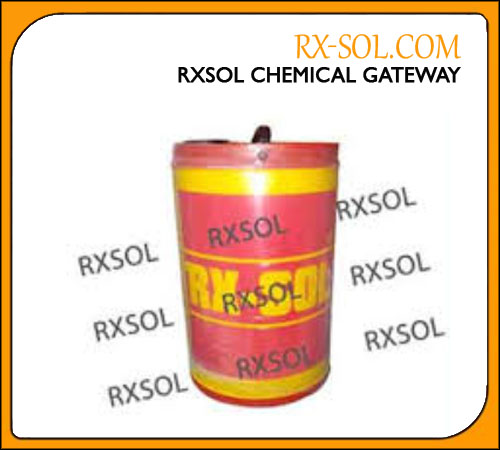
Sodium Sulphite sulfite with Catalyst Powder
Part No: RXSOL-19-1305-025
Removal of oxygen using commercial sodium sulfite and a catalyzed sodium sulfite makes great difference . After 25 seconds of contact catalyzed sodium sulfite removed the oxygen completely.
Catalyzed sodium sulfite for corrosion prevention. Generally speaking, sulfite is not present in natural water. In boiler feedwater conditioning sodium sulfite is fed to a boiler to remove dissolved oxygen and thus prevent pitting. For the reaction between sulfite and oxygen to proceed rapidly and completely, it is necessary to maintain an excess sulfite concentration at an elevated temperature.
Theoretically, 3.5 Kg of chemically pure sodium sulfite are required to remove approx 400 gram of oxygen. The efficiency of the oxygen removal is estimated at 75 per cent to allow for oxidation in contact with air, blowdown losses, etc. Therefore it is estimated that 4.5 Kg of commercial sodium sulfite are required for 450 Gram of oxygen removed (or 10 ppm sulfite per 1 ppm dissolved oxygen.)
The use of sodium sulfite as a chemical deoxygenator is economical within certain limitations imposed by the dissolved oxygen content of the feedwater. If appreciable quantities of dissolved oxygen are permitted to enter the boiler, costs will be high if sulfite is relied on as the sole means of oxygen removal. Generally, costs are balanced by removal of as much of the oxygen as feasible by mechanical means, e.g. deaerator and by using sulfite to react with the residual oxygen.
To prevent corrosion and pitting in feed lines, closed heaters and economizers, it is desirable to feed the sulfite continuously to the boiler feedwater rather than directly to the boiler feedwater rather than directly to the boiler. Reaction between sulfite and oxygen is not instantaneous and the completion of the reaction is aided by the longer contact times provided by feeding sulfite to the feedwater.
Catalyzed sodium sulfite will, however, react almost instantaneously with dissolved oxygen even at cold water temperatures. Because of this property, catalyzed sulfite has found increased use in the treatment of cooling water, process water, distribution system, etc. for preventing oxygen corrosion.
Application
Sodium Sulfite anhydrous is a white granular material with the chemical formula Na2SO3
It is primarily used in pulp and paper industry. It is used in water treatment as an oxygen scavenger agent, in the photographic industry to protect developer solutions from oxidation, in textile industry as a bleaching, as a desulfurising and as a dechlorinating agent and in leather trade for the sulfitisation of tanning extracts. It is used in chemical manufacturing as a sulfonation and sulfomethylation agent. It is used in the production of rubber chemicals, sulfur dyes and other chemical compounds. It is used in other applications including ore flotation, oil recovery, food preservative, making dyes, and detergent.
White, free flowing crystalline Odorless powder
Dosage
Dose of Sulfite can be controlled by this method ::: Because it readily reacts with oxygen to form sulfate, sulfite is not usually found in natural water systems. In its most common form, sodium sulfite, it is widely used as an oxygen scavenger in feedwater conditioning to prevent pitting in boilers; as a pulping or pulp-bleaching agent by the paper industry; to neutralize residual chlorine in potable water, sewage, industrial effluents, and textile process waters; and as a reducing agent in still other manufacturing processes.
Sample water over 100 degree F will cause a false-high reading; therefore, quickly cool to room temperature before testing. To prevent a false-low reading caused by the reaction between sulfite and ambient air or dissolved oxygen, water samples should be capped while cooling and then tested without delay. An iodometric drop test is the most popular field method for determining sodium sulfite concentrations.
Reagent packs, containing an instruction and chemicals only, may be purchased for use with buret setups. Note: Sulfide and ferrous iron cause positive interference; copper and nitrite cause negative interference.
Sulfite, Titrimetric Method(0-100ppm)
The test for sulfite is based on the colour change end point reaction. At the end point reagent combines with the indicator to form a blue color.
Apparatus Required
Buret, automatic, 25 ml -1 ( Sample Tube, Graduated, 25 mL, plastic w/cap and white dot )
Casserole porcelain, 210 ml -1
Cylinder, graduated, 50 ml -1
Measuring dipper (plastic) -1
Stirring rod, glass -1
Chemicals Required
TK - 13 ::: RXSOL-62-5503-002
TK - 14 ::: RXSOL-62-5503-003
TK - 15 ::: RXSOL-62-5503-004 ( 1 ml =0.5 mg SO3 )
Procedure for Test
The water sample should be freshly obtained with as little contact as possible with air. Do not filter the sample, but cool it to room temperature (70 to 800F).
NOTE:
Sample must be cooled to less than 100ºF (38ºC) to prevent high test results.
Sample must be protected from air contact while cooling to prevent low test results.
1. Measure 50 ml of the water sample with the graduated cylinder . For error free result Collect water to be tested in a clean, preferably large-mouthed, bottle to overflowing. Immediately cap and cool to room temperature.
2. Add three or four drops of TK - 13 ::: RXSOL-62-5503-002 to the sample Swirl to mix. Sample should turn red.
3. Add TK - 14 ::: RXSOL-62-5503-003 Powder a dipper at a time, swirling after each dipper, until color changes from red to colorless. Add 2 more dippers. Swirl until dissolved. ( Note : Use the plastic dipper to add TK - 14 ::: RXSOL-62-5503-003 to the sample. Add only one measure at a time and stir thoroughly between each addition of TK - 14 ::: RXSOL-62-5503-003. All the particle of TK - 14 ::: RXSOL-62-5503-003 may not dissolve and this may create a slight haze in the sample. Continue to add the TK - 14 in this manner until the red color disappears. It is not necessary that the sample solution be exactly neutralized, only that the sample turn colorless. When the sample is colorless, add one additional measure of TK - 14 ::: RXSOL-62-5503-003 and stir. )
4. Add TK - 15 ::: RXSOL-62-5503-004 Reagent dropwise, swirling and counting after each drop, until color changes from colorless to a faint but permanent blue. Always hold bottle in vertical position.
This color change is taken as the endpoint. Record the ml of TK - 15 ::: RXSOL-62-5503-004 solution used.
Calculation of Results
FORMULA: ppm sulfite as SO3 = ml of TK - 15 ::: RXSOL-62-5503-004 x 500 / ml SAMPLE
Using a 50 ml sample, sulfite, in parts per million as SO3 is equal to the ml of TK - 15 ::: RXSOL-62-5503-004 required multiplied by 10.
Limitations of Test :::
This method is rapid and adaptable to field determinations. It is affected by any oxidizable substances in the water such as organic matter sulfides and nitrites. The presence of these interfering substances will cause the sulfite content obtained from this titration to by shown as a higher value than actually exists.
Technical Specification
MSDS

| Porduct Name | Sodium Sulphite |
| Part Number | RXSOL-31-1305-051 |
Company Details:
RX MARINE INTERNATIONAL
105, A wing , BSEL , TECH PARK.
VASHI ,NEW BOMBAY 400703 INDIA
Branch : Kandla, Mumbai , Chennai, Vizag, Kolkata, UAE , OMAN , CANADA and KENYA
| Phone | +91 22 20871200 -1400 |
| Fax | +91 22 27612100 :::AOH :0091 9821214367 |
| mail @ rxmarine.com | |
| Website | www.rxmraine.com |

| Product name | Cas No | EC No | Weight | Formula |
| Sodium Sulfite | 7757-83-7 | 231-821-4 | 126.04 g/mol | Na2SO3 |

| Signal Word | No data available |
| Hazard Statements | No data available |
| Precautionary statements | No data available |
| Classification of the substance or mixture | No data available |
| Supplemental Hazard Statements | No data available |
| Other hazards | This substance/mixture contains no components considered to be either persistent, bioaccumulative and toxic (PBT), or very persistent and very bioaccumulative (vPvB) at levels of 0.1% or higher. |

| General advice | Show this material safety data sheet to the doctor in attendance |
| If inhaled | After inhalation fresh air. |
| Eye Contact | After eye contact: rinse out with plenty of water. Remove contact lenses. |
| Swallowed | After swallowing: immediately make victim drink water (two glasses at most). Consult a physician. 4.2 Most import |
| Skin Contact | In case of skin contact Take off immediately all contaminated clothing. Rinse skin with water/ shower. Call a physician immediately |
| Inhalation | No data available |
| Ingestion | No data available |
| Most important symptoms and effects, both acute and delaye | The most important known symptoms and effects are described in the labelling (see section 2.2) and/or in section 11 |
| Indication of any immediate medical attention and special treatment needed | No data available |

| Flammability | No data available |
| Suitable extinguishing media | Use extinguishing measures that are appropriate to local circumstances and the surrounding environment. |
| Unsuitable extinguishing media | For this substance/mixture no limitations of extinguishing agents are given. |
| Special hazards arising from the substance or mixture | Sulfur oxides Sodium oxides Not combustible. Fire may cause evolution of: Sulfur oxides Ambient fire may liberate hazardous vapours |
| Further information | Suppress (knock down) gases/vapors/mists with a water spray jet. Prevent fire extinguishing water from contaminating surface water or the ground water system. |
|
Hazardous combustion products |
No data available |
| Advice for firefighters | In the event of fire, wear self-contained breathing apparatus. |
| Protective Equipment | No data available |
| Specific Hazards Arising from the Chemical | No data available |

| Personal precautions, protective equipment and emergency procedures | Advice for non-emergency personnel: Avoid inhalation of dusts. Evacuate the danger area, observe emergency procedures, consult an expert. For personal protection see section 8. |
| Spillage | No data available |
| Personal Protection | No data available |
| Enviromental Precaution | Do not let product enter drains. Risk of explosion. |
|
Methods and materials for containment and cleaning |
Cover drains. Collect, bind, and pump off spills. Observe possible material restrictions (see sections 7 and 10). Take up dry. Dispose of properly. Clean up affected area. Avoid generation of dusts. |
| Reference to other sections | For disposal see section 13. |

| Advice on protection against fire and explosion | Keep away from open flames, hot surfaces and sources of ignition.Take precautionary measures against static discharge. |
| Incompatible materials | No data available |
| Hygiene measures | Change contaminated clothing. Wash hands after working with substance. For precautions see section 2.2. |
| Advice on safe handling | For precautions see section 2.2. |
| Conditions for safe storage including any incompatibilities |
No data available |
| Storage conditions | Tightly closed. Dry. Recommended storage temperature see product label. |
| Storage class | Storage class (TRGS 510) 13 Non Combustible Solid |
| Specific end use(s) | Apart from the uses mentioned in section 1.2 no other specific uses are stipulated |
| Advice on general occupational hygiene | No data available |

| Exposure controls | Personal protective equipment |
| Engineering Control | No data available |
| Eye/face protection | Use equipment for eye protection tested and approved under appropriate government standards such as NIOSH (US) or EN 166(EU). Safety glasses |
| Body Protection | Protective clothing. |
| Skin protection | This recommendation applies only to the product stated in the safety data sheet, supplied by us and for the designated use. When dissolving in or mixing with other substances and under conditions deviating from those stated in EN 16523-1 please contact the supplier of CE-approved gloves (e.g. KCL GmbH, D-36124 Eichenzell, Internet: www.kcl.de). Full contact Material: butyl-rubber Minimum layer thickness: 0,7 mm Break through time: 480 min Material tested:Butoject® (KCL 898) This recommendation applies only to the product stated in the safety data sheet, supplied by us and for the designated use. When dissolving in or mixing with other substances and under conditions deviating from those stated in EN 16523-1 please contact the supplier of CE-approved gloves (e.g. KCL GmbH, D-36124 Eichenzell, Internet: www.kcl.de). Splash contact Material: Nitrile rubber Minimum layer thickness: 0,4 mm Break through time: 120 min Material tested:Camatril® (KCL 730 / Aldrich Z677442, Size M) |
| Respiratory protection |
Required when dusts are generated. Our recommendations on filtering respiratory protection are based on the following standards: DIN EN 143, DIN 14387 and other accompanying standards relating to the used respiratory protection system. Recommended Filter type: Filter type P2The entrepeneur has to ensure that maintenance, cleaning and testing of respiratory protective devices are carried out according to the instructions of the producer. These measures have to be properly documented.
|
| Other Protection Measure | No data available |

| Physical state | Powder |
| Colour | White |
| Odour | No data available |
| Odor Threshold | No data available |
| pH | 9,0 - 10,5 at 126 g/l at 25 °C |
| Melting Point | Decomposes before melting. |
| Boiling Point | No data available |
| Flash Point | No data available |
| Evaporation Rate | No data available |
| Flammability (solid, gas) | No data available |
| Explosive limits | No data Available |
| Upper/lower flammability or explosive limits | No data available |
| Autoignition temperature | No data available |
| Decomposition temperature | No data available |
| Vapour pressure | No data available |
| Viscosity | No data available |
| Density | 2,630 g/cm3 |
| Relative Density | No data available |
| Specific Gravity | No data available |
| Partition coefficient | No data available |
| Explosive properties | No data available |
| Solubility | 126 g/l at 20 °C - completely soluble |
| Ignition temperature | No data available |
| Particle characteristics | No data available |

| Reactivity | No data available |
| Chemical stability | The product is chemically stable under standard ambient conditions (room temperature) |
| Possibilityof hazardous reactions | Violent reactions possible with: nitrites Exothermic reaction with: Oxidizing agents Generates dangerous gases or fumes in contact with: acids |
| Conditions to avoid | No data available |
| Incompatible materials |
No data available
|
| Hazardous decomposition products | In the event of fire: see section 5 |

| Acute toxicity | LD50 Oral - Rat - 3.560 mg/kg LC50 Inhalation - Rat - 4 h - > 5.500 mg/m3 - dust/mist LD50 Dermal - Rat - > 2.000 mg/kg (OECD Test Guideline 402 |
| Skin corrosion/irritation | Skin - Rabbit No skin irritation (OECD Test Guideline 404) |
| Serious eye damage/irritation | Eyes - Rabbit Mild eye irritation (OECD Test Guideline 405) |
| Respiratory or skin sensitization | Prolonged or repeated exposure may cause allergic reactions in certain sensitive individuals. in vivo assay - Mouse Did not cause sensitization on laboratory animals. |
| Carcinogenicity | This product is or contains a component that is not classifiable as to its carcinogenicity based on its IARC, ACGIH, NTP, or EPA classification. |
| Germ cell mutagenicity | No data available |
| Reproductive toxicity | No data available |
| Specific target organ toxicity - single exposure |
No data available
|
| Additional Information | The substance/mixture does not contain components considered to have endocrine disrupting properties according to REACH Article 57(f) or Commission Delegated regulation (EU) 2017/2100 or Commission Regulation (EU) 2018/605 at levels of 0.1% or higher. May cause irritation of the:, Gastrointestinal tract, violent colic, Diarrhea, Disturbance of:, circulatory system, Central nervous system depression, death, Persons with allergies and/or asthma may exhibit hypersensitivity to sulfites., To the best of our knowledge, the chemical, physical, and toxicological properties have not been thoroughly investigated. Liver - Irregularities - Based on Human Evidence |

| Persistence and degradability | The methods for determining biodegradability are not applicable to inorganic substances. |
| Toxicity to fish | LC50 - Gambusia affinis (Mosquito fish) - 660 mg/l - 96 h |
| Toxicity to daphnia and other aquatic invertebrates | No data available |
| Toxicity | No data available |
| Toxicity to bacteria | No data available |
| Toxicity to algae | No data available |
| Products Biodegradation | No data available |
| Mobility in soil | No data availalble |
| Results of PBT and vPvB assessment | This substance/mixture contains no components considered to be either persistent, bioaccumulative and toxic (PBT), or very persistent and very bioaccumulative (vPvB) at levels of 0.1% or higher. |
| Endocrine disrupting properties | The substance/mixture does not contain components considered to have endocrine disrupting properties according to REACH Article 57(f) or Commission Delegated regulation (EU) 2017/2100 or Commission Regulation (EU) 2018/605 at levels of 0.1% or higher |
| Other adverse effects | No data available |

| Product | No data available |
| Contaminated packaging | No data available |
| Waste treatment Method | No data available |

| UN number | ADR/RID: | IMDG: |
IATA: |
| UN proper shipping name | ADR/RID:Not dengerous goods | IMDG:Not dengerous goods | IATA:Not dengerous goods |
| Transport hazard class(es) | ADR/RID: | IMDG: | IATA: |
| Packaging group | ADR/RID: | IMDG: | IATA: |
| Environmental hazards | ADR/RID:No | IMDG:No | IATA:No |
| Special precautions for user | No data available | ||
| Further information | No data available |

| Safety, health and environmental regulations/legislation specific for the substance or mixture | This material safety data sheet complies with the requirements of Regulation (EC) No. 1907/2006. |
| Other regulations | No data available |
| Chemical Safety Assessment | A Chemical Safety Assessment was not carried out for this substance. |

| Other Information |
The information above is believed to be accurate and represents the best information currently available to us. However, we make no warranty of merchantability or any other warranty, express or implied, with respect to such information, and weassume no liability resulting from its use. Users should make their own investigations to determine the suitability of the information for their particular purposes. In no event shall be liable for any claims, losses, or damages of any third party or for lost profits or any special, indirect, incidental, consequential or exemplary damages, howsoever arising, even if Rx Marine International has been advised of the possibility of such damages. DISCLAIMER OF LIABILITY :The information in this SDS was obtained from sources which we believe are reliable. However, the information is provided without any warranty, express or implied, regarding its correctness. The conditions or methods of handling, storage, use or disposal of the product are beyond our control and may be beyond our knowledge. For this and other reasons, we do not assume responsibility and expressly disclaim liability for loss, damage or expense arising out of or in any way connected with the handling, storage, use or disposal of the product. This MSDS was prepared and is to be used only for this product. If the product is used as a component in another product, this MSDS information may not be applicable. |
| No data available |
| No data available |