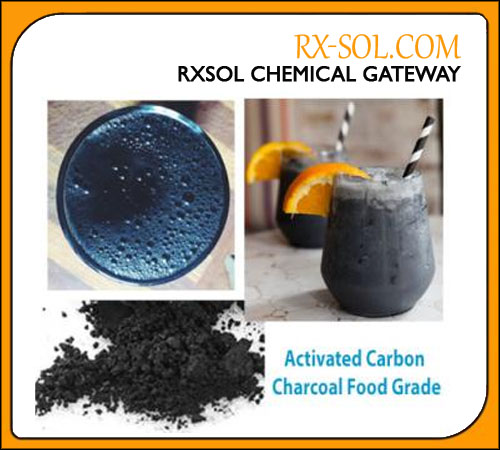
Activated Carbon Charcoal Food Grade
Part No: RXSOL-32-3107-005
Poly Methyl Methacrylate is the synthetic polymer derived from methyl methacrylate. Being an engineering plastic, it is a transparent thermoplastic.
This additive is a potent pour point depressant of the polymethacrylate type, designed to give maximum pour point depression in a wide range of base oils. The product is used in both automotive and industrial lubricants.
Application
For blended into lubricating base stocks imparts pour point depression extending the lubricants effective application temperature range. This pour point depressant is the most versatile product usable in all lubricants.
Dosage
The recommended concentration for RXSOL Pour Point Dispersant is generally between 0.02 and 0.5% wt. with the exact dosage being determined by actual tests in the finished oil. Please contact your RX Chemical representative for specific recommendations.The treatment level would normally be expected to be in the region of 0.1 to 0.3%, though 0.5 to 1.0% can be required for some gear applications.
Technical Specification
Typical Characteristics
Appearance - Clear to slight Pale Yellow Viscous Liquid
Density at 15°C, g/ml - 0.90
Viscosity at 100°C, mm²/s - 360
Flash Point (PMC), °C - 80
MSDS

| Product Name | Polymethacrylate PMA |
| Part No | RXSOL-17-1363-220 |
Company Details:
RX MARINE INTERNATIONAL
105, A wing , BSEL , TECH PARK.
VASHI ,NEW BOMBAY 400703 INDIA
Branch Name : Branch : Mumbai, Kandla, Chennai, Vizag,Kolkata,UAE,Oman,Kenya
| Phone | +91 22 20871200 - 1400 |
| Fax | +91 22 2087 1500 :::AOH :0091 9821214367 |
| mail @ rxmarine.com | |
| Website | www.rxmarine.com/ |

| Chemical Name | Cas No | EC.NO | Weight | Formula |
| Poly(methacrylic acidmethyl ester) PMMA | 9011-14-7 | 931-909-9 | 0.3–0.4% | (C5H8O2)n |

| Signal word | None |
| Classification according to Regulation | Not a hazardous substance or mixture according to Regulation (EC) No. 1272/2008. |
| Label elements | Not a hazardous substance or mixture according to Regulation (EC) No. 1272/2008 |
| Other hazards | This substance/mixture contains no components considered to be either persistent, bioaccumulative and toxic (PBT), or very persistent and very bioaccumulative (vPvB) at levels of 0.1% or higher. |

| General advice | Show this material safety data sheet to the doctor in attendance. |
| If inhaled | If breathed in, move person into fresh air. If not breathing, give artificial respiration. |
| In case of skin contact | Wash off with soap and plenty of water |
| In case of eye contact | Flush eyes with water as a precaution |
| If swallowed | Never give anything by mouth to an unconscious person. Rinse mouth with water |
| Most important symptoms and effects, both acute and delayed | The most important known symptoms and effects are described in the labelling (see section 2.2) and/or in section 11 |
| Indication of any immediate medical attention and special treatment needed | No data available |

|
Extinguishing media |
Suitable extinguishing media Use water spray, alcohol-resistant foam, dry chemical or carbon diox |
| Unsuitable extinguishing media | For this substance/mixture no limitations of extinguishing agents are given. |
| Special hazards arising from the substance or mixture | Carbon oxides |
| Advice for firefighters | Carbon oxides |
| Further information | No data availabl |

| Personal precautions, protective equipment and emergency procedures | Avoid dust formation. Avoid breathing vapours, mist or gas. For personal protection see section |
| Environmental precautions | No special environmental precautions required. |
| Methods and materials for containment and cleaning up | Sweep up and shovel. Keep in suitable, closed containers for disposal.. |
| Reference to other sections | For disposal see section 13. |

| Precautions for safe handling | Provide appropriate exhaust ventilation at places where dust is formed.Normal measures for preventive fire protection. For precautions see section 2.2 |
| Specific end use(s) | Apart from the uses mentioned in section 1.2 no other specific uses are stipulated |
| Conditions for safe storage, including any incompatibilities | Store in cool place. Keep container tightly closed in a dry and well-ventilated place. Storage class (TRGS 510): Combustible Solid |

| Appropriate engineering controls | General industrial hygiene practice |
| Eye/face protection | Use equipment for eye protection tested and approved under appropriate government standards such as NIOSH (US) or EN 166(EU |
| Skin protection | Handle with gloves. Gloves must be inspected prior to use. Use proper glove removal technique (without touching glove's outer surface) to avoid skin contact with this product. Dispose of contaminated gloves after use in accordance with applicable laws and good laboratory practices. Wash and dry hands |
| Body Protection | Choose body protection in relation to its type, to the concentration and amount of dangerous substances, and to the specific work-place., The type of protective equipment must be selected according to the concentration and amount of the dangerous substance at the specific workplace |
| Respiratory protection | Choose body protection in relation to its type, to the concentration and amount of dangerous substances, and to the specific work-place., The type of protective equipment must be selected according to the concentration and amount of the dangerous substance at the specific workplace |
| Control of environmental exposure | No special environmental precautions required |

| Form | Powder |
| Color | White |
| Odor | Odorless |
| Melting point/freezing point | No data availa |
| Initial boiling point and boiling range | No data available |
| Flammability (solid, gas) | No data available |
| Upper/lower flammability or explosive limits | No data available |
| Flash point | > 250.00 °C - closed cup |
| Evaporation ra | No data available |
| Autoignition temperature | No data available |
| Decomposition temperature | No data available |
| Water solubility | Insoluble |
| pH | No data available |
| Partition coefficient: n-octanol/water | Log Pow: 3,2 at 22 °C - Bioaccumulation is not expected. |
| Vapor pressure | No data available |
| Relative density | 1.200 g/cm3 |
| Density | No data available |
| Explosive properties | No data available |
| Auto-ignition temperature | 304 °C |
| Oxidizing properties | No data availabl |

| Reactivity | No data available |
| Chemical stability | Stable under recommended storage conditions. |
| Possibility of hazardous reactions | no information available |
| Conditions to avoid | no information available |
| Incompatible materials | Strong oxidizing agents, Strong acids |
| Hazardous decomposition products | Hazardous decomposition products formed under fire conditions. - Carbon oxides Other decomposition products - No data available In the event of fire: see section 5 |

| Acute toxicity | No data available2-Propenoic acid, 2-methyl-, methyl ester, homopolymer |
| Skin corrosion/irritation | No data available(2-Propenoic acid, 2-methyl-, methyl ester, homopolymer) |
| Serious eye damage/eye irritation | No data available(2-Propenoic acid, 2-methyl-, methyl ester, homopolymer) |
| Respiratory or skin sensitization | No data available(2-Propenoic acid, 2-methyl-, methyl ester, homopolymer) |
| Germ cell mutagenicity | Test Type: In vitro mammalian cell gene mutation test Test system: mouse lymphoma cells Metabolic activation: with and without metabolic activation Method: OECD Test Guideline 476 Result: negative Test Type: Ames test Test system: S. typhimurium Metabolic activation: with and without metabolic activation Method: OECD Test Guideline 471 Result: negative Test Type: Chromosome aberration test in vitro Test system: Chinese hamster ovary cells Metabolic activation: with and without metabolic activation Method: OECD Test Guideline 473 Result: negative |
| Aspiration hazard | No data available |
| Reproductive toxici | No data available(2-Propenoic acid, 2-methyl-, methyl ester, homopolymer) |
| Specific target organ toxicity - single exposure | No data available(2-Propenoic acid, 2-methyl-, methyl ester, homopolymer) |
| Specific target organ toxicity - repeated exposur | No data available |
| Endocrine disrupting properties | The substance/mixture does not contain components considered to have endocrinedisrupting properties according to REACH Article 57(f) or Commission Delegated regulation (EU) 2017/2100 or Commission Regulation (EU) 2018/605 at levels of 0.1% or higher. |
| Repeated dose toxicity | Rat - male and female - Oral - NOAEL (No observed adverse effect level) - 250 mg/kg Remarks: (in analogy to similar products) The value is given in analogy to the following substances: diammonium hydrogenphosphate To the best of our knowledge, the chemical, physical, and toxicological properties have not been thoroughly investigated. After uptake of large quantities: Stomach/intestinal disorders disturbed electrolyte balance. drop in blood pressure The following applies to ammonium salts in general: after swallowing: local irritation symptoms, nausea, vomiting, diarrhoea. Systemic effect: after the uptake of very large qantities: drop in blood pressure, collapse, CNS disorders, spasms, narcotic conditions, respiratory paralysis, haemolysis. However, when the product is handled appropriately, hazardous effects are unlikely to occur. Handle in accordance with good industrial hygiene and safety practice |
| Aspiration hazard | No data available(2-Propenoic acid, 2-methyl-, methyl ester, homopolymer) |
| Additional Information | RTECS: TR0400000 To the best of our knowledge, the chemical, physical, and toxicological properties have not been thoroughly investigated.(2-Propenoic acid, 2-methyl-, methyl ester, homopolymer) |

| Toxicity | No data available |
| Toxicity to daphnia and other aquatic invertebrate | Static test EC50 - Daphnia magna (Water flea) - > 100 mg/l - 48 h (OECD Test Guideline 202) |
| Toxicity to algae | Static test ErC50 - Pseudokirchneriella subcapitata (green algae) - > 100 mg/l - 72 h (OECD Test Guideline 201) |
| Toxicity to bacteria | Static test EC50 - activated sludge - > 100 mg/l - 3 h (OECD Test Guideline 209) |
| Persistence and degradability | No data available |
| Bioaccumulative potential | No data available |
| Mobility in soil | No data available |
| Results of PBT and vPvB assessment | This substance/mixture contains no components considered to be either persistent, bioaccumulative and toxic (PBT), or very persistent and very bioaccumulative (vPvB) at levels of 0.1% or higher. |
| Endocrine disrupting properties | The substance/mixture does not contain components considered to have endocrine disrupting properties according to REACH Article 57(f) or Commission Delegated regulation (EU) 2017/2100 or Commission Regulation (EU) 2018/605 at levels of 0.1% or higher |
| Other adverse effects | This substance/mixture contains no components considered to be either persistent, bioaccumulative and toxic (PBT), or very persistent and very bioaccumulative (vPvB) at levels of 0.1% or higher. |

| Waste treatment methods | Offer surplus and non-recyclable solutions to a licensed disposal company. |
| Contaminated packaging | Dispose of as unused produc |

| UN number |
ADR/RID: - IMDG: - IATA: - |
| UN proper shipping name |
ADR/RID: Not dangerous goods IMDG: Not dangerous goods IATA: Not dangerous goods |
| Transport hazard class(es) |
ADR/RID: IMDG: IATA: |
| Packaging group |
ADR/RID: - IMDG: - IATA: - |
| Environmental hazards |
ADR/RID: no IMDG Marine pollutant: no IATA: no |
| Special precautions for user | No data available |

| Safety, health and environmental regulations/legislation specific for the substance or mixture | This safety datasheet complies with the requirements of Regulation (EC) No. 1907/2006. |
| Other regulations | Take note of Dir 94/33/EC on the protection of young people at work |
| Chemical Safety Assessment | For this product a chemical safety assessment was not carried out |

| Other Information |
The information above is believed to be accurate and represents the best information currently available to us. However, we make no warranty of merchantability or any other warranty, express or implied, with respect to such information, and weassume no liability resulting from its use. Users should make their own investigations to determine the suitability of the information for their particular purposes. In no event shall be liable for any claims, losses, or damages of any third party or for lost profits or any special, indirect, incidental, consequential or exemplary damages, howsoever arising, even if Rx Marine International has been advised of the possibility of such damages. DISCLAIMER OF LIABILITY :The information in this SDS was obtained from sources which we believe are reliable. However, the information is provided without any warranty, express or implied, regarding its correctness. The conditions or methods of handling, storage, use or disposal of the product are beyond our control and may be beyond our knowledge. For this and other reasons, we do not assume responsibility and expressly disclaim liability for loss, damage or expense arising out of or in any way connected with the handling, storage, use or disposal of the product. This MSDS was prepared and is to be used only for this product. If the product is used as a component in another product, this MSDS information may not be applicable. |