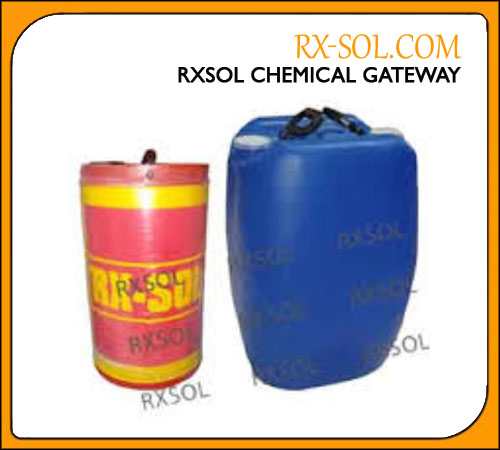
Aromatherapy liquid - berry Variety
Part No: RXSOL-41-8329-025
Viscosity Builder for Toilet Cleaner
Acid Thickener Rx is a nonionic surfactant designed to build viscosity in acid media. Acid Thickener Rx surfactant may be used alone in hydrochloric acid, or in combination with sodium chloride (salt) when used with other acids (such as phosphoric, sulfuric, hydrofluoric, citric, oxalic, etc.) Varying the use level of Acid Thickener surfactant (and salt) will vary the viscosity build. Acid Thickener Rx is a versitle, broad spectrum non phenolic biocide & Fungicide for leather, paper, paint, textile,wood and water treatment , free from penta - chlorophenate.
Application
It is an ethoxylate for preparing high viscosity acid solutions and thus is commonly known as acid thickener. It is most predominantly used in preparing liquid toilet cleaner based on hydrochloric acid.
Dosage
It is used as viscosity builder in acid cleaning and the dosage suggested for building viscosity is 2 to 2.4% depending upon the acid content.
Technical Specification
|
Active content |
Blend of Ethoxylates (~100%w/w) |
|
Amine Value |
120-160 |
|
Appearance |
Pale yellow viscous liquid |
|
Chemical Nature |
Nonionic |
|
Flash point |
>250O C |
|
Non volatiles @100OC |
98-100% |
|
Solubility |
Miscible in water in all ratios |
|
Sp. Gravity at 30 degree C |
0.95-1 |
MSDS

| Product Name |
Acid Thickner EBV RXSOL |
| Part Number |
RXSOL-19-1999-025 |
Company Details:
RX MARINE INTERNATIONAL
105, A wing , BSEL , TECH PARK.
VASHI ,NEW BOMBAY 400703 INDIA
| Phone | +91 22 65113333/ 5555 / 9999 |
| Fax | +91 22 2781 1318 :::AOH :0091 9821214367 |
| 123@rxmarine.com |

Substances : -
| Chemical Name | Cas No. | Percentage |
| Amines, Tallow Alkyl, Ethoxylated | 61791-26-2 | 50% - 80 % |
| Amines, N-tallow alkyltrimethylenedi-, ethoxylated | 61790-85-0 | 20% - 50 % |

Emergency Overview : Corrosive
Keep away from heat and sources of ignition. Combustible Liquid.
Potential Health Effects:
| Inhalation | : | Can cause severe eye, skin and respiratory tract burns. Risk of serious damage.to the lungs (by inhalation). May cause nose, throat, and lung irritation. Inhalation of aerosol may cause irritation to the upper respiratory tract. |
| Eye contact | : | Causes eye burns. May cause blindness. |
| Skin contact | : | Causes skin burns |
| Ingestion | : | If ingested, severe burns of the mouth and throat, as well as a danger of perforation of the oesophagus and the stomach. |
| Chronic Health Hazard | : | This product contains no listed carcinogens according to IARC, ACGIH, NTP and/or OSHA in concentrations of 0.1 percent or greater. |
| Exposure Guidelines | ||
| Target Organs | : | Skin. |

General advice : Seek medical advice. If breathing has stopped or is labored, give assisted respirations. Supplemental oxygen may be indicated. If the heart has stopped, trained personnel should begin cardiopulmonary resuscitation immediately.
Eye contact : Hold eyelids apart, initiate and maintain gentle and continuous irrigation until the patient receives medical care. If medical care is not promptly available, continue to irrigate for one hour.
Skin contact : Immediately remove contaminated clothing, and any extraneous chemical, if possible to do so without delay. Initiate and maintain continuous irrigation until the patient receives medical care. If medical care is not promptly available, continue to irrigate for one hour. Cover wound with sterile dressing.
Ingestion : Do not induce vomiting without medical advice. If a person vomits when lying on his back, place him in the recovery position. Never give anything by mouth to an unconscious person. Prevent aspiration of vomit. Turn victim's head to the side.
Inhalation : If breathing has stopped or is labored, give assisted respirations. Supplemental oxygen may be indicated. If the heart has stopped, trained personnel should begin cardiopulmonary resuscitation immediately. Move to fresh air.

| Suitable extinguishing media | : |
Alcohol-resistant foam. Carbon dioxide (CO2). Dry chemical. Dry sand.Limestone powder. |
| Specific hazards | : | Incomplete combustion may form carbon monoxide. May generate ammonia gas. May generate toxic nitrogen oxide gases. Burning produces noxious and toxic fumes. In the event of fire, cool tanks with water spray . Downwind personnel must be evacuated. Fire or intense heat may cause violent rupture of packages. May form explosive mixtures in air. |
|
Protective equipment for fire-fighters |
: | Avoid contact with the skin. A face shield should be worn. Use personal protective equipment. Wear self contained breathing apparatus for fire fighting if necessary. |
Further information : Do not allow run-off from fire fighting to enter drains or water courses., Fire residues and contaminated fire extinguishing water must be disposed of in accordance with local regulations.

Personal precautions : Wear suitable protective clothing, gloves and eye/face protection. Use self-contained breathing apparatus and chemically protective clothing. Remove all sources of ignition. Evacuate personnel to safe areas.
Environmental precautions : Construct a dike to prevent spreading. Shut off or remove all ignition sources. Construct a dike to prevent spreading.
Methods for cleaning up : Contact Air Products' Emergency Response Center for advice. Approach suspected leak areas with caution. Absorb with inert absorbent materials such as: Dry sand. Vermiculite. Activated charcoal. Place in appropriate chemical waste container.
Additional advice : Open enclosed spaces to outside atmosphere. If possible, stop flow of product.

Handling : Use well-ventilated areas. Avoid breathing vapors and/or aerosols. Avoid contact with skin and eyes. Emergency showers and eye wash stations should be readily accessible. Adhere to work practice rules established by government regulations. Use personal protective equipment. When using, do not eat, drink or smoke.
Storage : Do not store near acids. Keep containers tightly closed in a dry, cool and well-ventilated place. To avoid ignition of vapors by static electricity discharge, all metal parts of the equipment must be grounded. Keep away from heat and sources of ignition. Keep in a dry, cool place. Keep away from oxidizers.
Technical measures/Precautions: Keep away from open flames, hot surfaces and sources of ignition.

Engineering measures : Apply process controls to ensure safe operating conditions. Assess potential flammability hazards based on flashpoint and potential ignition sources. Ensure adequate ventilation. Provide readily accessible eye wash stations and safety showers. Provide natural or explosion-proof ventilation adequate to ensure concentrations are kept below exposure limits.
Personal protective equipment : -
| Respiratory protection | Wear appropriate respirator when ventilation is inadequate. | |
| Hand protection | Neoprene gloves. Impervious gloves.The breakthrough time of the selected glove(s) must be greater than the intended use period. | |
| Eye protection | Full face shield with goggles underneath. | |
| Skin and body protection | Impervious clothing.Skin and body protection :Full rubber suit (rain gear). Rubber or plastic boots. Slicker Suit. | |
| Environmental exposure controls | Construct a dike to prevent spreading. Shut off or remove all ignition sources. | |
| Special instructions for protection and hygiene |
Discard contaminated leather articles. Provide readily accessible eye wash stations and safety showers. Wash at the end of each workshift and before eating, smoking or using the toilet. Provide readily accessible eye wash stations and safety showers. |

| Appearance Form: | Liquid, clear |
| Colour: | Colourless |
| Odour | No data available |
| Odour Threshold | Ammoniacal. |
| pH | No data available |
| Boiling point | > 220 °F (> 104.4 °C) |
| Evaporation rate | No data available |
| Vapour pressure | 59,5 hPa at 20,0 °C |
| Vapour density | No data available |
| Water solubility | completely soluble |
| Viscosity | No data available |
| Explosive properties | No data available |
| Oxidizing properties | No data available |
Other safety information: No data available

| Reactivity | No data available |
| Chemical stability | Stable under recommended storage conditions. |
| Conditions to avoid | Heat, flames and sparks. Extremes of temperature and direct sunlight. |
| Incompatible materials | Alkali metals, Ammonia, Oxidizing agents, Peroxides |
| Hazardous decomposition products |
Other decomposition products - No data available In the event of fire: see section 5 |

Acute Health Hazard :
| Ingestion | LD50 : 1,000 - 2,000 mg/kg Species : Rat. | |
| Inhalation | No data is available on the product itself. | |
| Dermal | No data is available on the product itself. |

Ecotoxicity effects
| Aquatic toxicity | : | (96 h) : < 1 mg/l Species : Fish.EC50 (48 h) : < 1 mg/l Species : Daphnia. |
| Toxicity other Organisms | : | No data available. |
Persistence and degradability :
| Biodegradability | : | No data is available on the product itself. |
| Mobility | : | No data available. |
| Bioaccumulation | : | No data is available on the product itself. |

Dispose of container and unused contents in accordance with federal, state, and
local requirements.

DOT
| UN proper shipping name | Amines, liquid, corrosive, n.o.s., (Amines, N-tallow alkyltrimethylenedi-, ethoxylated) |
| Class or Division | 8 |
| Packaging group | III |
| Label(s) | 8 |
| Marine Pollutant | No |
IATA
| UN proper shipping name | Amines, liquid, corrosive, n.o.s., (Amines, N-tallow alkyltrimethylenedi-, ethoxylated) |
| Class or Division | 8 |
| Packaging group | III |
| Label(s) | 8 |
| Marine Pollutant | Yes |
IMDG
| UN proper shipping name | Amines, liquid, corrosive, n.o.s., (Amines, N-tallow alkyltrimethylenedi-, ethoxylated) |
| Class or Division | 8 |
| Packaging group | III |
| Label(s) | 8 |
| Marine Pollutant | Yes |

OSHA Hazard Communication Standard (29 CFR 1910.1 200) Hazard Class(es)
Corrosive. Combustible Liquid.
| Country | Regulatory list | Notification |
| USA | TSCA |
Included on Inventory. |
| EU | EINECS | Included on EINECS inventory or polymer substance, monomers included on EINECS inventory or no longer polymer. |
| Canada | DSL | Included on Inventory. |
| Australia | AICS | Included on Inventory. |
| Japan | ENCS | Included on Inventory. |
| South Korea | ECL | Included on Inventory. |
| China | SEPA | Included on Inventory |
| Philippines | PICCS | Included on Inventory. |
EPA SARA Title III Section 313 (40 CFR 372) Component(s) above 'de minimus' level : None.
WHMIS Hazard Classification : Combustible Liquid, Corrosive Material

The information above is believed to be accurate and represents the best information currently available to us. However, we make no warranty of merchantability or any other warranty, express or implied, with respect to such information, and we assume no liability resulting from its use. Users should make their own investigations to determine the suitability of the information for their particular purposes. In no event shall Rx Marine International be liable for any claims, losses, or damages of any third party or for lost profits or any special, indirect, incidental, consequential or exemplary damages, howsoever arising, even if Rx Marine International has been advised of the possibility of such damages.
DISCLAIMER OF LIABILITY :The information in this SDS was obtained from sources which we believe are reliable. However, the information is provided without any warranty, express or implied, regarding its correctness. The conditions or methods of handling, storage, use or disposal of the product are beyond our control and may be beyond our knowledge. For this and other reasons, we do not assume responsibility and expressly disclaim liability for loss, damage or expense arising out of or in any way connected with the handling, storage, use or disposal of the product. This MSDS was prepared and is to be used only for this product. If the product is used as a component in another product, this MSDS information may not be applicable.