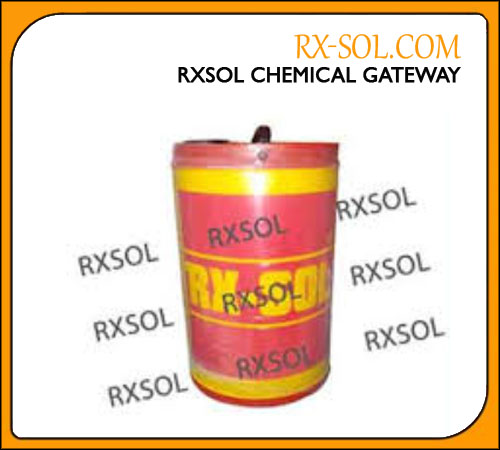
Big D Fire D One Shot Fogger
Part No: RXSOL-41-86
Powerful non-oxidising microbiocide for use in cooling towers, cooling water systems, oil and gas systems and other related systems to control the growth of bacteria, algae and fungi.
BIOCIDE 6111 is a powerful non-oxidising microbiocide for use in cooling towers, cooling water systems, oil and gas systems and other related systems to control the growth of bacteria, algae and fungi. This treatment approach is effective over a wide range of pH and is an excellent supplement to other corrective treatment procedures. BIOCIDE 6111 contains a blend of non-ionic surfactants to aid the penetration and dispersion of biofilms.
Application
RXSOL-81-8196-210 can be added directly to the tower sump or any other convenient point in the system.
For typical microbiological control, use BIOCIDE 6111 at a concentration of 5 to 25 ppm based on the total system volume. Higher or lower dosages may be required depending on the specific system conditions.
Dosage
AIR WASHER SYSTEMS
For use in industrial air washer systems, add BIOCIDE 6111 for Air Washer Systems at the makeup to the air washer sump or chill water sump. For continuous or intermittent use, treat with 10 to 100 ppm of this product depending on the severity of the microbial contamination and the frequency of treatment. Maintain 1 to 5 ppm of active bromine residual.
OIL AND GAS
This water-based, non-oxidising biocide is used to control bacteria, fungi and algae in oil and gas production and processing water systems, including produced water circuits, injection water systems, cooling and utility water loops, and hydrotest water. Dose the product at a point of good circulation to ensure uniform mixing. Typical treatment rates are 10-200 ppm of product depending on contamination level, system volume and retention time. For heavily contaminated systems, apply an initial shock dose followed by a maintenance programme to prevent biofouling, MIC (microbiologically influenced corrosion), slime formation and plugging of pipelines, heat exchangers and filters. Adjust dosage based on on-site microbiological monitoring and operational conditions.
HEAT TRANSFER SYSTEMS
Recirculating and One-Pass Cooling Water Systems: Add BIOCIDE 6111 for Heat Transfer Systems directly to the cooling water system at a point of uniform mixing, such as the basin area, the sump area of the cooling tower, or other reservoir. Depending on the severity of the problem, a dosage of 10 to 200 ppm of this product (based on total water volume) may be needed. Maintain 1 to 5 ppm of active bromine residual.
FOR PULP AND PAPER MILLS
BIOCIDE 6111 for Pulp and Paper Mills is effective in controlling slime-forming bacteria, fungi, and algae in pulp and paper mill process waters. Add BIOCIDE 6111 directly to the system at a point of uniform mixing. Initial doses of 10 to 100 ppm based on the weight of water in the system should be added as required to maintain control. Repeat treatment as necessary.
FOR WASTEWATER TREATMENT SYSTEMS
BIOCIDE 6111 for Waste Water Treatment Systems is used to control microbial growth in wastewater treatment systems, including sewage systems. Add BIOCIDE 6111 at a point in the system where uniform mixing will occur. The dosage will depend on the severity of the contamination but is typically 10 to 100 ppm. Repeat treatment as necessary to maintain microbial control.
FOR SHELL EGG PASTEURIZER
For use in controlling bacteria and fungi in shell egg pasteurizing operations, add BIOCIDE 6111 for Shell Egg Pasteurizer directly to the water in the pasteurizer at a point of uniform mixing. Apply at a concentration of 5 to 10 ppm based on the total water volume. Maintain a residual of 1 to 5 ppm of active bromine during operation. Adjust dosage as needed to maintain control and follow all local, state, and federal regulations.
Technical Specification
Specification
| Parameters | Values |
| Appearance | Colourless to pale hazy |
| Odor | Odorless |
| Flammability | Non Flammable |
| pH | 4-8 |
| Density | 1.1 |
| Solubility | Completely soluble in water and not in solvents |
MSDS

| Product Name |
Biocide 6111 |
| Part Number | RXSOL-81-8196-210 |
Company Details:
RX MARINE INTERNATIONAL
105, A wing , BSEL , TECH PARK.
VASHI ,NEW BOMBAY 400703 INDIA
| Phone | +91 22 65113333 / 5555 / 9999 |
| Fax | +91 22 2781 1318 :::AOH :0091 9821214367 |
| 123 @ rxmarine.com | |
| Website | www.rxmarine.com |

| Component | CAS-No | Weight % | R Phrases |
| Glutaraldehyde | 111-30-8 | 10- 30 | R 23 , R 25 |
| Quaternary as non Hazardous | - | 10-30 | |
| Brominated compounds | - | 10-20 | |
| Proprietary Blend of Biocides | - | > 60 |

| Signal Word | : | Danger |
| Classification | : | severe skin burns and eye damage. Harmful if swallowed. |
| Label Elements | : | An allergic skin reaction. |
| Environmental hazards | : | Environmental effects Dangerous for the environment Very toxic to aquatic |

4.1 Description of necessary first-aid measures:
| Inhalation | : | Remove to fresh air, treat symptomatically. Get immediate medical attention. |
| Skin Contact | : |
PROMPT ACTION IS ESSENTIAL IN CASE OF CONTACT. Immediately flush eye with water for at least 15 minutes while holding eyelids open. Get immediate medical attention. |
| Eye Contact | : | Immediate medical attention is required. Rinse immediately with plenty of water, also under the eyelids, for at least 15 minutes. |
| Ingestion | : | Seek medical advice immediately, showing the label and/or SDS. If conscious, washout mouth and give water to drink. If unconsious, do not give anything by mouth, place in the recovery position, check breathing and pulse. If necessary give artifical respiration. Do not induce vomiting without medical advice. |
| If Swallowed | : | Harmful if swallowed. Causes severe skin burns and eye damage. May cause an allergic skin reaction. Toxic if inhaled. May cause allergy or asthma symptoms or breathing difficulties if inhaled. May cause respiratory irritation. |
| Important symptoms | : |
Probable mucosal damage may contraindicate the use of gastric lavage. Based on the individual reactions of the patient, the physician's judgement should be used to control symptoms and clinical condition.. |

| Suitable Extinguishing Media | : | This product would not be expected to burn unless all the water is boiled away. The remaining organics may be ignitable. Use extinguishing media appropriate for surrounding fire. |
| Fire Hazard | : |
Special hazards arising from the substance or mixture: May evolve oxides of carbon (COx) under fire conditions. Not flammable or combustible.In the event of a spill, prevent material and fire water from entering sewers or waterways. |
| Special Fire Fighting Procedure | : | In case of fire, wear a full face positive-pressure self contained breathing apparatus and protective suit. |

| Personal Precautions | : |
This material may be hazardous by contact, do not attempt to clean up the spill. Call trained emergency responders immediately. Clean up only to be done by Emergency responders/personnel. Restrict access to area as appropriate until clean-up operations are complete. Use personal protective equipment recommended in Section 8 (Exposure Controls/Personal Protection). |
| Environmental Precautions | : |
In the event of a spill, prevent material from entering sewers or waterways. Do not allow material to contaminate ground water system. Prevent product from entering drains. If drains, streams, soil or sewers become contaminated, notify local authority. This product may pose a risk to the aquatic ecosystem if released. |
| Methods for Containment and Clean Up | : |
SMALL SPILLS: Soak up spill with absorbent material. Place residues in a suitable, covered, properly labeled container. Wash affected area. LARGE SPILLS: Contain liquid using absorbent material, by digging trenches or by diking. Reclaim into recovery or salvage drums or tank truck for proper disposal. Wash site of spillage thoroughly with water. Dilute the glutaraldehyde to 5% or less with water. Add sodium bisulfite (2-3 parts by weight per part glutaraldehyde). This will typically reduce the glutaraldehyde concentration to 2 ppm or less in 5 minutes at room temperature. The remaining solution can be disposed of via appropriate means. Contact an approved waste hauler for disposal of contaminated recovered material. Dispose of material in compliance with regulations indicated in Section 13 (Disposal Considerations). |

| Handling |
Prevent contact with skin, eyes and clothing. Use with adequate ventilation. Do not breathe vapors/gases/dust. Keep the containers closed when not in use. Ensure all containers are labeled. Have emergency equipment (for fires, spills, leaks, etc.) readily available. Use only in a closed system. Use personal protective equipment recommended in Section 8 (Exposure Controls/Personal Protection). Use good work and personal hygiene practices to avoid exposure. Keep an eye wash fountain available. Keep a safety shower available. Always wash thoroughly after handling chemicals. When handling this product never eat, drink or smoke. Eye wash station and safety shower are necessary. Always wash thoroughly after handling chemicals. When handling this product never eat, drink or smoke. If clothing is contaminated, remove clothing and thoroughly wash the affected area. Launder contaminated clothing before reuse. |
| Storage | Keep container closed when not in use. Keep container in a well-ventilated area. |
| Suitable Construction Material | PVC, Plexiglass, Kalrez, Alfax, Teflon, HDPE (high density polyethylene), Ethylene propylene, Polypropylene, Polyethylene, Stainless Steel 304, Stainless Steel 316L, Hastelloy C-276, Aluminum, MDPE (medium density polyethylene), Surface-modified HDPE (high density polyethylene) |
| Unsuitable Construction Material | Copper, Mild steel, EPDM, Brass, Nylon, Buna-N, Natural rubber, Polyurethane, Hypalon, Viton, Neoprene, Nitrile |

| Occupational Exposure Limits | : |
Exposure guidelines have not been established for this product.Available exposure limits for the substance(s) are shown below. |
Source: Substance(s) Basis ppm mg/m3
Great Britain Glutaraldehyde TWA 0.05 0.2
STEL 0.05 0.2
*A skin notation refers to the potential significant contribution to overall exposure by the cutaneous route, including mucous membranes and the eyes.
MONITORING MEASURES
A small volume of air is drawn through an absorbant or barrier to trap the substance(s) which can then be desorbed or removed and analyzed as referenced below:
| Substance(s) | Method | Analysis | Absorbant |
| Glutaraldehyde | UK MDHS: 93 | High pressure liquid chromatography | Glass fibre filter treated with Dinitrophenyl hydrazine |
DNEL
Components:
| End Use: | Exposure routes: | Potential health effects: | Value: |
Glutaraldehyde
| Workers | Inhalation | short-term - local | 0.5 mg/m3 |
| Workers | Inhalation | long-term - local | 0.25 mg/m3 |
PNEC
Components:
| Fresh water | 0.0025 mg/l |
| Marine water | 0.00025 mg/l |
| Intermittent release | 0.006 mg/l |
| STP | 0.8 mg/l |
| Fresh water sediment | 0.527 mg/kg |
| Soil | 0.03 mg/kg |
| Engineering Measures | : | General ventilation is recommended. The use of local exhaust ventilation is recommended to control emissions near the source. Laboratory samples should be handled in a fumehood. Provide mechanical ventilation of confined spaces. |
| Personal Protection | : |
Eye/Face Protection: Wear a face shield with chemical splash goggles. |
| Hygiene Measures | : | Handle in accordance with good industrial hygiene and safety practice. Use only with adequate ventilation. Avoid contact with skin, eyes and clothing. Remove contaminated clothing and protective equipment before entering eating areas. Wash hands before breaks and immediately after handling the product. |
| Respiratory Protection | Where concentrations in air may exceed the limits given in this section, the use of a half face filter mask or air supplied breathing apparatus is recommended. A suitable filter material depends on the amount and type of chemicals being handled. Consider the use of filter type: A-P The applicable European standard can be found in EN 140, EN 137, EN 143 and EN 14387. In event of emergency or planned entry into unknown concentrations a positive pressure, full-facepiece SCBA should be used. If respiratory protection is required, institute a complete respiratory protection program including selection, fit testing, training, maintenance and inspection. |


Gloves Suit

| Physical State | : | Liquid |
| Appearance | : | Light Yellow |
| Odor | : | Pungent |
| Odor Threshold | : | No information available. |
| PH | : | 4-8 |
| Melting / Freezing Point | : | - 4 °C |
| Boiling Point/Range | : | 101 °C |
| Flash Point | : | Not Applicable |
| Evaporation Rate | : | No information available. |
| Lower Explosion Limit | : | No data available. |
| Vapor Pressure | : | 2.13 kPa (20 °C) |
| Vapor Density | No data available. | |
| Relative Density | : | >1.05 g/cm3 (20.0 °C) |
| Solubility in Water | : | Complete soluble |
| Partition coefficient n octanol/water | : | Not available. |
| Explosive Properties | : | Not applicable |
| Oxidizing Properties | : | Not applicable |

| Stability | : | Stable under normal conditions. |
| Conditions to Avoid | : |
None known High temperature. |
| Materials to avoid | : | Contact with strong oxidizers (e.g. chlorine, peroxides, chromates, nitric acid, perchlorate, concentrated oxygen, permanganate) may generate heat, fires, explosions and/or toxic vapors. Strong Bases Strong acids Contact with these may cause a heat-generating reaction which is not expected to be violent. |
| Hazardous decomposition | : | Under fire conditions: Oxides of carbon |
| Hazardous Reaction | : | No dangerous reaction known under conditions of normal use. |

| Acute toxicity | : | Harmful if swallowed. |
| Acute inhalation toxicity |
Toxic if inhaled. |
|
|
Skin corrosion/irritation |
No data is available on the product itself. |
|
|
Chronic toxicity |