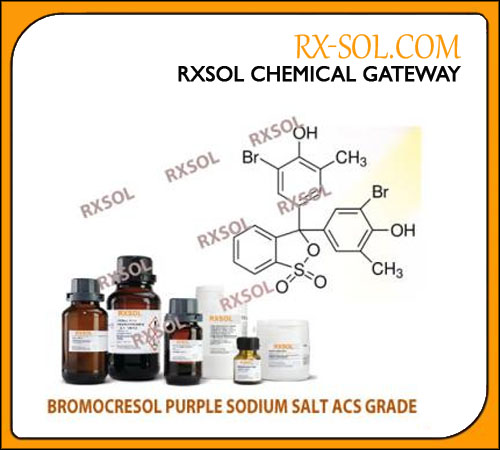
BROMOCRESOL PURPLE SODIUM SALT ACS GRADE
Part No: RXSOL-69-6262-530
Powerful concentrated corrosion inhibitor acts as oxygen scavengers used to effectively remove dissolved OXYGEN
This is most common oxygen treatment as a scavengers used to effectively remove dissolved OXYGEN from your feedwater. By the presence of dissolved oxygen in system, corrosion and pitting caused on metal surface. Removes dissolved oxygen, By acting as an oxygen scavenger.
A fast-acting, catalyzed sodium sulphite (Na₂SO₃) oxygen scavenger for low- and medium-pressure boiler systems. The product reacts stoichiometrically with dissolved oxygen to prevent corrosion in boilers, feed lines, and condensate systems by converting oxygen to inert sulfate.
Application
- Oxygen removal in low/medium-pressure boilers (typically up to ~65 bar; usage above this pressure is uncommon due to potential sulfate/solids carryover).
- Hot standby protection to prevent pitting during idle periods i.e. Oilfield Application.
- Feedwater & deaerator outlets where residual O₂ must be suppressed rapidly.
Dosage
Reaction (overall):
Na₂SO₃ + ½ O₂ → Na₂SO₄
Catalyst accelerates the reaction at lower temperatures and shorter residence times (e.g., in deaerator outlets and feedwater lines)
- Deaerator outlet O₂: ≤ 7–10 ppb (if DA present)
- Sulfite residual in boiler water:
- Normal operation: 20–40 mg/L as Na₂SO₃
- High risk / wet lay-up: 60–100 mg/L as Na₂SO₃
- pH (feedwater/boiler): follow your internal treatment program (commonly FW pH 8.5–9.2; boiler water pH 10.5–11.5 depending on pressure).
- Preferably deaerator storage section or feedwater line upstream of economizer to ensure complete O₂ removal before the boiler.
Example Dose Calculation
Feedwater DO = 0.10 mg/L (100 ppb) at 20 m³/h.
Stoichiometric Na₂SO₃ = 0.10 × 7.88 = 0.788 mg/L.
With 1.3× safety factor → ~1.0 mg/L Na₂SO₃.
At 20 m³/h → 20 g/h Na₂SO₃ (as pure).
Using 38% liquid: 20 / 0.38 ≈ 52.6 g/h (~40 mL/h) (SG 1.32 ⇒ ~30 mL/h by mass; verify on site).
Fine-tune to maintain target sulfite residual in boiler.
Technical Specification
| Property | Specification |
|---|---|
| Appearance | Clear to pale straw liquid |
| Specific gravity @ 25 °C | ~1.30 – 1.34 (depends on strength) |
| pH (neat) | 8.5 – 10.5 (stabilized alkaline) |
| Odor | Faint sulfurous |
| Freeze point | < 0 °C (varies with strength) |
| Solubility | Completely miscible with water |
MSDS

| Product Name | RXSOL Oxygen Scavenger OxyGuard S |
| Product Type | RXSOL-34-6119-250 |
Company Details:
RX MARINE INTERNATIONAL
105, A wing , BSEL , TECH PARK.
VASHI ,NEW BOMBAY 400703 INDIA
Stock Point : Mumbai, Gandhidham, Chennai, Visakhapatnam, Kolkata, Fujairah, Muscat, Canada BC, Nairobi Kenya
| Phone | +91 22 27815540 / 41 / 42 |
| Fax | +91 22 2781 1318 :::AOH :0091 9821214367 |
| mail @ rxmarine.com |

Our hazard evaluation has identified the following chemical substance(s) as hazardous. Consult Section 15 for the nature of the hazard(s).
| Hazardous Substance(s) | CAS NO | Composition% |
| Sodium Sulphite | 7757-83-7 | 30-40 |
| Cobalt Chloride | 7646-79-9 | 0.1 - 1 |
| Proprietory Blend of Catalyzed Inhibitor | N/A | 10-15 |

|
**EMERGENCY OVERVIEW**
WARNING |
| PRIMARY ROUTES OF EXPOSURE | Eye, Skin |
| HUMAN HEALTH HAZARDOUS | CUTE |
| EYE CONTACT | Can cause mild |
| SKIN CONTACT | Can cause mild irritation. |
| INGESTION | May cause asthmatic-like attack. |
| INHALATION | Can cause mild irritation. Causes asthmatic signs and symptoms in hyper-reactive individuals. |
| HUMAN HEALTH HAZARDS | Ingestion of sulfite can cause a severe allergic reaction in asthmatics and some sulfite sensitive individuals. The resulting symptoms can include difficulty in breathing, flushed skin and a rash. Chronic exposure to sulfites may cause symptoms of upper respiratory disease and affect sense of taste and smell. |

| EYE CONTACT : | Immediately flush with plenty of water for at least 15 minutes. Get medical attention. |
| SKIN CONTACT : | Immediately flush with plenty of water for at least 15 minutes. If skin irritation persists, obtain medical attention. |
| INGESTION : | Do not induce vomiting without medical advice. If conscious, washout mouth and give water to drink. If unconsious,do not give anything by mouth, place in the recovery position, check breathing and pulse. If necessary give artifical respiration. Get medical attention. |
| INHALATION : | Remove to fresh air, treat symptomatically. If breathing has stopped, trained personnel should begin artificial respiration or, if the heart has stopped, cardiopulmonary resuscitation (CPR) immediately. Get medical attention. |
| NOTE TO PHYSICIAN : | Based on the individual reactions of the patient, the physician's judgement should be used to control symptoms and clinical condition. |

| FLASH POINT : | Not flammable |
| LOWER EXPLOSION LIMIT : | Not flammable |
| UPPER EXPLOSION LIMIT : | Not flammable |
| EXTINGUISHING MEDIA : | Use extinguishing media appropriate for surrounding fire. |
| FIRE AND EXPLOSION HAZARD : | May evolve oxides of sulfur (SOx) under fire conditions. May evolve hydrogen sulfide (H2S) under fire conditions. |
| SPECIAL PROTECTIVE EQUIPMENT FOR FIRE FIGHTING : | May evolve oxides of sulfur (SOx) under fire conditions. May evolve hydrogen sulfide (H2S) under fire conditions. |

PERSONAL PRECAUTIONS :
Restrict access to area as appropriate until clean-up operations are complete. Do not touch spilled material.
Ventilate spill area if possible. Stop or reduce any leaks if it is safe to do so. Use personal protective equipment recommended in Section 8 (Exposure Controls/Personal Protection). Notify appropriate government, occupational health and safety and environmental authorities.
METHODS FOR CLEANING UP :
SMALL SPILLS: Soak up spill with absorbent material. Place residues in a suitable, covered, properly labeled container. Wash affected area. LARGE SPILLS: Contain liquid using absorbent material, by digging trenches or by diking. Reclaim into recovery or salvage drums or tank truck for proper disposal. Dispose of material in compliance with regulations indicated in Section 13 (Disposal Considerations). Contact an approved waste hauler for disposal of contaminated recovered material.
ENVIRONMENTAL PRECAUTIONS :
Do not contaminate surface water.

| HANDLING : | Do not take internally. Avoid generating aerosols and mists. Do not get in eyes, on skin, on clothing. |
| STORAGE CONDITIONS : | Store in a cool well ventilated area away from direct sunlight. Store the containers tightly closed. Evolves sulfur dioxide (SO2) when open to atmosphere. The rate of SO2 evolution increases with temperature and/or transfer of product. Sulfur dioxide may react with vapors from neutralizing amines and may form a visible cloud of amine salt particles. |

OCCUPATIONAL EXPOSURE LIMITS :
Exposure guidelines have not been established for this product. Available exposure limits for the substance(s) are shown below.
ENGINEERING MEASURES :
General ventilation is recommended. Local exhaust ventilation may be necessary when this material is heated or a mist is created.
RESPIRATORY PROTECTION :
If significant mists, vapors or aerosols are generated an approved respirator is recommended. An approved respirator must be worn if the occupational exposure limit is likely to be exceeded.
RESPIRATORY PROTECTION :
If significant mists, vapors or aerosols are generated an approved respirator is recommended. An approved respirator must be worn if the occupational exposure limit is likely to be exceeded.
HAND PROTECTION :
Neoprene gloves, Nitrile gloves, Butyl gloves, PVC gloves
SKIN PROTECTION :
Wear impervious apron and boots.
EYE PROTECTION :
Wear a face shield with chemical splash goggles.
HYGIENE RECOMMENDATIONS :
Keep a safety shower available. Keep an eye wash fountain available. If clothing is contaminated, remove clothing and thoroughly wash the affected area. Launder contaminated clothing before reuse.
HUMAN EXPOSURE CHARACTERIZATION :
Based on our recommended product application and personal protective equipment, the potential human exposure is: Moderate

| PHYSICAL STATE | Clear solution |
| APPEARANCE | Solution free From foreign particles. |
| Molecula Formula | Proprietary Blend |
| pH | 8.5-10.5 |
| SPECIFIC GRAVITY | 1.25-1.35 @ 77 °F / 25 °C |
| SOLUBILITY IN WATER | Completely soluble in water and has strong smell. |
Note: These physical properties are typical values for this product and are subject to change.

| STABILITY : | Stable under normal conditions. |
| HAZARDOUS POLYMERIZATION : | Hazardous polymerization will not occur. |
| CONDITIONS TO AVOID : | High temperatures |
| MATERIALS TO AVOID : | Contact with strong oxidizers (e.g. chlorine, peroxides, chromates, nitric acid, perchlorate, concentrated oxygen,permanganate) may generate heat, fires, explosions and/or toxic vapors. Contact with strong acids(e.g.sulfuric,phosphoric,nitric,hydrochloric, chromic, sulfonic) may generate heat, splattering or boiling and toxic vapors |
| HAZARDOUS DECOMPOSITION PRODUCTS : | Under fire conditions: Oxides of sulfur, Hydrogen sulfide (H2S) |

No toxicity studies have been conducted on this product.
| SENSITIZATION : | HUMAN HAZARD CHARACTERIZATION : |
| CARCINOGENICITY : | None of the substances in this product are listed as carcinogens by the International Agency for Research on Cancer (IARC), the National Toxicology Program (NTP) or the American Conference of Governmental Industrial Hygienists (ACGIH). |
| HUMAN HAZARD CHARACTERIZATION : | Based on our hazard characterization, the potential human hazard is: Low |

ECOTOXICOLOGICAL EFFECTS :
The following results are for a similar product.
ACUTE FISH RESULTS :
| Species | Exposure | LC50 | Test Descriptor |
| Fathead Minnow | 96 hrs | 382 mg/l | Similar Product |
ACUTE INVERTEBRATE RESULTS :
| Species | Exposure | LC50 | EC50 | Test Descripton |
| Daphnia magna | 48 hrs | 728 mg/l | Similar Product |
ENVIRONMENTAL HAZARD AND EXPOSURE CHARACTERIZATION
Based on our hazard characterization, the potential environmental hazard is: Low
Based on our recommended product application and the product's characteristics, the potential environmental
exposure is: Moderate
If released into the environment, see CERCLA/SUPERFUND in Section 15.

If this product becomes a waste, it is not a hazardous waste as defined by the Resource Conservation and Recovery Act (RCRA) 40 CFR 261, since it does not have the characteristics of Subpart C, nor is it listed under Subpart D.
As a non-hazardous waste, it is not subject to federal regulation. Consult state or local regulation for any additional handling, treatment or disposal requirements. For disposal, contact a properly licensed waste treatment, storage,disposal or recycling facility.

The information in this section is for reference only and should not take the place of a shipping paper (bill of lading)specific to an order. Please note that the proper Shipping Name / Hazard Class may vary by packaging, properties,and mode of transportation. Typical Proper Shipping Names for this product are as follows.
LAND TRANSPORT :
| Proper Shipping Name : Oxygen Scavenger | PRODUCT IS NOT REGULATED DURING TRANSPORTATION |
AIR TRANSPORT (ICAO/IATA) :
| Proper Shipping Name :Oxygen Scavenger | PRODUCT IS NOT REGULATED DURING TRANSPORTATION |
MARINE TRANSPORT (IMDG/IMO) :
| Proper Shipping Name :Oxygen Scavenger | PRODUCT IS NOT REGULATED DURING TRANSPORTATION |

No Information Available.

Due to our commitment to Product Stewardship, we have evaluated the human and environmental hazards and exposures of this product. Based on our recommended use of this product, we have characterized the product's general risk. This information should provide assistance for your own risk management practices. We have evaluated our product's risk as follows:
* The human risk is: Low
* The environmental risk is: Low
Any use inconsistent with our recommendations may affect the risk characterization. Our sales representative will assist you to determine if your product application is consistent with our recommendations. Together we can implement an appropriate risk management process.
This product material safety data sheet provides health and safety information. The product is to be used in
applications consistent with our product literature. Individuals handling this product should be informed of the recommended safety precautions and should have access to this information. For any other uses, exposures should be evaluated so that appropriate handling practices and training programs can be established to insure safe workplace operations. Please consult your local sales representative for any further infomation.
DISCLAIMER OF LIABILITY :The information in this SDS was obtained from sources which we believe are reliable. However, the information is provided without any warranty, express or implied, regarding its correctness. The conditions or methods of handling, storage, use or disposal of the product are beyond our control and may be beyond our knowledge. For this and other reasons, we do not assume responsibility and expressly disclaim liability for loss, damage or expense arising out of or in any way connected with the handling, storage, use or disposal of the product. This MSDS was prepared and is to be used only for this product. If the product is used as a component in another product, this MSDS information may not be applicable.