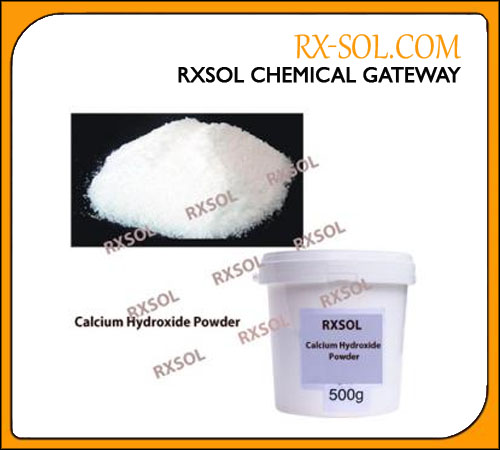
Calcium OXIDE Powder
Part No: RXSOL-93-1495-025
Silica flour
Silica Flour supplier and exporter.
Application
Dosage
Technical Specification
MSDS

| Product Name | Silica Flour |
| Part Number | RXSOL-81-8119-030 |
Company Details:
RX MARINE INTERNATIONAL
105, A wing , BSEL , TECH PARK.
VASHI ,NEW BOMBAY 400703 INDIA
Stock Point ::: Kolkata, Kandla, Mumbai, Chennai, Visakhapatnam, Fujairah
| Phone | +91 22 27815540 / 41 / 42 |
| Fax | +91 22 2781 1318 :::AOH :0091 9821214367 |
| 123 @ rxmarine.com | |
| Website | www.rxmarine.com |

| Name of Substance | Cas Number | Wight % |
| SiO 2 | 14808-60-7 | 99.0 -99.9 |
| Al2O3 | 1344-28-1 | < 0.8 |
| Fe2O3 | 1309-37-1 | < 0.1 |
| TiO2 | 13463-67-7 | < 0.1 |

| Principle routes of exposure | Inhalation.Eye contact |
| Main health hazards | Respirable dust CANCER HAZARD.This product May contain small amounts of respirable Crystalline silica .Crystallina silica dust is listed by IARC in Group 1 as known to cause lung cancer In humans,if inhaled.Risk of cancer depends on Duration and level of exposure. |
| Main environmental hazards | None |
| Other hazards | Dust. |
| Chronic Effects |
The adverse health effects:silicosis,cancer,Autoimmune,diseases,tuberculosis,and Nephrotoxicity; are chronic effects.Inhalation:Silicosis Respirable crystalline silica (quartz) can cause silicosis,a fibrosis(scarring) of the lungs. Silicosis may be Progressive; it may lead to disability and Death.
|

| Eye Contact | Rinse with water. |
| Skin Contact | Rinse with water. |
| Inhalation: | No specific first –aid is necessary since the adverse health effects Associated with exposure to crystalline silica (quartz),Remove the person immediately to fresh air,give artificial respiration as Needed,seek medical attention as needed. |
| Ingestion: |
Rinse mouth. Consult a physician if necessary.Never give anything by Mouth to an unconscious person. |
| Notes to Physicians | Good personal hygiene is essential. Always wash your hands after handling crystalline silica, prior to handling food and/or drinkable liquids.Inhalation of silica is known to cause silicosis of the lungs along with lung cancer with long term exposure. |

| Flammability | Non Flammable. |
| Fire hazard | Does not flash |
| Flash Point | Not Applicable |
| Autoignition temperature | Not Applicable |
| Flammability limits in air | |
| Lower | Not Applicable |
| Upper | Not Applicable |
| Oxidizing properties | None |
| Suitable extinguishing media |
None needed .The product itself does not durn. Use extinguishing Media suitable for surrounding. |
| Combustion products,or Released gases | None |
| Special protective Equipment for firefighters |
Not applicable. |

| Main physical hazards |
No classified physical hazards. |
| Other Hazard | Dust |
| Personal precautions | Do not breathe dust. Wear suitable protective equipment. |
| Methods for cleaning up | Shovel into suitable container for disposal. After cleaning,flush awayTraces with water.Use dustless methods(vacuum) iff possible and Place into closable container for disposal,or flush with water.Do not dry Sweep.Wear protective equipment specified below. |
| Environmental precautions | None |

| Personal Handling | Do not breath dust.Use adequate ventilation and dust collection.Keep airborne dust concentrations below PEL.Do not rely on your sight to Determine if dust is in the air. Silica may be in the air without a visible Dust cloud.If dust cannot be kept below permissible limits.wear a Respirator approved for silica dust when using handling.stroing or Equipment.Maintain,clean,and fit test respirators in accordance with OSHA regulations.Maintain and test ventilation and dust collection Equipement .Wash or vacuum clothing that has become dusty. See also Control measures in Section 8. |
| Safe handling advice | Provide appropriate exhaust ventilation at places where dust is formed. |
| Storage Condition | No special storage conditions required. |
| Packaging requirements | Paper bag (minimum 3ply) ,or other industrial container designed for Powders and granulated meterials. |
| Incompatible products | None known. |

| Hygiene measures | Keep airborne concentrations below exposure limits.Wear suitable Protective equipement .Avoid contact with eyes. |
| Respiratory protection | Use NIOSH approved respirator with dust mist protection (3M 8210).If dust concentration exceeds 5 times exposure limit.wear an |
| Eye protection | Safety glasses with side-shields. |
| Hand protection | Cotton gloves. |

Gloves

| Chemical characterization | Inert (Inorganic). |
| Fire hazard | Not Combustible |
| Form | Soild/Powder |
| Colour | White -Tone |
| Odour | None |
| Odor threshold | Not Applicable |
| pH | Not Applicable |
| Boiling Point / Range | Not Applicable |
| Flash Point | Does not flash |
| Flamability in Air | |
| Lower | Not Applicable |
| Upper | Not Applicable |
| Bulk density | 1100-1600kg/m3 |
| Melting point/range | >1700°C /3092 °F |
| Decomposition temperature | Not Applicable |
| Water solubility | Insoluble. |
| Fat solubility | Insoluble. |
| Relative density | No data available |
| Specific Gravity | 2.65 (@20 °C) |
| Vapor Pressure | Not Applicable |
| Vapor Density | Not Applicable |
| Viscosity | Not Applicable |
| Evaporation Rate | Not Applicable |
| % Volatile | None |

| Stability | Stable |
| Conditions to avoid | Not known |
| Incompatibility with other | Not known |
| Substances Hazardous Decomposition | None |
| Product Hazardous polymerization |
None |
| Other hazards | Dust |

| Eye contact | May cause mechanical irritation. |
| Skin contact |
No effect expected |
| Ingestion | Accidental ingestion of small amounts is not expected to cause adverse Effects. |
| Inhalation | Inhalation of dust may cause shortness of breath,tightness of the chest, A sore throat and cough. This product may contain small amounts of Respirable crystalline silica. Repeated or prolonged inhalation of Crystalline silica dust can cause delayed lung injury,and other diseases, Including silicosis and lung cancer. |
| Sensitization | None |
| Toxicologically synergistic | Smoked tobacco |
| Products Carcinogenic effects |
Crystalline silica dust is listed by IARC in Group 1 as known to cause Lung cancer in humans, if inhaled Risk of cancer depends on duration And level of exposure. A SILICOSIS The major concern is silicosis,caused by the inhalation And retention of respirable crystalline silica dust.Silicosis can exist in Several forms,chronic(or ordinary),accelerated,or acute.Chronic or Ordinary Silicosis (often referred to as Simple Silicosis) is the most Common form of silicosis ,and can occur after many years of exposure To relatively low levels of airborne respirable crystalline silica dust.It is Further defined as either simple of complicated silicosis.Simple silicosis Is characterized by lung lesions(shown as radiographic opacities) less Than 1 centimeter in diameter,primarily in the upper lung zones.Often, Simple silicosis is not associated with symptoms,detectable changes in Lung function or disability.Simple silicosis may be progressive and may Develop into complicated silicosis or progressive massive fibrosis (PMF).Complicated silicosis or PMF is characterized by lung lesions (shown as radiographic opacities) grater than 1 centimeter in diameter Although there may be no symptoms associated with complicated Silicosis or PMF , the symptoms, if present,are shortness of breath, Wheezing,cough and sputum production Complicated silicosis or PMF may be associated with decreased lung Funcation and may be disabling.Advanced complicated silicosis or PMF May lead to death.Advanced complicated silicosis or PMF can result in Heart disease secondary to the lung disease(cor pumonale). Accelerated Silicosis can occur with exposure to high concentrations of Respirable crystalline silica over a relatively short period,the lung . Lesions can appear within five(5) years of the initial exposure.The Progression can be rapid .Accelerated silicosis is similar to chronic or Ordinary silicosis,except that the lung lesions appear earlier and theProgession is more rapide Acute Silicosis can occur with exposures to very high concentrations of Respirable crystalline silica over a very short time period,sometimes as Short as a few months. The symptoms of acute silicosis includes Progressive shortness of breath,fever,cough and weight loss.Acute Silicosis is fatal. B.CANCER IARC –The International Agency for Research on Cancer (‘’IARC”) concluded that there was “sufficient evidence in Humans for the carcinogenicity of crystalline silica in the forms of quartz Or cristobalite from occupational sources is Carcinogenic to human (Group1)”The IARC evaluation noted that “carcinogenicity was not dected in all industrial circumstances studies. Carcinogenicity may be dependent on inherent characteristics of the Crystalline silica or on external factors affecting its biological activity or Distribution of its polymorphs.” For further information on the IARC Evaluation,see IARC Monographs on the Evaluation of Carcinogenic Araisks to Humans,Volume 68,”Silica,Some Silicates…..”(1997). NTP.The National Toxicology Program ,in its Ninth Annual Report on Carcinogens,classified” silica,crystalline (respirable)” as a known Human carcinogen. OSHA-Crystalline silica (quartz) is not regulated by the U.S. Occupational Sfety and Health Administration as a carcinogen.There Have been many article published on the carcinogenicity of crystalline Silica,which the reader should consult for additional information,the Following are examples of recently published articles. (1)”Crystalline Silica and Lung Cancer The Problem of Conflicting Evidence,” Indoor Built Environ,Volume 8,pp.121-126(1998);(2) Crystalline Silica and the risk of lung cancer on the potteries,” Occup Environ.Med,Volume 55,pp.779-785(1998); (3) “ Is Silicosis Required for Silica –Associated Lung Cancer?”, American Journal of Industrial Medicine,Volume 37, pp. 252-259(2000);(4)” Silica Silicosis ,and Lung Cancer: A Risk Assessment,”American Journal of Industrial Medicine,Volume 38 pp. 8-18(2000); (5)”Silica ,Silicosis, And Lung Cancer: A Response to a Recent Working Group Report,” Journal of Occupational and Environmmental Medicine,Volume 42,pp. 704-702(2000). C.AUTOIMMUNE DISEASES There is evidence that Exposure to respirable crystalline silica (Without silicosis) or that the Disease silicosis is associated with the increased incidence of several Autoimmune disorders,---scleroderma, systemic lupus erythematous, Rheumatoid arthritis and diseases affecting the kidneys.For a review of The subject the following may be consulted; “Occupational Exposure Crystalline Silica And Autoimmune Disease,” Environmental Health Perspectives,Volume 107, Supplement 5, pp.793-802 (1999): “Occupational Scleroderma,” Current Opinion In Rheumatology,Volum 11.pp.490-494 (1999), D.TUBERCULOSIS Individuals with silicosis are at increased risk to Develop pulmonary tuberculosis,if exposed to persons with Tuberculosis.The following may be consulted for further information; Occupational Lung Disorders,Third Edition,Chapter 12, entitled “Silicosis and Related Diseases,” Parkes,W.Raymond (1994);”Risk of Pulmonary tuberculosis relative to silicosis and exposure to silica dust In South African gold miners,”Occup Environ Med,Volume 55,pp.496-502(1998) E. KIDNEY DISEASE There is evidence that exposure to respirable Crystalline silica (withoutsilicosis)or that the disease silicosis is End stage renal disease.For additional information on the subject,the Following may be consulted;”Kideny Disease and Silicosis” Nephron Volume 85,pp,14-19(2000). |
| Mutagenic effects | None |
| Teratogenic effects | None |
| Target organ effects | Silicosis,Lung cancer. |

| Persistance/Degradability | Not Applicable |
| Main environmental hazards | None Crystalline silica(quartz) is not known to be ecotoxic;i.e. there is No data which suggests that crystalline silica (quartz)is toxic to birds,Fish,invertebrates,microorganisms or plants. For additional information.On crystalline silica (quartz),see Sections 9(physical and chemical Properties) and 10 (stability and reactivity)of this MSDS. |
| Aquatic toxicity | This product has no known eco-toxicological effects. |
| Bioaccumulation potential | None |

| Waste from residues/ Unused products | Dispose of by injection or other acceptable method in accordance with local regulations,however,material should be covered to Minimize generation of airborne dust |
| Contaminated packaging | Dispose of in accordance with local regulations. |

| DOT, ADN, IMDG, IATA | Crystallina silica (quartz/Flour) is not a hazardous material for purposes of transportation under the U.S. Department of Transportation Table of Hazardous Materials,49 CFR -172 101. |
| ADR | N/A |
| ADNR | N/A |
| RID | N/A |
| IATA | Not Regulated |
| IMO | Not Regulated |
| Transport in Bulk | Not Available |

| OSHA | Not available |
| HMIS(U.S.A) |
Health Hazard:1 Fire Hazard:0 Reactivity :0 |
|
National Fire Protection Association (U.S.A) |
Health :1 Flammability:0 Reactivity :0 Specific hazard |

| Other Information |
The information above is believed to be accurate and represents the best information currently available to us. However, we make no warranty of merchantability or any other warranty, express or implied, with respect to such information, and we assume no liability resulting from its use. Users should make their own investigations to determine the suitability of the information for their particular purposes. In no event shall be liable for any claims, losses, or damages of any third party or for lost profits or any special, indirect, incidental, consequential or exemplary damages, howsoever arising, even if Rx Marine International has been advised of the possibility of such damages. DISCLAIMER OF LIABILITY :The information in this SDS was obtained from sources which we believe are reliable. However, the information is provided without any warranty, express or implied, regarding its correctness. The conditions or methods of handling, storage, use or disposal of the product are beyond our control and may be beyond our knowledge. For this and other reasons, we do not assume responsibility and expressly disclaim liability for loss, damage or expense arising out of or in any way connected with the handling, storage, use or disposal of the product. This MSDS was prepared and is to be used only for this product. If the product is used as a component in another product, this MSDS information may not be applicable. |