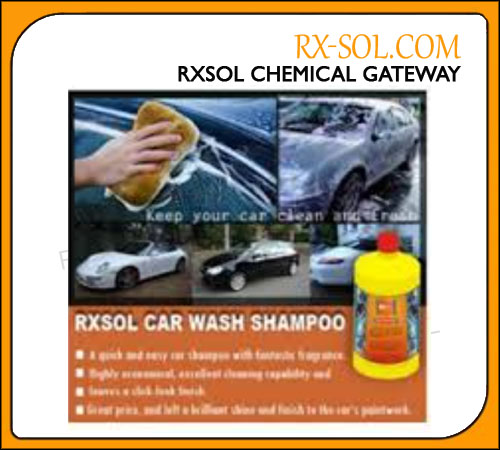
Car Shampoo
Part No: RXSOL-12-4102-020
Aminoethoxyvinylglycine (AVG) is a plant regulator
Aminoethoxyvinylglycine (AVG) is a plant regulator used on apples, pears, and ornamentals. In apples, it may delay fruit maturity, leading to benefits such as a reduction in pre-harvest fruit drop and improved fruit quality. In pears, AVG may help maintain fruit firmness.
Application
The aim of this study was to determine effects of postharvest aminoethoxyvinylglycine(AVG) treatment using vacuum infiltration method on retardation of ripening, storage and shelf life of Tomato Fruit.
Dosage
Aminoethoxyvinylglycine (AVG), also known as ReTain, is a plant growth regulator that inhibits ethylene production, which can be applied to plants in various ways. It can be sprayed on the foliage of trees, especially before harvest, to reduce fruit drop and delay ripening. AVG can also be applied to the soil, particularly around the base of plants, to affect root development and overall growth. Specific application methods, including concentrations and timing, depend on the target crop and desired effect.
MSDS

| Product Name | Amino ethoxy vinyl glycine |
| Part Number | RXSOL-60-6022-001 |
Company Details:
RX MARINE INTERNATIONAL
105, A wing , BSEL , TECH PARK.
VASHI ,NEW BOMBAY 400703 INDIA
Branch : Kandla, Mumbai , Chennai, Vizag, Kolkata, UAE , OMAN , CANADA and KENYA
| Phone | +91 22 20871200 - 1400 |
| Fax | +91 22 27612100 :::AOH :0091 9821214367 |
| mail @ rxmarine.com | |
| Website | www.rxmraine.com |

| Chemical Name | CAS No | EC number | Weight | Formula |
| Amino ethoxy vinyl glycine | 55720-26-8 | 620-948-4 |
196.6 g/mol |
C6H12N2O3 • HCl |

| Signal Word |
Danger. |
| Hazard Statements |
H302 Harmful if swallowed. H315 Causes skin irritation. H318 Causes serious eye damage. H335 May cause respiratory irritation. |
| Precautionary statements response |
P261 Avoid breathing dust/fume/gas/mist/vapors/spray P264 Wash thoroughly after handling. P270 Do not eat, drink or smoke when using this product. P271 Use only outdoors or in a well-ventilated area. P280 Wear eye protection / face protection. P301+P312 If swallowed: Call a poison center/doctor if you feel unwell. P302+P352 If on skin: Wash with plenty of water. P304+P340 IF INHALED: Remove person to fresh air and keep comfortable for breathing. P305+P351+P338 If in eyes: Rinse cautiously with water for several minutes. Remove contact lenses, if present and easy to do. Continue rinsing. P310 Immediately call a poison center/doctor. P321 Specific treatment (see on this label). P330 Rinse mouth. P362+P364 Take off contaminated clothing and wash it before reuse. P332+P313 If skin irritation occurs: Get medical advice/attention. P403+P233 Store in a well-ventilated place. Keep container tightly closed. P405 Store locked up. P501 Dispose of contents/container in accordance with local/regional/national/international regulations. |

| General advice | Symptoms of poisoning may even occur after several hours; therefore medical observation for at least 48 hours after the accident. |
| If inhaled | In case of unconsciousness place patient stably in side position for transportation. |
| Eye Contact | Rinse opened eye for several minutes under running water. Then consult a doctor. |
| Swallowed | Immediately call a doctor. |
| Skin Contact | Immediately wash with water and soap and rinse thoroughly. |
| Most important symptoms and effects, both acute and delayed | No further relevant information available. |
| Indication of any immediate medical attention and special treatment needed | No further relevant information available. |

| Suitable extinguishing media | Use fire fighting measures that suit the environment. A solid water stream may be inefficient. |
| Unsuitable extinguishing media | No data available. |
| Special hazards arising from the substance or mixture | No further relevant information available |
| Hazardous combustion products | No data available. |
| Advice for firefighters | No special measures required. |
| Specific Hazards Arising from the Chemical | No data available. |

| Personal precautions, protective equipment and emergency procedures | Wear protective equipment. Keep unprotected persons away. |
| Enviromental Precaution | Do not allow to enter sewers/ surface or ground water |
| Methods and materials for containment and cleaning | Use neutralizing agent. Dispose contaminated material as waste according to section 13. Ensure adequate ventilation. |

| Advice on safe handling | Thorough dedusting. |
| Advice on protection against fire and explosion | No special measures required. |
| Precautions for safe handling | For precautions see section 2.2. |
| Conditions for safe storage, including any incompatibilities | Keep container tightly closed. Store in accordance with information listed on the product insert |
| Storage conditions | Store in accordance with information listed on the product insert |
| Specific end use(s) | No further relevant information available. |

|
Personal protective equipment General protective and hygienic measures |
Keep away from foodstuffs, beverages and feed. Immediately remove all soiled and contaminated clothing. Wash hands before breaks and at the end of work. Avoid contact with the skin. Avoid contact with the eyes and skin. |
| Eye/face protection | Tightly sealed goggles |
| Body Protection | The selection of the suitable gloves does not only depend on the material, but also on further marks of quality and varies from manufacturer to manufacturer. Complete suit protecting against chemicals. The type of protective equipment must be selected according to the concentration and amount of the dangerous substance at the specific workplace. |
| Skin protection | The exact break through time has to be found out by the manufacturer of the protective gloves and has to be observed. |
| Respiratory protection | Where risk assessment shows air purifying respirators are appropriate use a full face respirator with multi-purpose combination (US) or type ABEK (EN 14387) respirator cartridges as a backup to engineering controls. If the respirator is the sole means of protection, use a full face supplied air respirator. Use respirators and components tested and approved under appropriate government standards such as NIOSH (US) or CEN (EU). |

| Physical state | Solid |
| Colour | Not determined |
| Odour | Characteristic |
| Odor Threshold | Not Applicable |
| pH | No data available |
| Melting Point | No Data Available |
| Boiling Point | No Data Available |
| Flash Point | No Data Available |
| Evaporation Rate | Not Applicable |
| Flammability (solid, gas) | Product is not flammable. |
| Explosive limits | No Data Available |
| Upper/lower flammability or explosive limits | No data available |
| Autoignition temperature | No Data Available |
| Decomposition temperature | No data available |
| Vapour pressure | No data available |
| Density | No Data Available |
| Vapour Density | No Data Available |
| Freezing point | No data available |
| Specific Gravity | No data available |
| Partition coefficient | No data available |
| Explosive properties | No data available |
| Solubility | 10 mg/ml |
| Relative density | No Data Available |
| Ignition temperature | No information available. |
| Particle characteristics | No data available |
| Viscosity | No data available |

| Reactivity | No data available |
| Stability | Stable under recommended storage conditions. |
| Possibility of hazardous reactions | No dangerous reactions known |
| Conditions to avoid | No decomposition if used according to specifications |
| Incompatible materials | strong oxidizing agents |
| Hazardous decomposition products | carbon oxides, nitrogen oxides |

| Acute toxicity | Oral LD50 500 mg/kg (mouse) 5,000 mg/kg (rat) |
| Skin corrosion/irritation | Irritant to skin and mucous membranes |
| Respiratory or skin sensitization | No sensitizing effects known. |
| Serious eye damage/eye irritation | Strong irritant with the danger of severe eye injury. |
| Germ cell mutagenicity | No data available |
| Specific target organ toxicity - single exposure | The substance or mixture is classified as specific target organ toxicant, single exposure, category 3 with respiratory tract irritation. |
| Specific Target Organ Toxicity – Repeated Exposure | No data available |
| Aspiration Hazard | May be fatal if swallowed and enters the airways. |

| Persistence and degradability | No further relevant information available |
| Bioaccumulative potential | No further relevant information available |
| Toxicity | No further relevant information available |
| Mobility | No further relevant information available |
| Results of PBT and vPvB assessment | PBT/vPvB assessment not available as chemical safety assessment not required/not conducted. |
| Other adverse effects | No further relevant information available. |

| Waste treatment methods | Must not be disposed of together with household garbage. Do not allow product to reach sewage system. |
| Contaminated packaging | Disposal must be made according to official regulations. |

| UN number | not regulated |
| UN proper shipping name |
not regulated |
| Transport hazard class(es) | not regulated |
| Packaging group | not regulated |
| Environmental hazards | not regulated |
| Special precautions for user | not regulated |
| Further information | not regulated |

| Safety, health and environmental regulations specific for the product in question | This material safety data sheet complies with the requirements of Regulation (EC) No. 1907/2006. |
| Other regulations | No data available |
| Chemical Safety Assessment | For this product a chemical safety assessment was not carried out. |

| Other Information |
The information above is believed to be accurate and represents the best information currently available to us. However, we make no warranty of merchant ability or any other warranty, express or implied, with respect to such information, and we assume no liability resulting from its use. Users should make their own investigations to determine the suitability of the information for their particular purposes. In no event shall be liable for any claims, losses, or damages of any third party or for lost profits or any special, indirect, incidental, consequential or exemplary damages, how so ever arising, even if Rx Marine International has been advised of the possibility of such damages. |