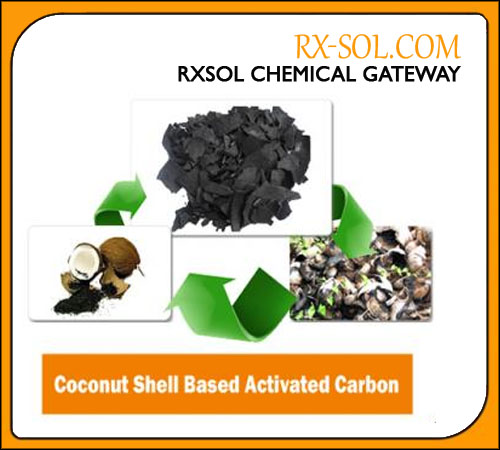
Coconut Shell Based Activated Carbon
Part No: RXSOL-32-3107-030
No oxygen is entering the boiler with the feed water when hydrazine is present in the water ( This will help to decrease oxygen on HP, LP boiler )
Carbohydrazide in BOILER means no oxygen is entering the boiler Carbohydrazide will help to Decrease oxygen on HP, LP boiler. Carbohydrazid also called Carbodihydrazide, is a high performance oxygen scavenger which can be used in all types of boilers. Carbohydrazide is a white, water-soluble solid that decomposes upon melting point around 153°C.
Application
Carbohydrazide can be used as oxygen scrubber as direct replacement for Hydrazine in any boiler without the associated safety hazards and handling precautions. The product is based on volatile chemistry and so leaves no dissolved solids and minimal ammonia to the boiler system.
Dosage
Carbohydrazide does provide outstanding protection from oxygen corrosion together with excellent feed water and boiler system passivation. Carbohydrazide reacts directly with oxygen. It helps prevent oxygen damage and continues to passivate metal surfaces during wet lay-up. Carbohydrazide can also be used as a curing agent for epoxide-type resins.
Technical Specification
Physical properties :::
Carbohydrazide the Hydrazide of carbonic acid
| Molecular formula: | OC(N₂H₃)₂ |
| CAS No.: | |
| Molecular weight: | 90.09 |
| Description: | White Solid |
| odor: | Characteristic Smell |
| Density: | 1.34 (25/4°C) |
| Solubility: | Soluble in Water, Ethanol |
| vapor density: | 1.04 (air = 1) |
| vapor pressure: |
14.4 mm Hg at 25°C |
MSDS

| Product Name | Oxygen Scavenger Carbohydrazide |
| Part Number | RXSOL-42-2541-210 |
Company Details:
RX MARINE INTERNATIONAL
105, A wing , BSEL , TECH PARK.
VASHI ,NEW BOMBAY 400703 INDIA
Branch : Kandla, Mumbai , Chennai, Vizag, Kolkata, UAE , OMAN , CANADA and KENYA
| Phone | +91 22 20871200 - 1400 |
| Fax | +91 22 27612100 :::AOH :0091 9821214367 |
| mail @ rxmarine.com | |
| Website | www.rxmraine.com |

Substances
| Formula | CH6N4O |
| Molecular weight | 90,08 g/mol |
| CAS-No. | 497-18-7 |
| EC-No. | 207-837-2 |
| Component | Classification | Concentration |
| 1,3-diaminourea | ||
|
CAS-No. 497-18-7
EC-No. 207-837-2
|
Acute Tox. 4; Skin Irrit. 2;
Skin Sens. 1; Aquatic
Chronic 2; H302, H315,
H317, H411
|
<= 100 % |

Classification of the substance or mixture
| Classification according to Regulation (EC) No 1272/2008 |
Acute toxicity, Oral (Category 4), H302
Skin irritation (Category 2), H315
Skin sensitization (Category 1), H317
Long-term (chronic) aquatic hazard (Category 2), H411
For the full text of the H-Statements mentioned in this Section, see Section 16.
|
Label elements
| Signal Word | Warning |
| Hazard statement(s) |
H302 Harmful if swallowed.
H315 Causes skin irritation.
H317 May cause an allergic skin reaction.
H411 Toxic to aquatic life with long lasting effects.
|
| Precautionary statement(s) |
P273 Avoid release to the environment.
P280 Wear protective gloves.
P301 + P312 + P330 IF SWALLOWED: Call a POISON CENTER/ doctor if you feel unwell. Rinse mouth.
P302 + P352 IF ON SKIN: Wash with plenty of water.
|
| Supplemental Hazard information (EU) | EUH044 Risk of explosion if heated under confinement. |
| Reduced Labeling (<= 125 ml) | |
| Signal Word | Warning |
| Hazard Statements(s) | H317 May cause an allergic skin reaction. |
| Precautionary Statements(s) |
P280 Wear protective gloves.
P302 + P352 IF ON SKIN: Wash with plenty of water.
|
| Supplemental Hazard information (EU) | EUH044 Risk of explosion if heated under confinement. |
| Other hazards | This substance/mixture contains no components considered to be either persistent, bioaccumulative and toxic (PBT), or very persistent and very bioaccumulative (vPvB) at levels of 0.1% or higher. |

| General Advice | Consult a physician. Show this material safety data sheet to the doctor in attendance. |
| If inhaled | If breathed in, move person into fresh air. If not breathing, give artificial respiration. Consult a physician. |
| In case of skin contact | Wash off with soap and plenty of water. Consult a physician. |
| In case of eye contact | Flush eyes with water as a precaution. |
| If swallowed | Never give anything by mouth to an unconscious person. Rinse mouth with water. Consult a physician. |
| Most important symptoms and effects, both acute and delayed | The most important known symptoms and effects are described in the labelling (see section 2.2) and/or in section 11 |
| Indication of any immediate medical attention and special treatment needed | No data available |

| Suitable extinguishing media | Use water spray, alcohol-resistant foam, dry chemical or carbon dioxide. |
| Special hazards arising from the substance or mixture |
Carbon oxides
Nitrogen oxides (NOx)
|
| Advice for firefighters | Wear self-contained breathing apparatus for firefighting if necessary. |
| Further information | No data available |

| Personal precautions, protective equipment and emergency procedures |
Use personal protective equipment. Avoid dust formation. Avoid breathing vapors, mist or gas. Ensure adequate ventilation. Avoid breathing dust.
For personal protection see section 8.
|
| Environmental precautions | Prevent further leakage or spillage if safe to do so. Do not let product enter drains. Discharge into the environment must be avoided. |
| Methods and material for containment and cleaning up | Pick up and arrange disposal without creating dust. Sweep up and shovel. Keep in suitable, closed containers for disposal. |
| Reference to other sections | For disposal see section 13. |

Precautions for safe handling
| Advice on safe handling | Avoid contact with skin and eyes. Avoid formation of dust and aerosols. |
| Advice on protection against fire and explosion | Provide appropriate exhaust ventilation at places where dust is formed. |
| Hygiene measures |
Handle in accordance with good industrial hygiene and safety practice. Wash hands before breaks and at the end of workday.
For precautions see section 2.2.
|
| Conditions for safe storage, including any incompatibilities |
|
| Storage conditions | Keep container tightly closed in a dry and well-ventilated place. Store in cool place. |
| Storage class | Storage class (TRGS 510): 11: Combustible Solids |
| Specific end use(s) | Apart from the uses mentioned in section 1.2 no other specific uses are stipulated |

| Eye/face protection | Face shield and safety glasses Use equipment for eye protection tested and approved under appropriate government standards such as NIOSH (US) or EN 166(EU). |
| Skin protection |
Handle with gloves. Gloves must be inspected prior to use. Use proper glove removal technique (without touching glove's outer surface) to avoid skin contact with this product. Dispose of contaminated gloves after use in accordance with applicable laws and good laboratory practices. Wash and dry hands.
The selected protective gloves have to satisfy the specifications of Regulation (EU) 2016/425 and the standard EN 374 derived from it.
|
| Body Protection |
Complete suit protecting against chemicals, The type of protective equipment must be selected according to the concentration and amount of the dangerous substance at the specific workplace.
|
| Respiratory protection | For nuisance exposures use type P95 (US) or type P1 (EU EN 143) particle respirator.For higher level protection use type OV/AG/P99 (US) or type ABEK-P2 (EU EN 143) respirator cartridges. Use respirators and components tested and approved under appropriate government standards such as NIOSH (US) or CEN (EU). |
| Control of environmental exposure | Prevent further leakage or spillage if safe to do so. Do not let product enter drains. Discharge into the environment must be avoided. |

| Physical state | Crystalline |
| Color | White |
| Odor | Odorless |
| Melting point/freezing point | Melting point/range: 150 - 153 °C - lit. |
| Initial boiling point and boiling range | No data available |
| Flammability (solid, gas) | No data available |
|
Upper/lower
flammability or
explosive limits
|
No data available |
| Flash point | No data available |
| Autoignition temperature | No data available |
| Decomposition temperature | No data available |
| pH | 6,7 - 8,3 |
| Viscosity |
Viscosity, kinematic: No data available
Viscosity, dynamic: No data available
|
| Water solubility |
Soluble
|
| Partition coefficient: n-octanol/water | No data available |
| Vapor pressure | 16 hPa at 20 °C |
| Density | 1,020 g/cm3 at 20 °C |
| Relative density | No data available |
| Relative vapor density | No data available |
| Particle characteristics | No data available |
| Explosive properties | No data available |
| Oxidizing properties | No data available |
| Other safety information | No data available |

| Reactivity |
No data available
|
| Chemical stability | Stable under recommended storage conditions. |
| Possibility of hazardous reactions | No data available |
| Conditions to avoid | No data available |
| Incompatible materials | Strong oxidizing agents, Strong acids, Copper, Zinc, Nickel, Lead, Brass |
| Hazardous decomposition products | In the event of fire: see section 5 |

| Acute toxicity |
LD50 Oral - Rat - female - 311 mg/kg
Acute toxicity estimate Oral - 311 mg/kg
(Calculation method)
Inhalation: No data available
Dermal: No data available
|
| Skin corrosion/irritation | Remarks: No data available |
| Serious eye damage/eye irritation | No data available |
| Respiratory or skin sensitization | No data available |
| Germ cell mutagenicity |
Result: negative
Remarks: Histidine reversion (Ames)
|
| Carcinogenicity | No data available |
| Reproductive toxicity |
No data available
|
| Specific target organ toxicity - single exposure | No data available |
| Specific target organ toxicity - repeated exposure | No data available |
| Aspiration hazard | No data available |
| Additional Information |
RTECS: FF2625000
To the best of our knowledge, the chemical, physical, and toxicological properties have not been thoroughly investigated.
|

| Toxicity | |
| Toxicity to fish |
LC50 - Lepomis macrochirus (Bluegill) - 190,0 mg/l - 96,0 h
|
| Toxicity to daphnia and other aquatic invertebrates | LC50 - Daphnia magna (Water flea) - 96 mg/l - 48 h |
| Toxicity to algae |
EC50 - Desmodesmus subspicatus (green algae) - 9,5 mg/l - 72 h
|
| Persistence and degradability | |
| Biodegradability | Result: - Not readily biodegradable. |
| Bioaccumulative potential | No data available |
| Mobility in soil | No data available |
| Results of PBT and vPvB assessment | This substance/mixture contains no components considered to be either persistent, bioaccumulative and toxic (PBT), or very persistent and very bioaccumulative (vPvB) at levels of 0.1% or higher. |
| Endocrine disrupting properties Product | No data available |
| Other adverse effects | Toxic to aquatic life with long lasting effects. |

Waste treatment methods
| Product | Offer surplus and non-recyclable solutions to a licensed disposal company. Dissolve or mix the material with a combustible solvent and burn in a chemical incinerator equipped with an afterburner and scrubber. Waste material must be disposed of in accordance with the Directive on waste 2008/98/EC as well as other national and local regulations. Leave chemicals in original containers. No mixing with other waste. Handle uncleaned containers like the product itself. |
| Contaminated packaging | Dispose of as unused product. |

| UN number | ADR/RID: 3077 IMDG: 3077 IATA: 3077 |
| UN proper shipping name |
ADR/RID: ENVIRONMENTALLY HAZARDOUS SUBSTANCE, SOLID, N.O.S. (1,3-diaminourea)
IMDG: ENVIRONMENTALLY HAZARDOUS SUBSTANCE, SOLID, N.O.S. (1,3-diaminourea)
IATA: Environmentally hazardous substance, solid, n.o.s. (1,3-diaminourea)
|
| Transport hazard class(es) | ADR/RID: 9 IMDG: 9 IATA: 9 |
| Packaging group | ADR/RID: III IMDG: III IATA: III |
| Environmental hazards | ADR/RID: yes IMDG Marine pollutant: yes IATA: yes |
| Further information | EHS-Mark required (ADR 2.2.9.1.10, IMDG code 2.10.3) for single packagings and combination packagings containing inner packagings with Dangerous Goods > 5L for liquids or > 5kg for solids.Packages smaller than or equal to 5 kg / L , not dangerous goods of Class 9 |

| Safety, health and environmental regulations/legislation specific for the substance or mixture | This material safety data sheet complies with the requirements of Regulation (EC) No. 1907/2006. |
|
National legislation
Seveso III: Directive 2012/18/EU of the European
Parliament and of the Council on the control of
major-accident hazards involving dangerous
substances.
|
ENVIRONMENTAL HAZARDS |
| Chemical Safety Assessment | For this product a chemical safety assessment was not carried out |

| Other Information |
The information above is believed to be accurate and represents the best information currently available to us. However, we make no warranty of merchantability or any other warranty, express or implied, with respect to such information, and weassume no liability resulting from its use. Users should make their own investigations to determine the suitability of the information for their particular purposes. In no event shall be liable for any claims, losses, or damages of any third party or for lost profits or any special, indirect, incidental, consequential or exemplary damages, howsoever arising, even if Rx Marine International has been advised of the possibility of such damages. |