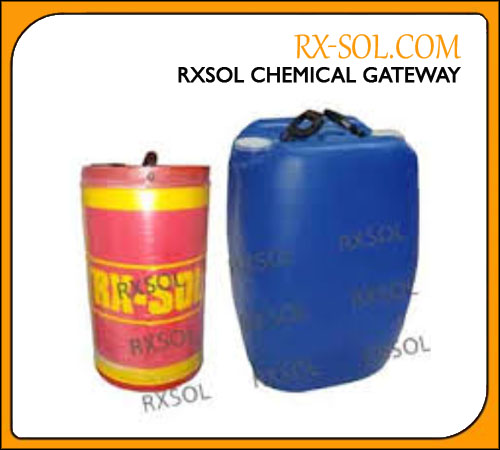
Concrobium Mold Stain Remover (Part 1)
Part No: RXSOL-41-8721-025
Biocide
BIOCIDE 6111 is a broad-spectrum, non-oxidizing biocide approved for use in recirculating cooling towers, closed loop cooling systems, air washers and brewery pasteurizers.
BIOCIDE 6111 is a powerful microbiocide which will control a wide range of troublesome microbes in both open and closed water systems.
Application
Biocide can be used to control sulfate-reducing bacteria, slime-forming bacteria
BIOCIDE 6111 can be used in industrial process water systems for the control of microbial and algae growth. Examples of these systems include but are not limited to: Air Washer Systems, Recirculating Closed Cooling Water Systems, Process Water Systems, Brewery Pasteurizers, Dairy Sweetwater Systems, Hydrostatic Sterilizers, Packaging Pasteurizers, and other industrial process water systems.
Dosage
DOSAGE AND FEEDING BIOCIDE 6111 should be fed via a closed feed system (a closed feed system being defined as a system in which fluid is moved from a closed storage vessel into a treated media without exposure to the atmosphere). For complete dosage and feeding recommendations, consult your RXSOL sales engineer.
For typical microbiological control, use BIOCIDE 6111 at a concentration of 5 to 25 ppm based on the total system volume. Higher or lower dosages may be required depending on the specific system conditions.
AIR WASHER SYSTEMS
For use in industrial air washer systems, add BIOCIDE 6111 for Air Washer Systems at the makeup to the air washer sump or chill water sump. For continuous or intermittent use, treat with 10 to 100 ppm of this product depending on the severity of the microbial contamination and the frequency of treatment. Maintain 1 to 5 ppm of active bromine residual.
OIL AND GAS
This water-based, non-oxidising biocide is used to control bacteria, fungi and algae in oil and gas production and processing water systems, including produced water circuits, injection water systems, cooling and utility water loops, and hydrotest water. Dose the product at a point of good circulation to ensure uniform mixing. Typical treatment rates are 10–200 ppm of product depending on contamination level, system volume and retention time. For heavily contaminated systems, apply an initial shock dose followed by a maintenance programme to prevent biofouling, MIC (microbiologically influenced corrosion), slime formation and plugging of pipelines, heat exchangers and filters. Adjust dosage based on on-site microbiological monitoring and operational conditions.
HEAT TRANSFER SYSTEMS
Recirculating and One-Pass Cooling Water Systems: Add BIOCIDE 6111 for Heat Transfer Systems directly to the cooling water system at a point of uniform mixing, such as the basin area, the sump area of the cooling tower, or other reservoir. Depending on the severity of the problem, a dosage of 10 to 200 ppm of this product (based on total water volume) may be needed. Maintain 1 to 5 ppm of active bromine residual.
FOR PULP AND PAPER MILLS
BIOCIDE 6111 for Pulp and Paper Mills is effective in controlling slime-forming bacteria, fungi, and algae in pulp and paper mill process waters. Add BIOCIDE 6111 directly to the system at a point of uniform mixing. Initial doses of 10 to 100 ppm based on the weight of water in the system should be added as required to maintain control. Repeat treatment as necessary.
FOR WASTEWATER TREATMENT SYSTEMS
BIOCIDE 6111 for Waste Water Treatment Systems is used to control microbial growth in wastewater treatment systems, including sewage systems. Add BIOCIDE 6111 at a point in the system where uniform mixing will occur. The dosage will depend on the severity of the contamination but is typically 10 to 100 ppm. Repeat treatment as necessary to maintain microbial control.
FOR SHELL EGG PASTEURIZER
For use in controlling bacteria and fungi in shell egg pasteurizing operations, add BIOCIDE 6111 for Shell Egg Pasteurizer directly to the water in the pasteurizer at a point of uniform mixing. Apply at a concentration of 5 to 10 ppm based on the total water volume. Maintain a residual of 1 to 5 ppm of active bromine during operation. Adjust dosage as needed to maintain control and follow all local, state, and federal regulations.
Technical Specification
Biocide 6111 must be applied according to appropriate national and local regulations. Biocide 6111 is registered for use in the United States. As with all biocides applied in the United States, Biocide 6111 is regulated by the U.S. EPA under the Federal Insecticide, Fungicide and Rodenticide Act (FIFRA). It is a violation of federal law to use this product or any biocide in a manner inconsistent with its product label. U.S. EPA Registration Number 1706-153 is approval forBiocide 6111 use in: Industrial Cooling Tower Systems and Process Water Systems Industrial Recirculating Closed Loop Water Cooling Systems Air Washer Systems and Brewery Pasteurizers Pulp and paper mill influent water systems (but note this use is not currently authorized in California) Biocide 6111 is registered for use in Canada. The federal legislative authority for the regulation of pesticides in Canada is the Pest Control Products Act. As with all biocides applied in Canada, the use of Biocide 6111 is subject to Federal regulation and regulation under provincial/territorial authority. The Pest Management Regulatory Agency (PMRA) administers the Pest Control Products Act (PCPA) for the federal Minister of Health. Canadian PCPA Registration Number 17338 is approval for Biocide 6111 use in: Industrial Recirculating Cooling Water Systems Industrial Process Water Systems. This control product is to be used only in accordance with the directions on the product label. It is an offense under the Pest Control Products Act to use a control product under unsafe conditions. Please refer to the product label (U.S. or Canadian) for specific directions of use (including initial dosage and subsequent dosages, and other detailed, product-specific information ). Product labels can be accessed in theRXSOL EH&S (Environmental Health and Safety) database. Refer to the Material Safety Data Sheet (MSDS), SECTION 15 for the most recent information on approvals.
MSDS

| Product Name | BIOCIDE 6111 |
| Part Number | RXSOL-81-8192-105 |
Company Details:
RX MARINE INTERNATIONAL
105, A wing , BSEL , TECH PARK.
VASHI ,NEW BOMBAY 400703 INDIA
Stock Point ::: Mumbai, Kandla, Kolkata, Chennai, Vizag, Fujairah, Muscat, Nairobi
| Phone | +91 22 65113333 / 5555 / 9999 |
| Fax | +91 22 2781 1318 :::AOH :0091 9821214367 |
| 123 @ rxmarine.com | |
| Website | www.rxmarine.com |

| Name of Substance | Cas Number | Weight Percentage |
| Glutraldehyde | 111-30-8 | 20-30% |
| 2-methyl-4-isothiazolin-3-one | 1003-07-2 | 10-15% |
| Non Hazardous Proprietory Ingredient including stabilizing agents | Proprietory | 75 to 85 |

| Signal Word | Warning |
| Hazard Statements |
H302 + H332 Harmful if swallowed or if inhaled. H314 Causes severe skin burns and eye damage. H317 May cause an allergic skin reaction. H334 May cause allergy or asthma symptoms or breathing difficulties if inhaled. H335 May cause respiratory irritation. H410 Very toxic to aquatic life with long lasting effects. EUH071 Corrosive to the respiratory tract |
| Precautionary statements - prevention |
P273 Avoid release to the environment. P280 Wear protective gloves/ protective clothing/ eye protection/ face protection. |
| Precautionary statements - response |
P301 + P330 + P331 IF SWALLOWED: Rinse mouth. Do NOT induce vomiting. P302 + P352 IF ON SKIN: Wash with plenty of soap and water. P304 + P340 IF INHALED: Remove victim to fresh air and keep at rest in a position comfortable for breathing. P305 + P351 + P338 IF IN EYES: Rinse cautiously with water for several minutes. Remove contact lenses, if present and easy to do. Continue rinsing. P308 + P310 IF exposed or concerned: immediately call a POISON CENTER or doctor/ physician. |

| Eye Contact | Check for and remove any contact lenses. In case of contact, immediately flush eyes with plenty of water for at least 15 minutes. Cold water may be used. Get medical attention immediately. |
| Skin Contact | In case of contact, immediately flush skin with plenty of water. Cover the irritated skin with an emollient. Remove contaminated clothing and shoes. Cold water may be used.Wash clothing before reuse. Thoroughly clean shoes before reuse. Get medical attention. |
| Inhalation: | Move to fresh air. If breathing is difficult, give oxygen. Get medical attention immediately if symptoms occur. |
| Ingestion: | Do not induce vomiting. Obtain medical attention.If vomiting occurs, lean patient forward or place on left side (head-down position, if possible) to maintain open airway and prevent aspiration. |
| Notes to Physician | Treat symptomatically |

| Flammability | Non-Flammable. |
| Flash Point | Not Applicable. |
| Suitable extinguishing media | No Information Available |
|
Hazardous combustion products |
When Heated to decomposition, it emits acrid smoke and fumes. |
| Protective Equipment | Use personal protective equipment. |
| Specific Hazards Arising from the Chemical | Not considered to be a significant fire risk. |

| Small Spillage | Use appropriate tools to put the spilled solid in a convenient waste disposal container. Finish cleaning by spreading water on the contaminated surface and dispose of according to local and regional authority requirements |
| Personal Protection | Advice for non-emergency personnel: Avoid inhalation of dusts. Evacuate the danger area, observe emergency procedures, consult an expert. Advice for emergency responders: Protective equipment see section 8. |
| Enviromental Precaution | Do not let product enter drains. |
|
Methods and materials for containment and cleaning |
Cover drains. Collect, bind, and pump off spills. Observe possible material restrictions (see sections 7 and 10). Take up dry. Dispose of properly. Clean up affected area. Avoid generation of dusts |

| Handling | Do not ingest. Do not breathe dust. Avoid contact with eyes. Wear suitable protective clothing. In case of insufficient ventilation, wear suitable respiratory equipment. If ingested, seek medical advice immediately and show the container or the label. Keep away from incompatibles such as oxidizing agents, acids. |
| Storage | Light Sensitive. Refrigerate. Store in light-resistant containers. Keep containers tightly closed. Keep containers in a cool, wellventilated area.Packing : Only packagings which are approved (e.g. acc. to ADR) may be used. |
| Advice on general occupational hygiene | Advice on safe handling Observe label precautions. Change contaminated clothing. Wash hands after working with substance. |

| Engineering Control | Provide exhaust ventilation or other engineering controls to keep the airborne concentrations of vapors below their respective threshold limit value. Ensure that eyewash stations and safety showers are proximal to the work-station location. |
| Personal Protection |
Eye/face Protection : Wear appropriate protective eyeglasses or chemical safety goggles as described by OSHA's eye and face protection regulations in 29 CFR 1910.133 or European Standard EN166. Skin and body protection : Wear appropriate protective gloves and clothing to prevent skin exposure. Respiratory Protection : Follow the OSHA respirator regulations found in 29 CFR 1910.134 or European Standard EN 149. Use a NIOSH/MSHA or European Standard EN 149 approved respirator exposure limits are exceeded or if irritation or other symptoms are experienced. |
| Other Protection Measure | Handle in accordance with good industrial hygiene and safety practice. |
| Exposure Limit | Glutaraldehyde TWA: 0.2 (ppm) [Australia] TWA: 0.75 (mg/m3) [Australia] TWA: 0.25 CEIL: 0.2 (ppm) from NIOSH CEIL: 0.2 (ppm) from OSHA (PEL) [United States] TWA: 0.05 STEL: 0.05 (ppm) [United Kingdom (UK)] Consult local authorities for acceptable exposure limits. |


Gloves Suit

| Form | Liquid |
| Colour | Clear |
| Odour | Pungent |
| Odor Threshold | No Information Available |
| pH | 3-5 |
| Freezing Point | -7 °C |
| Boiling Point | 101°C |
| Flash Point | None ASTM D 56 |
| Evaporation Rate | 0.8 Calculated. |
| Flammability (solid, gas) | No Data Available |
| Explosive limits | No Data Available |
| Vapour pressure | 21 hPa at 20 °C |
| Vapour Density | >1.1 |
| Relative density Information | 1.05-1.10 at 25 °C |
| Partition coefficient | No data available |
| Explosive properties | None |
| Solubility | Soluble in water |
| Ignition temperature | 275 °C |

| Recativity | Forms explosive mixtures with air on intense heating. |
| Stability | Product is stable. |
| Possibility of hazardous reactions |
Violent reactions possible with:Amines, Strong oxidizing agents Violent polymerisation may be caused by: Strong bases, Strong acids |
| Conditions to avoid | Strong Heating |
| Incompatible materials | Aluminium, various metals, Mild steel |
| Hazardous Polymerization | Hazardous polymerization does not occur. |

| Rout Of Entry | Absorbed through skin. Eye contact. Inhalation. Ingestion. |
| Toxicity to Animal | WARNING: THE LC50 VALUES HEREUNDER ARE ESTIMATED ON THE BASIS OF A 4-HOUR EXPOSURE. Acute oral toxicity (LD50): 100 mg/kg [Mouse]. Acute dermal toxicity (LD50): >2500 mg/kg [Rat]. Acute toxicity of the vapor (LC50): 480 mg/m 4 hours [Rat]. 3 |
| Toxic Effects on Humans |
CARCINOGENIC EFFECTS: Classified A4 (Not classifiable for human or animal.) by ACGIH [Glutaraldehyde]. MUTAGENIC EFFECTS: Mutagenic for mammalian somatic cells. [Glutaraldehyde]. Mutagenic for bacteria and/or yeast. [Glutaraldehyde]. DEVELOPMENTAL TOXICITY: Classified Reproductive system/toxin/female, Reproductive system/toxin/male SUSPECTED [Glutaraldehyde]. Contains material which may cause damage to the following organs: blood, the reproductive system, liver, mucous membranes, spleen, central nervous system (CNS), Urinary system. |
| Special Remarks on other Toxic Effects on Humans: |
Potential Health Effects: Eye: Causes severe eye irritation. May cause eye injury or chemical conjunctivitis. Skin: Causes moderate to severe skin irritation. It may be absorbed through the skin, although poorly. May cause allergic contact dermatitis with itching and skin rash. May cause staining of the skin and nails to a brown or golden brown color. Ingestion: Harmful if swallowed. May cause severe irritation of the digestive tract with burning sensation in the chest, abdominal pain, cramping, vomiting, diarrhea (perhaps bloody diarrhea), vascular collapse, and coma. May also affect liver (increased liver enzymes, liver damage), spleen, blood (normocytic anemia), metabolism (weight loss), behavior (somnolence, excitement, dizziness, lethargy, ataxia, seizures), metabolism (weight loss), urinary system ( abnormal reneal function, anuria) Inhalation: Harmful if inhaled. Can cause respiratory tract irritation and sudden headaches. |

| Eco Toxicity | Not Available |
| COD and BOD 5 | Not Available |
| Products of Biodegradation: | No Information available |
| Mobility in soil | No Information available |
| Results of PBT and vPvB assessment | Substance(s) in the mixture do(es) not meet the criteria for PBT or vPvB according to Regulation (EC) No 1907/2006, Annex XIII, or a PBT/vPvB assessment was not conducted.. |
| Other adverse effects | Discharge into the environment must be avoided. |

| Waste Treatment Method | Waste material must be disposed of in accordance with the national and local regulations. Leave chemicals in original containers. No mixing with other waste. Handle uncleaned containers like the product itself |

DOT
| UN Number | UN 3265 |
| Proper shipping name |
CORROSIVE LIQUID, N.O.S. (GLUTARDIALDEHYDE SOLUTION) |
| Hazard Class | 8 |
| Packing group | III |
TDG
| UN Number | UN 3265 |
| Proper shipping name |
CORROSIVE LIQUID, N.O.S. (GLUTARDIALDEHYDE SOLUTION) |
| Hazard Class | 8 |
| Packing group | III |
IATA
| UN Number | UN 3265 |
| Proper shipping name |
CORROSIVE LIQUID, N.O.S. (GLUTARDIALDEHYDE SOLUTION) |
| Hazard Class | 8 |
| Packing group | III |
IMDG/IMO
| UN Number | UN 3265 |
| Proper shipping name |
CORROSIVE LIQUID, N.O.S. (GLUTARDIALDEHYDE SOLUTION) |
| Hazard Class | 8 |
| Packing group | III |

| Fedral and State Regulation | Pennsylvania RTK: Glutaraldehyde Florida: Glutaraldehyde Massachusetts RTK: Glutaraldehyde New Jersey: Glutaraldehyde California Director's list of Hazardous Substances: Glutaraldehyde TSCA 8(b) inventory: Glutaraldehyde; Water TSCA 8(a) PAIR: Glutaraldehyde TSCA 8(d) H and S data reporting: Glutaraldehyde: 9/30/91 to 9/30/01 |
| Other Regulation | OSHA: Hazardous by definition of Hazard Communication Standard (29 CFR 1910.1200). EINECS: This product is on the European Inventory of Existing Commercial Chemical Substances. |
| WHMIS (Canada) | CLASS D-1A: Material causing immediate and serious toxic effects (VERY TOXIC). CLASS D-2B: Material causing other toxic effects (TOXIC). CLASS E: Corrosive liquid. |
| DSCL (EEC) | R36- Irritating to eyes. S2- Keep out of the reach of children. S24/25- Avoid contact with skin and eyes. S46- If swallowed, seek medical advice immediately and show this container or label. |
| HMIS | |
| Health Hazard | : 1 |
| Fire Hazard | : 0 |
| Reactivity | : 0 |
| Personal Protection | : H |
| Fire : | |
| Health Hazard | : 1 |
| Fire Hazard | : 0 |
| Reactivity | : 0 |
| Specific Hazard | : H |

| Other Information |
The information above is believed to be accurate and represents the best information currently available to us. However, we make no warranty of merchantability or any other warranty, express or implied, with respect to such information, and we assume no liability resulting from its use. Users should make their own investigations to determine the suitability of the information for their particular purposes. In no event shall be liable for any claims, losses, or damages of any third party or for lost profits or any special, indirect, incidental, consequential or exemplary damages, howsoever arising, even if RX Marine International has been advised of the possibility of such damages. DISCLAIMER OF LIABILITY :The information in this SDS was obtained from sources which we believe are reliable. However, the information is provided without any warranty, express or implied, regarding its correctness. The conditions or methods of handling, storage, use or disposal of the product are beyond our control and may be beyond our knowledge. For this and other reasons, we do not assume responsibility and expressly disclaim liability for loss, damage or expense arising out of or in any way connected with the handling, storage, use or disposal of the product. This MSDS was prepared and is to be used only for this product. If the product is used as a component in another product, this MSDS information may not be applicable. |