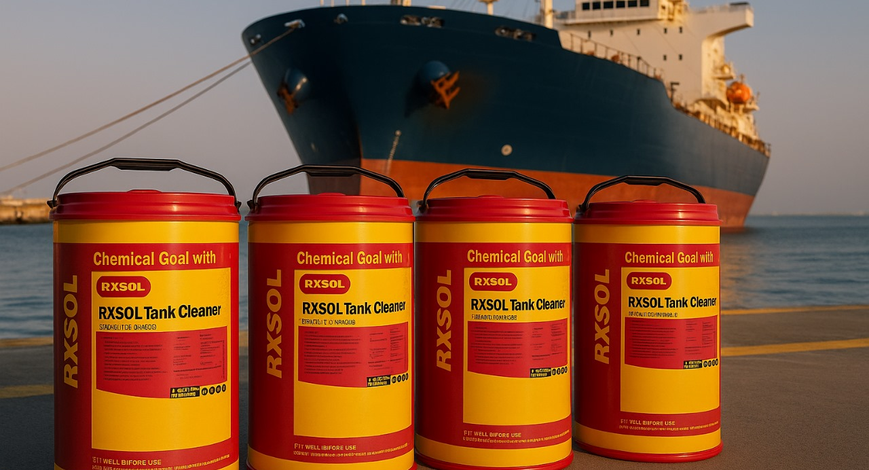
Conductivity Powder
Part No: RXSOL-26-8101-025
Heavy Duty Degreaser, especially developed for Industrial, Marine, and Engine cleaning applications
Solvent Degreaser – Non-Water Soluble
Product Description
Solvent Degreaser is a high-performance, solvent-based cleaning and degreasing agent specially formulated for the removal of heavy oil, grease, fuel residues, lubricants, sludge, carbon deposits and other hydrocarbon-based contaminants from industrial and marine equipment.
Unlike water-soluble degreasers, this product is non-water soluble and works by dissolving and loosening oil-based contamination directly from the surface. It is particularly suitable where a powerful solvent action is required without introducing water during the initial cleaning operation.
The product can be used for cleaning machinery, engines, mechanical components, tanks, pumps, valves, tools, workshop equipment and other oil-contaminated surfaces, subject to material compatibility.
What is a Heavy Duty Degreaser?
A Heavy Duty Degreaser (like RXSOL DEGREASER HD) is a powerful alkaline or solvent-based cleaner formulated to remove - Grease, Oil, Carbon residues, Fuel and tar deposits, Heavy dirt and grime
Heavy Duty Degreaser is Excellent for removal of oil and grease. Not soluble in water in all proportions. It is a unique formulation blended from inorganic, organic compounds and detergents with powerful dispersing agents and aliphatic petroleum distillates. It is non-corrosive to metal like copper, aluminium, mild steel and plastic. It is non-toxic which makes handling easy.
Ideal for use where chlorinated solvents are undesirable or prohibited.
Application
Main Applications
| Application Area | Recommended Use |
|---|---|
| Marine Equipment | Cleaning engines, machinery, pumps, valves and mechanical components |
| Engine Room | Removal of oil, grease and lubricant deposits |
| Machinery & Equipment | Degreasing mechanical parts and equipment |
| Workshops | Cleaning tools, components and workshop surfaces |
| Tanks & Bilges | Removal of oil and hydrocarbon residues, subject to applicable waste-management requirements |
| Pumps & Valves | Removal of accumulated grease, oil and sludge |
| Metal Components | Degreasing before inspection, maintenance or further treatment |
| Industrial Maintenance | Cleaning oil-contaminated machinery and surfaces |
| Automotive / Heavy Equipment | Removal of grease, lubricants and petroleum residues |
Application & Dosage
Because this is a solvent-based, non-water-soluble product, it is generally applied directly rather than diluted with water.
| Cleaning Condition | Recommended Application |
|---|---|
| Light Oil / Grease | Apply directly or use approximately 1 part product : 1 part compatible solvent/carrier, if permitted by the formulation |
| Medium Contamination | Apply product directly and allow 5–15 minutes contact time |
| Heavy Grease / Sludge | Apply generously and allow 10–30 minutes contact time |
| Very Heavy Deposits | Repeat application and agitate with brush or suitable mechanical action |
| Small Components / Parts | Immerse or wipe with the product, where compatible |
| Spray Cleaning | Apply sufficient product to completely wet the contaminated surface |
| Final Cleaning | Wipe or remove dissolved contamination using suitable absorbent material |
Where You Can Use RXSOL Heavy Duty Degreaser: Engine rooms, Ship decks and bilges, Industrial floors, Workshop equipment, Cargo hold cleaning, Oil-stained concrete and machinery
Complete removal of dirt, oil, carbonised grease, heavy oil , gum, vegetable oil, lube oil, soot, asphalt, carbon stains etc. Gives clear finish to the surface. Excellent for use as a wash for fuel tankers & as a liquid steam jenny compound.
Specialized & Treated for the really tough daily cleaning problems faced in the proper Maintenance of Industrial and Institutional physical plants. Can be used as a stripper for all types of waxes and finishes and as a Degreaser where regular cleaners will not perform. May be brushed on, sprayed or used in a dip tank . Excellent for use as a wash for fuel tankers & as a liquid steam jenny compound.
Main Applications
| Application Area | Recommended Use |
|---|---|
| Marine Equipment | Cleaning engines, machinery, pumps, valves and mechanical components |
| Engine Room | Removal of oil, grease and lubricant deposits |
| Machinery & Equipment | Degreasing mechanical parts and equipment |
| Workshops | Cleaning tools, components and workshop surfaces |
| Tanks & Bilges | Removal of oil and hydrocarbon residues, subject to applicable waste-management requirements |
| Pumps & Valves | Removal of accumulated grease, oil and sludge |
| Metal Components | Degreasing before inspection, maintenance or further treatment |
| Industrial Maintenance | Cleaning oil-contaminated machinery and surfaces |
| Automotive / Heavy Equipment | Removal of grease, lubricants and petroleum residues |
Application & Dosage
Because this is a solvent-based, non-water-soluble product, it is generally applied directly rather than diluted with water.
| Cleaning Condition | Recommended Application |
|---|---|
| Light Oil / Grease | Apply directly or use approximately 1 part product : 1 part compatible solvent/carrier, if permitted by the formulation |
| Medium Contamination | Apply product directly and allow 5–15 minutes contact time |
| Heavy Grease / Sludge | Apply generously and allow 10–30 minutes contact time |
| Very Heavy Deposits | Repeat application and agitate with brush or suitable mechanical action |
| Small Components / Parts | Immerse or wipe with the product, where compatible |
| Spray Cleaning | Apply sufficient product to completely wet the contaminated surface |
| Final Cleaning | Wipe or remove dissolved contamination using suitable absorbent material |
Dosage
How to Use RXSOL HEAVY DUTY DEGREASER?
Step-by-Step Instructions:
| Contamination Level | Approx. Product Consumption* |
|---|---|
| Light contamination | 50–100 mL/m² |
| Medium contamination | 100–250 mL/m² |
| Heavy contamination | 250–500+ mL/m² |
*Actual consumption depends on the type and thickness of contamination, surface condition, temperature, application method and required cleaning standard.
Recommended Cleaning Procedure
-
Remove loose dirt and bulk contamination where possible.
-
Apply Solvent Degreaser directly to the contaminated surface.
-
Allow sufficient contact time for the solvent to penetrate the oil and grease.
-
Agitate stubborn deposits using a brush, cloth or suitable mechanical method.
-
Wipe or collect the dissolved contamination.
-
Repeat the application if heavy deposits remain.
-
Allow the surface to dry or wipe with a clean, dry cloth as appropriate.
RXSOL HEAVY DUTY DEGREASER Application Methods:
Spray, brush, or mop directly onto the greasy surface, Can also be applied using a foam gun or pressure washer
Soaking Time:
Allow the degreaser to sit for 5–15 minutes
For thick grease or carbon, give it more dwell time but don’t let it dry
Agitate (Optional):
Scrub with a brush for stubborn areas to enhance effectiveness
Rinse:
Rinse thoroughly with high-pressure water (freshwater or hot water for best results)
Depending upon contamination 2-25% with fresh water.
It is an extremely versatile heavy duty cleaner suitable for use in soak tanks, high pressure washers, Automated Scrubbing machines and for manual use.
MSDS

| Product Name | : Solvent Degreaser |
| Part Number | : RXSOL-10-1005-025 |
Company Details:
RX MARINE INTERNATIONAL
105, A wing , BSEL , TECH PARK.
VASHI ,NEW BOMBAY 400703 INDIA
Branch : Kandla, Sikka, Dahej, Hazira, JNPT, Goa, Mangalore, Cochin, Tuticorin, Chennai, Kakinada, Vizag, Paradip, Kolkata, UAE, Singapore.
| Phone | +91 22 27815540 / 41 / 42 |
| Fax | +91 22 2781 1318 :::AOH :0091 9821214367 |
| 123 @ rxmarine.com | |
| Website | www.rxmarine.com |

| Name of Substance | Cas Number | EINECS No | Wt.% | Symbol |
|
Hydrocarbons, C10-C13, n-alkanes, isoalkanes, cyclics, <2% aromatics Naphtha (petroleum), hydrotreated heavy |
64742-48-9 | 918-481-9 | 90-96 | Xi |

| Classification (1999/45/EEC) Xi;R38, R41. Human health | Irritating to skin. Risk of serious damage to eyes. |
|
Environment
|
The product contains a substance which is very toxic to aquatic organisms. The product may affect the acidity (pH-factor) in water with risk of harmful effects to aquatic organisms |
| Detergent Labelling: | < 5% anionic surfactants non-ionic surfactants cationic surfactants |
| Labelling | perfumes |
| Risk Phrases | R38 Irritating to skin. R38 Irritating to skin.R41 Risk of serious damage to eyes. |
| Safety Phrases | S26 In case of contact with eyes, rinse immediately with plenty of water and seek medical advice.S24/25 Avoid contact with skin and eyes. S37/39 Wear suitable gloves and eye/face protection. S60 This material and its container must be disposed of as hazardous waste. |

| Eye Contact | Remove victim immediately from source of exposure. Make sure to remove any contact lenses from the eyes before rinsing. Promptly wash eyes with plenty of water while lifting the eye lids. Continue to rinse for at least 15 minutes and get medical attention |
| Skin Contact | Remove victim immediately from source of exposure. Remove contaminated clothes and rinse skin thoroughly with water. Get medical attention if any discomfort continues. |
| Inhalation: | Remove victim immediately from source of exposure. Provide rest, warmth and fresh air. Get medical attention if any discomfort continues. |
| Ingestion: | Remove victim immediately from source of exposure. Provide rest, warmth and fresh air. Get medical attention. |
| Most important symptoms and effects, both acute and delayed | |
| Inhalation | Spray mists may cause respiratory tract irritation. |
|
Ingestion
|
May cause discomfort if swallowed. May cause internal injury. |
|
Skin contact
|
Skin irritation |
| Eye contact | Irritating to eyes |
| 3. Indication of any immediate medical attention and special treatment needed | The severity of the symptoms described will vary dependant of the concentration and the length of exposure. |

Extinguishing Media
| Property | Specification / Information |
|---|---|
| Suitable Extinguishing Media | Use dry chemical, CO₂, water spray (fog) or foam. Sand. |
| Unsuitable Extinguishing Media | Do not use a solid water stream as it may scatter and spread fire. |
Specific Hazards Arising from the Chemical
| Property | Specification / Information |
|---|---|
| Specific Hazards | Combustible liquid. Runoff to sewer may create fire or explosion hazard. In a fire or if heated, a pressure increase will occur and the container may burst, with the risk of a subsequent explosion. |
| Hazardous Thermal Decomposition Products | Decomposition products may include carbon dioxide, carbon monoxide, various hydrocarbons, aldehydes and soot. |
Special Protective Actions and Equipment
| Property | Specification / Information |
|---|---|
| Special Protective Actions for Fire-Fighters | Promptly isolate the scene by removing all persons from the vicinity of the incident if there is a fire. No action shall be taken involving any personal risk or without suitable training. Move containers from the fire area if this can be done without risk. Use water spray to keep fire-exposed containers cool. |
| Special Protective Equipment for Fire-Fighters | Fire-fighters should wear appropriate protective equipment and self-contained breathing apparatus (SCBA) with a full face-piece operated in positive pressure mode. |
| Remark | Not considered explosive based on chemical structure and oxygen balance considerations. |

| Personal precautions, protective equipment and emergency procedure |
Wear protective clothing as described in Section 8 of this safety data sheet |
| Enviromental Precaution | Avoid discharge to the aquatic environment. |
|
Methods and materials for containment and cleaning up |
Stop leak if possible without risk. Absorb in vermiculite, dry sand or earth and place into containers. Flush with plenty of water to clean spillage area. Containers with collected spillage must be properly labelled with correct contents and hazard symbol. |
|
Reference to other sections
|
Wear protective clothing as described in Section 8 of this safety data sheet. See section 11 for additional information on health hazards. For waste disposal, see section 13. |

| Precautions for safe handling | Read and follow manufacturer's recommendations. Avoid spilling, skin and eye contact. Wash hands after handling. |
| Conditions for safe storage, including any incompatibilities | Store in tightly closed original container in a dry, cool and well-ventilated place |
| Specific end use(s) | The identified uses for this product are detailed in Section 1.2. |

| Control parameters | BUTYL GLYCOL WEL 25 ppm 50 ppm Sk POTASSIUM HYDROXIDE WEL 2 mg/m3 PROPAN-2-OL WEL 400 ppm 999 mg/m3 500 ppm 1250 mg/m3 |
| Engineering measures | Provide adequate ventilation. |
| Respiratory equipment | No specific recommendation made, but respiratory protection must be used if the general level exceeds the recommended occupational exposure limit. |
| Personal Protection |
Eye protection : Wear approved safety goggles. Hand protection : Wear protective gloves. The most suitable glove must be chosen in consultation with the gloves supplier, who can inform about the breakthrough time of the glove material. Skin protection : Personal protective equipment comprising: suitable protective gloves, safety goggles and protective clothing Respiratory protection : When workers are facing concentrations above the exposure limit they must use appropriate certified respirators. |
| Hygiene measures | Wash hands after handling. Wash promptly if skin becomes contaminated. Promptly remove any clothing that becomes contaminated. Wash hands at the end of each work shift and before eating, smoking and using the toilet. When using do not eat, drink or smoke. |


Gloves Suit

| Property | Specification / Value |
|---|---|
| Appearance | Liquid, Clear |
| Physical State | Liquid |
| Color | Colorless |
| Odor | Characteristic |
| Odor Threshold | Not available |
| pH | Not applicable |
| Melting Point / Freezing Point | Not available |
| Boiling Point | 183 to 216°C (361.4 to 420.8°F) [ISO 3405] |
| Flash Point | Closed Cup: 66°C (150.8°F) [ASTM D 93] |
| Evaporation Rate | 78 (Ether, anhydrous = 1) |
| Flammability | Slightly flammable in the presence of open flames, sparks and static discharge. Non-flammable in the presence of heat. |
| Lower Explosive / Flammable Limit | 0.6% |
| Upper Explosive / Flammable Limit | 7% |
Vapor Pressure |
0.038 kPa (0.28502 mm Hg) |
| Vapor Density | Not available |
| Relative Density | 0.807 [ISO 12185] |
| Density | 0.807 g/cm³ at 15°C [ISO 12185] |
| Solubility in Water | Not soluble |
| Miscible with Water | No |
| Partition Coefficient: n-Octanol/Water | Not applicable |
| Auto-Ignition Temperature | >230°C (>446°F) [ASTM E 659] |
| Decomposition Temperature | Not available |
| Viscosity | Kinematic at 40°C (104°F): 1.5 mm²/s (1.5 cSt) [ISO 3104] |
| Flow Time (ISO 2431) | Not available |
| Particle Characteristics | Not applicable |
| Median Particle Size | Not applicable |

| Property | Specification / Value |
|---|---|
| Reactivity | No specific test data related to reactivity is available for this product or its ingredients. |
| Chemical Stability | Stable under recommended storage and handling conditions (see Section 7). |
| Possibility of Hazardous Reactions | Under normal conditions of storage and use, hazardous reactions will not occur. |
| Conditions to Avoid | Heat, open flames, sparks and static discharge. |
| Incompatible Materials | Reactive or incompatible with strong acids and strong oxidizing agents. |
| Hazardous Decomposition Products | Under normal conditions of storage and use, hazardous decomposition products should not be produced. |

Acute Toxicity
| Product / Substance | Result | Species | Dose | Exposure | Test Method |
|---|---|---|---|---|---|
| Hydrocarbons, C10-C13, n-alkanes, isoalkanes, cyclics, <2% aromatics | LC50 – Inhalation, Vapor | Rat | >5,000 mg/m³ (Read across) | 4 hours | OECD 403 |
| Hydrocarbons, C10-C13, n-alkanes, isoalkanes, cyclics, <2% aromatics | LD50 – Dermal | Rabbit | >5,000 mg/kg (Read across) | — | OECD 402 |
| Hydrocarbons, C10-C13, n-alkanes, isoalkanes, cyclics, <2% aromatics | LD50 – Dermal | Rabbit | >2,000 mg/kg | — | OECD 402 – Acute Dermal Toxicity |
| Hydrocarbons, C10-C13, n-alkanes, isoalkanes, cyclics, <2% aromatics | LD50 – Oral | Rat | >5,000 mg/kg (Read across) | — | OECD 401 |
Irritation / Corrosion
| Exposure Route | Conclusion |
|---|---|
| Skin | Based on available data, the classification criteria are not met. |
| Eyes | Based on available data, the classification criteria are not met. |
| Respiratory | Based on available data, the classification criteria are not met. |
Sensitization
| Type | Conclusion |
|---|---|
| Skin | Based on available data, the classification criteria are not met. |
| Respiratory | Based on available data, the classification criteria are not met. |
Mutagenicity, Carcinogenicity & Reproductive Toxicity
| Toxicological Endpoint | Conclusion |
|---|---|
| Mutagenicity | Based on available data, the classification criteria are not met. |
| Carcinogenicity | Based on available data, the classification criteria are not met. |
| Reproductive Toxicity | Based on available data, the classification criteria are not met. |
| Teratogenicity | Based on available data, the classification criteria are not met. |
| Specific Target Organ Toxicity – Single Exposure | Not available. Based on available data, the classification criteria are not met. |
| Specific Target Organ Toxicity – Repeated Exposure | Not available. Based on available data, the classification criteria are not met. |
Aspiration Hazard
| Name | Result |
|---|---|
| Hydrocarbons, C10-C13, n-alkanes, isoalkanes, cyclics, <2% aromatics | ASPIRATION HAZARD – Category 1 |
| Conclusion / Summary |
|---|
| Based on available data, the classification criteria are met. |
Information on Likely Routes of Exposure
| Route of Exposure | Potential Health Effect |
|---|---|
| Eye Contact | No known significant effects or critical hazards. |
| Inhalation | No known significant effects or critical hazards. |
| Skin Contact | No known significant effects or critical hazards. |
| Ingestion | May be fatal if swallowed and enters airways. |
Symptoms Related to Physical, Chemical and Toxicological Characteristics
| Route of Exposure | Symptoms |
|---|---|
| Eye Contact | No specific data. |
| Inhalation | No specific data. |
| Skin Contact | No specific data. |
| Ingestion | Adverse symptoms may include nausea or vomiting. |
Delayed and Immediate Effects / Chronic Effects
| Exposure Duration | Potential Immediate Effects | Potential Delayed Effects |
|---|---|---|
| Short-Term Exposure | Not available. | Not available. |
| Long-Term Exposure | Not available. | Not available. |
Potential Chronic Health Effects
| Health Effect | Assessment |
|---|---|
| General | No known significant effects or critical hazards. |
| Carcinogenicity | No known significant effects or critical hazards. |
| Mutagenicity | No known significant effects or critical hazards. |
| Reproductive Toxicity | No known significant effects or critical hazards. |
Numerical Measures of Toxicity
| Parameter | Result |
|---|---|
| Acute Toxicity Estimates | N/A |

Toxicity
| Product / Substance | Result | Species | Exposure | Test Method |
|---|---|---|---|---|
| Hydrocarbons, C10-C13, n-alkanes, isoalkanes, cyclics, <2% aromatics | Acute EC50 > 1,000 mg/L | Algae – Pseudokirchnerella subcapitata | 72 hours | OECD 201 |
| Hydrocarbons, C10-C13, n-alkanes, isoalkanes, cyclics, <2% aromatics | Acute EC50 > 1,000 mg/L | Daphnia – Daphnia magna | 48 hours | OECD 202 |
| Hydrocarbons, C10-C13, n-alkanes, isoalkanes, cyclics, <2% aromatics | Acute NOELR 1,000 mg/L | Algae – Pseudokirchnerella subcapitata | 72 hours | OECD 201 |
| Hydrocarbons, C10-C13, n-alkanes, isoalkanes, cyclics, <2% aromatics | Chronic NOELR 0.18 mg/L | Daphnia – Daphnia magna | 21 days | — |
| Hydrocarbons, C10-C13, n-alkanes, isoalkanes, cyclics, <2% aromatics | Chronic NOELR 0.1 mg/L | Fish – Oncorhynchus mykiss | 28 days | — |
Persistence and Degradability
| Product / Substance | Test | Result | Dose | Inoculum | Exposure |
|---|---|---|---|---|---|
| Hydrocarbons, C10-C13, n-alkanes, isoalkanes, cyclics, <2% aromatics | OECD 301 F | 80% – Readily biodegradable | — | — | 28 days |
Aquatic Half-Life / Photolysis / Biodegradability
| Product / Substance | Aquatic Half-Life | Photolysis | Biodegradability |
|---|---|---|---|
| Hydrocarbons, C10-C13, n-alkanes, isoalkanes, cyclics, <2% aromatics | — | — | Readily biodegradable |
Bioaccumulative Potential
| Parameter | Result |
|---|---|
| Bioaccumulative Potential | Not available. |
Mobility in Soil
| Parameter | Result |
|---|---|
| Soil/Water Partition Coefficient (KOC) | Not available. |
| Mobility in Soil | Given its physical and chemical characteristics, the product generally shows low soil mobility. The product is insoluble and floats on water. |
Other Adverse Effects
| Parameter | Result |
|---|---|
| Other Adverse Effects | No known significant effects or critical hazards. |

| General information | Waste to be treated as controlled waste. Disposal to licensed waste disposal site in accordance with local Waste Disposal Authority. |
| Waste treatment methods | Dispose of waste and residues in accordance with local authority requirements. Recover and reclaim or recycle, if practical |
Dispose of surplus and non-recyclable products via a licensed waste disposal contractor. Waste should not be disposed of untreated to the sewer unless fully compliant with the requirements of all authorities with jurisdiction.
Waste packaging should be recycled. Incineration or landfill should only be considered when recycling is not feasible. This material
Empty containers or liners may retain some product residues. Vapor from product residues may create a highly flammable or explosive atmosphere
inside the container. Do not cut, weld or grind used containers unless they have been cleaned thoroughly internally.
Avoid dispersal of spilled material and runoff and contact with soil, waterways, drains and sewers.

Hazard Pictograms:
| UN Number | Not applicable. |
| Proper shipping name | Not applicable |
| Packing group | |
| Transport hazard class(es Not applicable | |
| Packing group | Not applicable. |
| Environmental hazards | |
| Environmental hazards | No |
| Special precautions for user | Not applicable. |
| Transport in bulk according to Annex II of MARPOL73/78 and the IBC Code Not applicable | |

| Regulations | |
| Statutory Instruments | Statutory Instruments The Chemicals (Hazard Information and Packaging for Supply) Regulations 2009 (S.I 2009 No. 716). |
| Approved Code Of Practice | Classification and Labelling of Substances and Preparations Dangerous for Supply. |
| Guidance Notes | Workplace Exposure Limits EH40 |
| EU Legislation | Regulation (EC) No 1272/2008 of the European Parliament and of the Council of 16 December 2008 on classification, labelling and packaging of substances and mixtures, amending and repealing Directives 67/548/EEC and 1999/45/EC, and amending Regulation (EC) No 1907/2006 with amendments. |
| Chemical safety assessment | No chemical safety assessment has been carried out. |

| Other Information |
The information above is believed to be accurate and represents the best information currently available to us. However, we make no warranty of merchantability or any other warranty, express or implied, with respect to such information, and we assume no liability resulting from its use. Users should make their own investigations to determine the suitability of the information for their particular purposes. In no event shall be liable for any claims, losses, or damages of any third party or for lost profits or any special, indirect, incidental, consequential or exemplary damages, howsoever arising, even if RX Marine International has been advised of the possibility of such damages. |