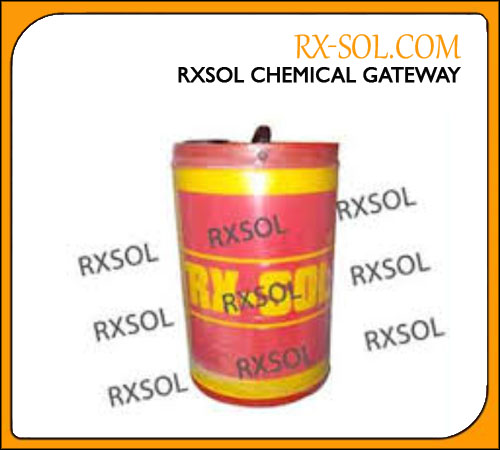
Cotton Rags 80%
Part No: RXSOL-21-2136-050
Low Hazardous Air Pollutants & Environmental friendly solvent. High boiling point.
C10 Aromatic hydrocarbons with high solvency. It has high flash point. Low Hazardous Air Pollutants & Environmental friendly solvent. High boiling point.
Application
1. High Build Coatings
2. PVC & Screen Printing Inks
3. Agrochemicals
4. Oil Field Chemicals
5. Specialty Chemicals like water-processing chemicals.
Dosage
Technical Specification
|
PROPERTY |
UNITS |
TYPICALVALUES |
TESTMETHOD |
|
Distillation range IBP DP |
°C |
183 207 |
ASTMD 86 |
|
Flash Point |
°C |
66 |
ASTMD 56 |
|
Density @15°C |
Kg/dm3 |
0.896 |
ASTMD 4052 |
|
Viscosity @25°C |
mm2/s |
1.21 |
ASTMD 445 |
|
Evaporation rate (n-BuAc=100) |
- |
10 |
EMC-AP-F01 |
|
K B value |
- |
95 |
ASTMD 1133 |
|
Aniline point |
°C |
15 |
ASTMD 611 mixed |
|
Aromati ccontent |
Vol% |
99.89 |
ASTMD 1319 |
|
Colour (Saybolt) |
- |
+30 |
ASTMD 156 |
|
Bromine index |
Mg/100g |
250 |
ASTMD 2710 |
|
Surface tension @25°C |
mN/m |
30.5 |
Ec-M-F02 |
|
Refractive index@20°C |
- |
1.521 |
ASTMD 1218 |
MSDS

| Product Name | RXSOL-19-1577-210 |
| Product Type | Solvent Naphtha 150 |
Company Details:
RX MARINE INTERNATIONAL
105, A wing , BSEL , TECH PARK.
VASHI ,NEW BOMBAY 400703 INDIA
Branch : Kandla , Hazira, Mumbai, Chennai, Vizag, Kolkata, UAE, OMAN, CANADA & KENYA
| Phone | +91 22 2087 1200 - 1400 |
| Fax | +91 27612100:::AOH :0091 9821214367 |
| mail @ rxmarine.com | |
| Website | www.rxmarine.com |

|
Chemical Name |
CAS Number |
EC Number |
Index number |
|
Solvent naphtha (Petroleum), Type: C9-C10 Aromatic. |
64742-94-5 |
265-198-5 |
649-424-00-3 |

| Signal Word | Miner Danger |
| Hazard Statements |
H227 - Combustible liquid |
| Precautionary statements - prevention |
P201 - Obtain special instructions before use. |
| Precautionary statements - response |
P301+P310 - If swallowed: Immediately call a doctor, a POISON CENTER. P302+P352 - If on skin: Wash with plenty of water. P304+P340 - If inhaled: Remove person to fresh air and keep comfortable for breathing. P305+P351+P338 - IF IN EYES: Rinse cautiously with water for several minutes. Remove contact lenses, if present and easy to do. Continue rinsing. P308+P313 - If exposed or concerned: Get medical advice/attention. P312 - Call a doctor, a POISON CENTER if you feel unwell. P321 - Specific treatment (see a doctor on this label). P331 - Do NOT induce vomiting. P332+P313 - If skin irritation occurs: Get medical advice/attention. P337+P313 - If eye irritation persists: Get medical advice/attention. P362+P364 - Take off contaminated clothing and wash it before reuse. P370+P378 - In case of fire: Use alcohol resistant foam, carbon dioxide (CO2), dry extinguishing powder, Water spray to extinguish. P391 - Collect spillage. P403+P233 - Store in a well-ventilated place. Keep container tightly closed. P403+P235 - Store in a well-ventilated place. Keep cool. P405 - Store locked up. P501 - Dispose of contents/container to hazardous or special waste collection point, in accordance with local, regional, national and/or international regulation. Storage: Store locked up. Store in a well-ventilated place. Keep cool. Disposal: Dispose of contents and container in accordance with all local, regional, national and international regulations. |

|
After inhalation |
Remove person to fresh air and keep comfortable for breathing. Remove victim to fresh air and keep at rest in a position comfortable for breathing. Call a POISON CENTER ordoctor/physician if you feel unwell. |
|
After skin contact |
Wash with plenty of soap and water. Wash contaminated clothing before reuse. If skin irritation occurs: Gently wash with plenty of soap and water, Get medical advice/attention. Get medical advice/attention. Specific treatment (see Consult a doctor/medical service on this label). Wash skin with plenty of water. Take off contaminated clothing. If skin irritation occurs: Get medical advice/attention. |
|
After eye contact |
Rinse cautiously with water for several minutes. Remove contact lenses, if present and easy to do. Continue rinsing. If eye irritation persists: Consult an eye specialist. Get medical advice/attention. If eye irritation persists: Get medical advice/attention. |
|
After ingestion |
Do NOT induce vomiting. Immediately call a poison center or doctor/physician. Do not induce vomiting. Call a physician immediately. |
| General |
Never give anything by mouth to an unconscious person. If you feel unwell, seek medical advice (show the label where possible). Call a physician immediately. |

| Suitable extinguishing media | Use dry chemical, CO₂, alcohol-resistant foam or water spray (fog). |
| Unsuitable extinguishing media | Do not use water jet |
| Protective Equipment | Wear suitable fire fightin suit. |
|
Specific hazards arising from the chemical |
Flammable liquid and vapor. Runoff to sewer may create fire or explosion hazard. In a fire or if heated, a pressure increase will occur and the container may burst, with the risk of a subsequent explosion |
|
Hazardous thermal decomposition products |
Toxic fumes may be released. |
|
Special protective actions for fire-fighters |
Promptly isolate the scene by removing all persons from the vicinity of the incident if there is a fire. No action shall be taken involving any personal risk or without suitable training. Move containers from fire area if this can be done without risk. Use water spray to keep fire-exposed containers cool. |
|
Special protective equipment for fire-fighters |
Do not enter fire area without proper protective equipment, including respiratory protection. Do not attempt to take action without suitable protective equipment. Self-contained breathing apparatus. Complete protective clothing. |

| Personal precautions, protective equipment and emergency procedures |
For non-emergency : personnelNo action shall be taken involving any personal risk or without suitable training. Evacuate surrounding areas. Keep unnecessary and unprotected personnel from entering. Do not touch or walk through spilled material. Shut off all ignition sources. No flares, smoking or flames in hazard area. Do not breathe vapor or mist. Provide adequate ventilation. Wear appropriate respirator when ventilation is inadequate. Put on appropriate personal protective equipment. |
| Enviromental Precaution | Avoid dispersal of spilled material and runoff and contact with soil, waterways, drains and sewers. Inform the relevant authorities if the product has caused environmental pollution (sewers, waterways, soil or air). |
|
Methods and materials for containment and cleaning up |
Small Spill :: Stop leak if without risk. Move containers from spill area. Use spark-proof tools and explosion-proof equipment. Dilute with water and mop up if water-soluble. Alternatively, or if water-insoluble, absorb with an inert dry material and place in an appropriate waste disposal container. Dispose of via a licensed waste disposal contractor. Large Spill : Stop leak if without risk. Move containers from spill area. Use spark-proof tools and explosion-proof equipment. Approach release from upwind. Prevent entry into sewers,water courses, basements or confined areas. Wash spillages into an effluent treatmentplant or proceed as follows. Contain and collect spillage with non-combustible,absorbent material e.g. sand, earth, vermiculite or diatomaceous earth and place in container for disposal according to local regulations (see Section 13). Dispose of via a licensed waste disposal contractor. Contaminated absorbent material may pose the same hazard as the spilled product. Note: see Section 1 for emergency contact information and Section 13 for waste disposal. |

| Advice on safe handling | Put on appropriate personal protective equipment (see Section 8). Avoid exposure - obtain special instructions before use. Do not handle until all safety precautions have been read and understood. Do not get in eyes or on skin or clothing. Do not breathe vapor or mist. Do not ingest. Use only with adequate ventilation. Wear appropriate respirator when ventilation is inadequate. Do not enter storage areas and confined spaces unless adequately ventilated. Keep in the original container or an approved alternative made from a compatible material, kept tightly closed when not in use. Store and use away from heat, sparks, open flame or any other ignition source. Use explosion-proof electrical (ventilating, lighting and material handling) equipment. Use only non-sparking tools. Take precautionary measures against electrostatic discharges. Empty containers retain product residue and can be hazardous. Do not reuse container. |
| Storage | Eating, drinking and smoking should be prohibited in areas where this material is handled, stored and processed. Workers should wash hands and face before eating, drinking and smoking. Remove contaminated clothing and protective equipment before entering eating areas. See also Section 8 for additional information on hygiene measures. |
| Conditions for safe storage including any incompatibilities | Store in accordance with local regulations. Store in a segregated and approved area. Store in original container protected from direct sunlight in a dry, cool and well-ventilated area, away from incompatible materials (see Section 10) and food and drink. Store locked up. Eliminate all ignition sources. Separate from oxidizing materials. Keep container tightly closed and sealed until ready for use. Containers that have been opened must be carefully resealed and kept upright to prevent leakage. Do not store in unlabeled containers. Use appropriate containment to avoid environmental contamination. See Section 10 for incompatible materials before handling or use |

| Occupational exposure limits |
|
||||
| Engineering Controls |
Use only with adequate ventilation. Use process enclosures, local exhaust ventilation or other engineering controls to keep worker exposure to airborne contaminants below any recommended or statutory limits. The engineering controls also need to keep gas, vapor or dust concentrations below any lower explosive limits. Use explosion-proof ventilation equipment. |
||||
| Personal Protection |
Eye protection : Wear chemical safety goggles. When transferring material wear face-shield in addition to chemical safety goggles. If inhalation hazards exist, a full-face respirator may be required instead. Hand protection : Chemical-resistant glove Skin protection : Wear long sleeves and chemical resistant apron to prevent repeated or prolonged skin contact. Respiratory protection : If a risk assessment indicates it is necessary, use a properly fitted, air purifying or supplied air respirator complying with an approved standard. Respirator selection must be based on known or anticipated exposure levels, the hazards of the product and the safe working limits of the selected respirator. |
||||
| Hygiene measures | Handle in accordance with good industrial hygiene and safety practice. Remove and wash contaminated clothing before re-use. Wash face, hands and any exposed skin thoroughly after handling. Provide suitable facilities for quick drenching or flushing of the eyes and body in case of contact or splash hazard. |

|
General Information |
|
|
Form |
Fluid |
|
Colour |
Clear |
|
Odour |
Characteristic |
|
Change in condition |
|
|
Melting/ Freezing Point |
-20°C |
|
Boiling point/Boiling range |
179°C |
|
Flash point |
66°C |
| Ignition temperature | 400°C |
| Relative evaporation rate (butyl acetate=1) |
< 0.1 |
| Flammability (solid, gas) | No data available |
| Explosion limits | 0.8 – 5.9 vol % |
| Explosive properties | No data available |
| Oxidizing properties | No data available |
| Vapor pressure | 0.08 kPa (0.6 mm Hg) (at 20°C) |
| Relative density | 0.883 - 0.900 kg/m³ |
| Relative vapor densityat 20 °C | 5 – 6 |
| Specific gravity / density | 895 kg/m³ |
| Solubility | Insoluble in water. |
| Partition coefficient n-octanol/water (Log Pow) | 2.9 – 6.1 |
| Decomposition temperature | No data available |

| Recativity | No specific test data related to reactivity available for this product or its ingredients. |
| Stability | Stable under normal conditions and recommended use. |
| Possibility of hazardous reactions | Under normal conditions of storage and use, hazardous reactions will not occur. |
| Incompatible materials | Reactive or incompatible with the following materials: oxidizing materials, organic materials, acids and alkalis. |
| Hazardous Decomposition |
Under normal conditions of storage and use, hazardous decomposition products should not be produced. |
| Condition to Avoid | Avoid all possible sources of ignition (spark or flame). Do not pressurize, cut, weld, braze, solder, drill, grind or expose containers to heat or sources of ignition. |
| Polymerization | Hazardous polymerization does not occur. |

|
Acute toxicity |
LD50 oral rat > 5000 mg/kg |
||||||||
| Irritation/Corrosion | No applicable toxicity data | ||||||||
| Sensitization |
No applicable toxicity data |
||||||||
| Mutagenicity |
No applicable toxicity data. |
||||||||
| Carcinogenicity | Not determine | ||||||||
| Reproductive toxicity | No applicable toxicity data | ||||||||
|
Teratogenicity |
No applicable toxicity data | ||||||||
| Specific target organ toxicity (single exposure) |
|
||||||||
| Specific target organ toxicity (repeated exposure) | No data Available | ||||||||
| Aspiration hazard | Not Applicble | ||||||||
|
Information on the likely routes of exposure |
Routes of entry anticipated: Dermal, Inhalation. | ||||||||
| Potential acute health effects | |||||||||
| Eye contact : | Causes serious eye damage. | ||||||||
| Inhalation : | Harmful if inhaled. Can cause central nervous system (CNS) depression. May cause drowsiness or dizziness. | ||||||||
| Skin contact : | Causes severe burns. Harmful in contact with skin. | ||||||||
| Ingestion : |
Can cause central nervous system (CNS) depression. |
||||||||
| Potential chronic health effects | Not Known | ||||||||
| General : | May cause damage to organs through prolonged or repeated exposure. | ||||||||
| Carcinogenicity : | Suspected of causing cancer. Risk of cancer depends on duration and level of exposure. | ||||||||
| Mutagenicity : | No known significant effects or critical hazards. | ||||||||
| Teratogenicity : | No known significant effects or critical hazards. | ||||||||
| Developmental effects : | No known significant effects or critical hazards. | ||||||||
| Fertility effects : | No known significant effects or critical hazards. | ||||||||
| Acute toxicity estimates |
Acute toxicity (oral) : Not classified |

| Toxicity |
The product is not considered harmful to aquatic organisms nor to cause long-term adverse effects in the environment. |
| Eco - Toxicity |
LC50 fish 1 19 mg/l (Exposure time: 96 h - Species: Pimephales promelas [static]) EC50 Daphnia 1 0.95 mg/l (Exposure time: 48 h - Species: Daphnia magna) LC50 fish 2 2.34 mg/l (Exposure time: 96 h - Species: Oncorhynchus mykiss) |
| Persistence and degradability |
May cause long-term adverse effects in the environment. |
| Bioaccumulative potential |
BCF fish 1 61 – 159 Partition coefficient n-octanol/water (Log Pow) 2.9 – 6.1 Bioaccumulative potential Not established. |
| Mobility in soil | If product enters soil, it will be highly mobile and may contaminate groundwater |
| Results of PBT and vPvB assessment |
Not classified as PBT/vPvB by current EU criteria. |

| Remarks | Please consider the relevant national or regional provisions. Waste shall be separated into the categories that can be handled separately by the local or national waste management facilities. |
| Waste Disposal | Dispose of surplus and non-recyclable products via a licensed waste disposal contractor. Waste packaging should be recycled. Incineration or landfill should only be considered when recycling is not feasible. This material and its container must be disposed of in a safe way. Care should be taken when handling emptied containers that have not been cleaned or rinsed out. Vapor from product residues may create a highly flammable or explosive atmosphere inside the container. Do not cut, weld or grind used containers unless they have been cleaned thoroughly internally. Avoid dispersal of spilled material and runoff and contact with soil, waterways, drains and sewers. |

| Transport hazard class(es) |
|
||||||||||||||||||||||||||||||
| Additional information | |||||||||||||||||||||||||||||||
| ADR/RID | Not Regulated | ||||||||||||||||||||||||||||||
| TDG Classification | Not Regulated | ||||||||||||||||||||||||||||||
| IATA | The environmentally hazardous substance mark may appear if required by other transportation regulations. | ||||||||||||||||||||||||||||||
| Special precautions for user | Allways transport in closed containers that are upright and secure. Ensure that persons transporting the product know what to do in the event of an accident or spillage. | ||||||||||||||||||||||||||||||
| Environmental hazards | |||||||||||||||||||||||||||||||
| Environmental hazards | No | ||||||||||||||||||||||||||||||
| Marine pollutant | No | ||||||||||||||||||||||||||||||

|
CLASSIFICATION AND LABELLING ACCORDING TO EC DIRECTIVES |
HARMFUL/Xn |
|
CLASSIFICATION/SYMBOL: GOVERNING DIRECTIVE: |
Miner Dangerous Substances Directive 67/548/EC, as modified. |
| NATURE OF SPECIAL RISK |
R65 Harmful : may cause lung damage if swallowed. R66 Repeated exposure may cause skin dryness or cracking R67 Vapours may cause drowsiness and dizziness |
|
SAFETY ADVICE |
S23 Do not breathe gas/fumes/vapour/spray S24 Avoid contact with skin S33 Take precautionary measures against static discharges S62 If swallowed, do not induce vomiting : seek medical advice immediately and show this container or label. |
| NATIONAL REGULATION |
Listed on the AICS (Australian Inventory of Chemical Substances) |

| Other Information |
The information above is believed to be accurate and represents the best information currently available to us. However, we make no warranty of merchantability or any other warranty, express or implied, with respect to such information, and we assume no liability resulting from its use. Users should make their own investigations to determine the suitability of the information for their particular purposes. In no event shall be liable for any claims, losses, or damages of any third party or for lost profits or any special, indirect, incidental, consequential or exemplary damages, howsoever arising, even if Rx Marine International has been advised of the possibility of such damages. DISCLAIMER OF LIABILITY :The information in this SDS was obtained from sources which we believe are reliable. However, the information is provided without any warranty, express or implied, regarding its correctness. The conditions or methods of handling, storage, use or disposal of the product are beyond our control and may be beyond our knowledge. For this and other reasons, we do not assume responsibility and expressly disclaim liability for loss, damage or expense arising out of or in any way connected with the handling, storage, use or disposal of the product. This MSDS was prepared and is to be used only for this product. If the product is used as a component in another product, this MSDS information may not be applicable. |