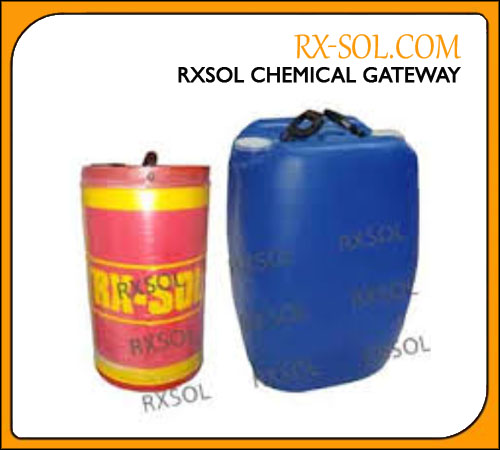
CS02
Part No: RXSOL-41-8314-025
Biopolymer RXPT is a high-purity xanthan gum biopolymer suspended in an ultra-clean mineral oil.
Biopolymer RXPT is a high-purity xanthan gum biopolymer suspended in an ultra-clean mineral oil. This type of polymer is unique when compared to most other polymers in oilfield drilling and completion applications. Xanthan gums are well known for their ability to provide extremely low-solids fluids with excellent carrying and suspending characteristics. This is due to their “shear thinning” properties. Fluids thickened with Biopolymer RXPT have a tendency to thin at higher velocities and thicken at lower velocities.
Biopolymer RXPT will not experience the separation, evident in other suspension products. It is not subject to particle settling or fluid separation under normal storage or transport conditions. Starting with an environmentally friendly fluid and utilizing our unique suspension technology, we eliminate settling of the Biopolymer RXPT particles while the product remains fully pourable. The long-term stability of the suspension provides for consistent, reliable product properties at your field locations any place in the world. Biopolymer RXPT has seen successful application in both warm climates, like the Gulf of Mexico and the Middle East, and in cold climates, like the North Sea.
Application
Biopolymer RXPT is a versatile product and can be used in most types of water-based fluids for rheology modification, improved hole cleaning and solids suspension. It provides excellent friction reduction for coil tubing operations. It is useful over a wide pH range. Xanthan gum was the first truly stable thickener for hydrochloric acid used in the oilfield. Our Biopolymer RXPT is uniquely stable, easily handled and useful in both oilfield and non-oilfield applications.
Dosage
| Application | Normal Use Range |
| Horizontal drilling and completions | 0.06 to 0.5 gal/BBL |
| Drill-in fluids | 0.06 to 0.5 gal/BBL |
| Drilling large-diameter well bores | 0.10 to 0.5 gal/BBL |
| Solids-free drilling, completion and workover fluids | 0.10 to 0.5 gal/BBL |
| Coring fluids | 0.06 to 0.5 gal/BBL |
| Improve hole cleaning | 0.07 to 0.6 gal/BBL |
| Gravel packing operations | 0.20 to 0.5 gal/BBL |
| Acid thickener | 0.40 to 0.8 gal/BBL |
Performance
The performance characteristics of the xanthan gums are well established in the oil field. Typical fluid properties imparted by Biopolymer RXPTare shown in Table 1. In fresh water and most brines, the xanthan gum produces stable viscosities as high as 275° F. In saturated salt water, that thermal stability has been shown to extend beyond 300° F. The addition of an oxygen scavenger may be useful in stabilizing the rheology at high temperatures.Biopolymer RXPT has been demonstrated to have a minimal effect on the permeability of Berea sandstone cores. For wellbore cleanup, however, the xanthan gum is acid soluble and is degradable by strong oxidizing agents.
| 0.06 | 0.12 | 0.18 | 0.24 | 0.36 | 0.48 | 0.60 | Gal/BBL | |
| n’ | 0.8903 | 0.5079 | 0.4103 | 0.4266 | 0.3237 | 0.2611 | 0.2611 | |
| K’ | 0.0002 | 0.0031 | 0.0091 | 0.0119 | 0.0355 | 0.0754 | 0.1006 | Dynes/cm2 |
| Viscosity | 5 | 12 | 21 | 30 | 53 | 81 | 108 | cp(170sec-1) |
| PV | 2 | 3 | 4 | 5 | 7 | 9 | 11 | cp |
| VP | 2 | 4 | 7 | 11 | 18 | 27 | 37 | Lb/100ft2 |
| 0.06 | 0.12 | 0.18 | 0.24 | 0.36 | 0.48 | 0.60 | Gal/BBL | |
| n’ | 0.8903 | 0.5079 | 0.4103 | 0.4266 | 0.3237 | 0.2611 | 0.2611 | |
| K’ | 0.0002 | 0.0031 | 0.0091 | 0.0119 | 0.0355 | 0.0754 | 0.1006 | Dynes/cm2 |
| Viscosity | 5 | 12 | 21 | 30 | 53 | 81 | 108 | cp(170sec-1) |
| PV | 2 | 3 | 4 | 5 | 7 | 9 | 11 | cp |
| VP | 2 | 4 | 7 | 11 | 18 | 27 | 37 | Lb/100ft2 |
| 0.06 | 0.12 | 0.18 | 0.24 | 0.36 | 0.48 | 0.60 | Gal/BBL | |
| n’ | 0.7946 | 0.7248 | 0.5665 | 0.4470 | 0.4010 | 0.3237 | 0.3588 | |
| K’ | 0.0005 | 0.0012 | 0.0044 | 0.0118 | 0.0245 | 0.0567 | 0.0558 | Dynes/cm2 |
| Viscosity | 8 | 14 | 23 | 33 | 54 | 84 | 99 | cp(170sec-1) |
| PV | 5 | 5 | 7 | 9 | 11 | 13 | 15 | cp |
| VP | 1 | 5 | 7 | 9 | 17 | 27 | 34 | Lb/100ft2 |
Technical Specification
MSDS

| Product Name | Biopolymer RXPT |
| Part Number | RXSOL-81-8188-210 |
Company Details:
RX MARINE INTERNATIONAL
105, A wing , BSEL , TECH PARK.
VASHI ,NEW BOMBAY 400703 INDIA
| Phone | +91 22 65113333 / 5555 / 9999 |
| Fax | +91 22 2781 1318 :::AOH :0091 9821214367 |
| 123 @ rxmarine.com | |
| Website | www.rxmarine.com |

| Name | CAS Number | EC Number |
| Isoprene | 78-79-5 | 201-143-3 |
| Styrene | 100-42-5 | 202-851-5 |
| Hydrocarbons,C11-C14, n-alkanes, isoalkanes, <2% |
Synonyms : Drilling Mud Additive
Molecular formula : Mixture

Classification of the substance or mixture ::: Not a hazardous substance or mixture according to Regulation (EC) No 1272/2008.
Classification (67/548/EEC, 1999/45/EC) : This mixture is not classified as dangerous according to Directive 1999/45/EC.
Label elements
Labeling (REGULATION (EC) No 1272/2008) : Not a hazardous substance or mixture according to Regulation (EC) No 1272/2008

General advice : No hazards which require special first aid measures.
If inhaled : If unconscious place in recovery position and seek medical advice. If symptoms persist, call a physician.
In case of skin contact : If skin irritation persists, call a physician. If on skin, rinse well with water. If on clothes, remove clothes.
In case of eye contact : Immediately flush eye(s) with plenty of water. Remove contact lenses. Protect unharmed eye. Keep eye wide open while rinsing. If eye irritation persists, consult a specialist.
If swallowed : Clean mouth with water and drink afterwards plenty of water. Keep respiratory tract clear. Never give anything by mouth to an unconscious person. Take victim immediately to hospital.

| Flash point | : | > 77 °C (> 171 °F) Method: ASTM D 93 |
| Autoignition temperature | : | 225 °C (437 °F) |
| Unsuitable extinguishing media | : | High volume water jet. |
| Special protective equipment for fire-fighters | : | Wear self-contained breathing apparatus for firefighting if necessary. |
| Further information | : | For safety reasons in case of fire, cans should be stored separately in closed containments. Use a water spray to cool fully closed containers. |
| Fire and explosion protection | : | Do not spray on an open flame or any other incandescent material. Keep away from open flames, hot surfaces and sources of ignition. |
| Hazardous decomposition products | : | Carbon oxides. |

Personal precautions : Use personal protective equipment.
Environmental precautions : Prevent further leakage or spillage if safe to do so. If the product contaminates rivers and lakes or drains inform respective authorities.
Methods for cleaning up: Contain spillage, and then collect with non-combustible absorbent material, (e.g. sand, earth, diatomaceous earth, vermiculite) and place in container for disposal according to local / national regulations (see section 13). Keep in suitable, closed containers for disposal.
A quantitative risk assessment is not required for the environment.
A quantitative risk assessment is not required for human health.

Handling
Advice on safe handling : Avoid formation of aerosol. Avoid contact with skin and eyes. For personal protection see section 8. Smoking, eating and drinking should be prohibited in the application area. Provide sufficient air exchange and/or exhaust in work rooms. Dispose of rinse water in accordance with local and national regulations.
Advice on protection against fire and explosion : Do not spray on an open flame or any other incandescent material. Keep away from openflames, hot surfaces and sources of ignition.
Storage
Requirements for storage areas and containers : No smoking. Keep container tightly closed in a dry and well-ventilated place. Observe label precautions. Electrical installations / working materials must

Engineering measures : Consider the potential hazards of this material (see Section 2), applicable exposure limits, job activities, and other substances in the work place when designing engineering controls and selecting personal protective equipment. If engineering controls or work practices are not adequate to prevent exposure to harmful levels of this material, the personal protective equipment listed below is recommended. The user should read and understand all instructions and limitations supplied with the equipment since protection is usually provided for a limited time or under certain circumstances.
Personal protective equipment
Respiratory protection : Wear a NIOSH approved respirator that provides protection when working with this material if exposure to harmful levels of airborne material may occur, such as:. Wear a supplied-air NIOSH approved respirator unless ventilation or other engineering controls are adequate to maintain minimal oxygen content of 19.5% by volume under normal atmospheric pressure. Air-Purifying Respirator for Dusts and Mists. Use a positive pressure, air-supplying respirator if there is potential for uncontrolled release, exposure levels are not known, or other circumstances where air-purifying respirators may not provide adequate protection.
Hand protection : The suitability for a specific workplace should be discussed with the producers of the protective gloves. Please observe the instructions regarding permeability and breakthrough time which are provided by the supplier of the gloves. Also take into consideration the specific local conditions under which the product is used, such as the danger of cuts, abrasion, and the contact time. Gloves should be discarded and replaced if there is any indication of degradation or chemical breakthrough.
Eye protection : Eye wash bottle with pure water. Tightly fitting safety goggles.
Skin and body protection : Choose body protection according to the amount and concentration of the dangerous substance at the work place. Wear as appropriate:. Safety shoes. Protective suit.
Hygiene measures : When using do not eat or drink. When using do not smoke. Wash hands before breaks and at the end of workday.
A quantitative risk assessment is not required for the environment.
A quantitative risk assessment is not required for human health.


Gloves Suit

| Physical state | : | Liquid |
| Color | : | Light brown |
| Odor | : | Slight |
| Flash point | : | > 77 °C (> 171 °F) Method: ASTM D 93 |
| Lower explosion limit | : | 0,6 %(V) |
| Upper explosion limit | : | 5,1 %(V) |
| Oxidizing properties | : | No |
| Autoignition temperature | : | 225 °C (437 °F) |
| Molecular formula | : | Mixture |
| Molecular weight | : | Not applicable |
| pH | : | No data available |
| pour point | : | No data available |
| Boiling point/boiling range | : | 217,8 - 237,8 °C (424,0 - 460,0 °F) |
| Vapor pressure | : | No data available |
| Relative density | : | 0.97 |
| Water solubility | : | Soluble |
| Partition coefficient: n-octanol/water | : | No data available |
| Viscosity, kinematic | : | 79.983 mm2/s |
| Relative vapor density | : | No data available |
| Evaporation rate | : | No data available |

Chemical stability : This material is considered stable under normal ambient and anticipated storage and handling conditions of temperature pressure.
Possibility of hazardous reactions
Conditions to avoid : Heat, flames and sparks.
Materials to avoid : May react with oxygen and strong oxidizing agents, such as chlorates, nitrates, peroxides, etc.
Hazardous decomposition products : Carbon oxides
Other data : No decomposition if stored and applied as directed.

| Acute oral toxicity | : | No adverse effects expected |
| Acute inhalation toxicity | : | No adverse effects expected |
| Acute dermal toxicity | : | No adverse effects expected |
| Skin irritation | : | May irritate skin. |
| Eye irritation | : | May irritate eyes. |
| Biopolymer RXPT Sensitization | : | Does not cause sensitization. Information given is based on data obtained from similar substances. |
| Aspiration toxicity | : | No aspiration toxicity classification. |
| Further information | : | High concentration of vapors may cause irritation to eyes and respiratory system and produce narcotic effects. |

Elimination information (persistence and degradability)
Biodegradability : Expected to be biodegradable
Ecotoxicology Assessment
Additional ecological information : This material is not expected to be harmful to aquatic organisms.

Do not dispose of waste into sewer. Do not contaminate ponds, waterways or ditches with chemical or used container. Send to a licensed waste management company.
Contaminated packaging : Empty remaining contents. Dispose of as unused product. Do not re-use empty containers. Do not burn, or use a cutting torch on, the empty drum.

Us Dot (United States Department Of Transportation)
-Not Regulated As A Hazardous Material Or Dangerous Goods For Transportation By This Agency.
Imo / Imdg (International Maritime Dangerous Goods)
-Not Regulated As A Hazardous Material Or Dangerous Goods For Transportation By This Agency.
Iata (International Air Transport Association)
-Not Regulated As A Hazardous Material Or Dangerous Goods For Transportation By This Agency.
Adr (Agreement On Dangerous Goods By Road (Europe))
-Not Regulated As A Hazardous Material Or Dangerous Goods For Transportation By This Agency.
Rid (Regulations Concerning The International Transport Of Dangerous Goods (Europe))
-Not Regulated As A Hazardous Material Or Dangerous Goods For Transportation By This Agency.
Adn (European Agreement Concerning The International Carriage Of Dangerous Goods By Inland Waterways)
-Not Regulated As A Hazardous Material Or Dangerous Goods For Transportation By This Agency.

US FEDERAL REGULATIONS: WASTE CLASSIFICATION: Not a hazardous waste by U.S. RCRA criteria. See Section 13.
REGULATORY STATUS: This Product or its components, if a mixture, is subject to following regulations (Not meant to be all inclusive - selected regulations represented):
SARA 311 Categories: 1: Immediate (Acute) Health Effects. The components of this product are listed on or are exempt from the following international chemical registries:
TSCA (U.S.)
DSL (Canada)
STATE REGULATIONS:
STATE REGULATORY STATUS: This product or its components, if a mixture, is subject to following regulations (Not meant to be all inclusive - selected regulations represented): None.
PROPOSITION 65: This product does not contain chemicals considered by the State of California's Safe Drinking Water and Toxic Enforcement Act of 1986 as causing cancer or reproductive toxicity, and for which warnings are now required.
NPCA HMIS HAZARD INDEX: 2 Moderate Hazard
FLAMMABILITY: 1 Slight Hazard
REACTIVITY: 0 Minimal Hazard
NPCA HMIS PERS. PROTECT. INDEX: J - Splash Goggles, Gloves, Synthetic Apron, Dust and Vapor Respirator.
| Europe REACH | On the inventory, or in compliance with the inventory |
| USA TCSA | Not On TSCA Inventory |
| Canada DSL | This product contains one or several components that are not on the Canadian DSL nor NDSL |
| Australia AICS | Not in compliance with the inventory |
| New Zealand, NZIoC | Not in compliance with the inventory |
| Japan ENCS | Not in compliance with the inventory |
| Korea KECI | Not in compliance with the inventory |
| Philippines PICCS | Not in compliance with the inventory |
| China IECSC | Not in compliance with the inventory |
NFPA Classification : Health Hazard: 1
Fire Hazard: 1
Reactivity Hazard: 0

The information above is believed to be accurate and represents the best information currently available to us. However, we make no warranty of merchantability or any other warranty, express or implied, with respect to such information, and we assume no liability resulting from its use. Users should make their own investigations to determine the suitability of the information for their particular purposes. In no event shall Rx Marine International be liable for any claims, losses, or damages of any third party or for lost profits or any special, indirect, incidental, consequential or exemplary damages, howsoever arising, even if Rx Marine International has been advised of the possibility of such damages.
DISCLAIMER OF LIABILITY :The information in this SDS was obtained from sources which we believe are reliable. However, the information is provided without any warranty, express or implied, regarding its correctness. The conditions or methods of handling, storage, use or disposal of the product are beyond our control and may be beyond our knowledge. For this and other reasons, we do not assume responsibility and expressly disclaim liability for loss, damage or expense arising out of or in any way connected with the handling, storage, use or disposal of the product. This MSDS was prepared and is to be used only for this product. If the product is used as a component in another product, this MSDS information may not be applicable.