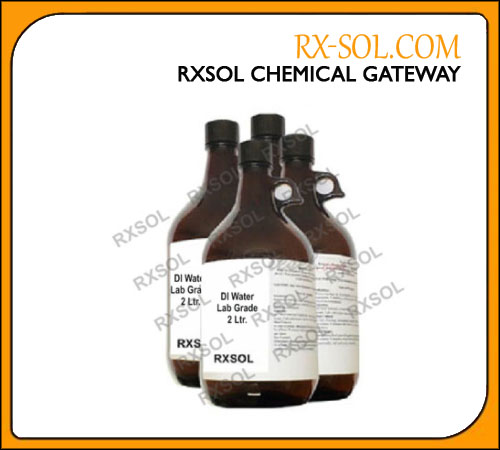
DI Water Lab Grade 2 Ltr
Part No: RXSOL-60-6105-002
Effective Descaler for BWMS Ballast Water Management System
CITRIC ACID is a source of hydrogen ions (H+) used to reduce the pH of a drilling fluid. Both liquid and powdered. CITRIC ACID provides a layer of hydrogen ions around active clays, reducing their zeta potential and thus reducing their ability to imbibe water. This function translates to fewer solids, less swelling of the solids in the drilling fluid, reduced wellbore swelling, and more efficient solids control equipment function. A secondary benefit of CITRIC ACID is the formation of sodium citrate, a thinner. This helps counteract the flocculating influence of the hydrogen ions on first being introduced to the drilling fluid system.
Application
Uses
CITRIC ACID is primarily used as a pH buffer, a low solids, non-dispersed, low pH drilling fluid.
Benefits
CITRIC ACID is primarily used to quickly reduce the pH in drilling fluid. One of the benefits of using Citric Acid is that it forms Sodium Citrate in the presence of Sodium based polymers such as DMA and OMNIPOL II. Sodium Citrate acts as a dispersant in water based fluids, helping to control the rheology. A third benefit of CITRIC ACID is the reduced hazard to personnel when compared to other acids normally used in drilling applications. CITRIC ACID will not reduce hardness levels in drilling fluids as will phosphoric acid.
Treatment
CITRIC ACID is added through the hopper when using the dry material, and added directly to the drilling fluid when using the liquid. A diaphragm-
metering pump may be utilized with the liquid for continuous
pH control.
Treatment levels vary with the concentration of salts, particularly hydrogen (H+) and hydroxide (OH- ).
Function
CITRIC ACID provides a layer of hydrogen ions around active clays, reducing their zeta potential and thus reducing their ability to imbibe water. This function translates to fewer solids, less swelling of the solids in the drilling fluid, reduced wellbore swelling, and more efficient solids control equipment function. A secondary benefit of CITRIC ACID is the formation of sodium citrate, a thinner. This helps counteract the flocculating influence of the hydrogen ions on first being introduced to the drilling fluid system.
Dosage
CITRIC ACID is a source of hydrogen ions (H+) used to reduce the pH of a drilling fluid. Both liquid and powdered.
Uses
CITRIC ACID is primarily used as a pH buffer, a low solids, non-dispersed, low pH drilling fluid.
Benefits
CITRIC ACID is primarily used to quickly reduce the pH in drilling fluid. One of the benefits of using Citric Acid is that it forms Sodium Citrate in the presence of Sodium based polymers such as DMA and OMNIPOL II. Sodium Citrate acts as a dispersant in water based fluids, helping to control the rheology. A third benefit of CITRIC ACID is the reduced hazard to personnel when compared to other acids normally used in drilling applications. CITRIC ACID will not reduce hardness levels in drilling fluids as will phosphoric acid.
Treatment
CITRIC ACID is added through the hopper when using the dry material, and added directly to the drilling fluid when using the liquid. A diaphragm-metering pump may be utilized with the liquid for continuous pH control.
Treatment levels vary with the concentration of salts, particularly hydrogen (H+) and hydroxide (OH- ).
Function
CITRIC ACID provides a layer of hydrogen ions around active clays, reducing their zeta potential and thus reducing their ability to imbibe water. This function translates to fewer solids, less swelling of the solids in the drilling fluid, reduced wellbore swelling, and more efficient solids control equipment function. A secondary benefit of CITRIC ACID is the formation of sodium citrate, a thinner. This helps counteract the flocculating influence of the hydrogen ions on first being introduced to the drilling fluid system.
Technical Specification
MSDS

| Product Name |
BWMS Descaler |
| Product Type | RXSOL-23-8926-025 |
Company Details:
RX MARINE INTERNATIONAL
105, A wing , BSEL , TECH PARK.
VASHI ,NEW BOMBAY 400703 INDIA
Stock Point : Mumbai, Kolkata, Chennai, Visakhapatnam, Kandla, Fujairah, Oman
| Phone | +91 22 27815540 / 41 / 42 |
| Fax | +91 22 2781 1318 :::AOH :0091 9322594669 |
| mail @ rxmarine.com |

Hazardous Ingredient CAS OSHA PEL OSHA HAZARD
Citric Acid 77-92-9 5000 mg/m3 (dust) Irritant
Corrosion Inhibitor Blend --- --- ---

Emergency Overview
Appearance: White Powder Odor: Ordorless Scent Flashpoint: N/A
Hazard: Irritant
Eye Contact: Causes temporary eye irritation.
Skin Contact: Frequent or prolonged contact causes temporary irritation. Skin contact may aggravate an
existing dermatitis condition.
Inhalation: May cause temporary irritation.
Ingestion: Small amounts swallowed incidental to normal handling operations are not likely to cause
injury; swallowing amounts larger than that may cause temporary injury.
HMIS Hazard Rating: Health 1 Flammability 0 Reactivity 0

Eye Contact: Immediately irrigate with flowing water continuously for 15 minutes. If irritation persists
consult medical personnel.
Skin Contact: Wash with soap and water. If irritation persists consult medical personnel.
Inhalation: Move to fresh air. If irritation persists consult medical personnel.
Ingestion: If swallowed, DO NOT induce vomiting unless directed to do so by medical personnel. If
injured party is conscious, give two glasses of water. Seek medical attention.

Flashpoint: N/A Upper Flammable Limit (% by volume): N/A
Autoignition Temperature: N/D Lower Flammable Limit (% by volume): N/A
General Hazard: Irritant
Fire Fighting Procedures: Wear self-contained breathing apparatus and full protective clothing. Use
water spray to cool nearby containers and structures exposed to fire.
Hazardous Decomposition Products: During a fire, smoke may contain the original material in addition
to unidentified toxic and/or irritating compounds. Hazardous combustion products may include and are
not limited to carbon dioxide and carbon monoxide.

Keep all unnecessary personnel away. Prevent additional discharge of material. Prevent material from
entering sewers, watercourses, or low areas. Contain and clean spilled material by vacuum or broom
sweeping and remove to disposal container. Consult an expert on disposal of recovered material and
ensure conformity to local disposal regulations.
Store out of reach of children; keep container closed; store in a cool dry well-ventilated place. Avoid
contact with skin and eyes. Use in a well-ventilated area; do not breathe dusts. Wash hands thoroughly
after handling.

Engineering Controls: Normal room ventilation is satisfactory for limited use.
Eye Protection: Safety glasses
Skin Protection: Use gloves impervious to this material when prolonged or frequently repeated contact
could occur.
Respiratory: No respiratory protection should be needed.
Exposure guidelines: N/E

Appearance/Physical State: White crystals Odor: Odorless
Vapor Pressure: N/A Vapor Density: N/A
Boiling Point: N/A Freezing Point: N/A
Density: N/E . pH: 3.0 - 4.0 (10% solution)
Solubility in Water: Soluble

Chemical stability: Stable
Incompatibility with other substances: Strong oxidizing or alkaline agents
Reactivity: Solutions are mildly corrosive to steel.
Hazardous Decomposition Products: Exposure to fire may liberate carbon dioxide, carbon monoxide,
organic acids, and other unidentified thermal decomposition products from this product or its packaging.

Route of Entry: Eye and skin contact
Effects of Acute Overexposure to Product:
Eye Contact: Causes temporary eye irritation, redness, tearing, and blurred vision
Skin Contact: Causes temporary skin irritation, defatting and dermatitis
Inhalation: Inhalation of dust may cause temporary respiratory irritation; temporary central nervous
system effects including dizziness, weakness, fatigue, nausea, and headache.
Ingestion: May cause gastrointestinal temporary irritation with nausea, vomiting and diarrhea.
Effects of Chronic Overexposure to Product:
Exposure limits: N/D for mixture
Teratogenicity: None
Reproductive toxicity: None
Sensitization to Product: None known
Mutagenicity: None
Carcinogenicity: None

Please refer to Section 6 for information regarding accidental releases and Section 15 for regulatory reporting information.

Dispose of in accordance with federal, state and local regulations. Prevent run-off to sewers.

Shipping paper description: None
Labeling: None
Markings: None
Placard: None
Packaging: Strong outer packaging. UN specification packaging not required.
Note: Applies only to ground shipments. Additional compliance steps are required for air shipments;
ship in accordance with 49 CFR parts 100 - 185.

TSCA: All chemicals used in this product are listed
CERCLA: No
SARA Title III: Under the provisions of Title III, Sections 311/312 of the Superfund Amendments and
Reauthorization Act, this product is classified into the immediate health hazard category.
The chemicals used in this product may be subject to the provisions of the Community Right-to Know
Act (40 CFR 370 - 374). If reporting requirements are met, please contact the Environmental, Health and
Safety (EHS) Manager for information regarding this product.

This document is prepared in accordance with 29 CFR 1910.1200. The purpose of this section is to ensure that the hazards of all chemicals produced or imported are evaluated, and that information concerning their hazards is transmitted to employers and employees. All information appearing herein is based upon data obtained from the raw material manufacturer and/or
recognized technical sources. While the information above is believed to be true and accurate, the author makes no representations as to its accuracy or sufficiency. Conditions of use are beyond the manufacturer's control; therefore the users are responsible to verify this data under their own particular conditions, applications and regulations to determine if the product is suitable for their particular purposes. The users assume all risks of product use, handling, disposal, reliance upon, publication or use of the information contained herein. This information applies only to the product designated above and does not necessarily apply to its use in combination with other materials, products, chemical compounds,
DISCLAIMER OF LIABILITY :The information in this SDS was obtained from sources which we believe are reliable. However, the information is provided without any warranty, express or implied, regarding its correctness. The conditions or methods of handling, storage, use or disposal of the product are beyond our control and may be beyond our knowledge. For this and other reasons, we do not assume responsibility and expressly disclaim liability for loss, damage or expense arising out of or in any way connected with the handling, storage, use or disposal of the product. This MSDS was prepared and is to be used only for this product. If the product is used as a component in another product, this MSDS information may not be applicable.