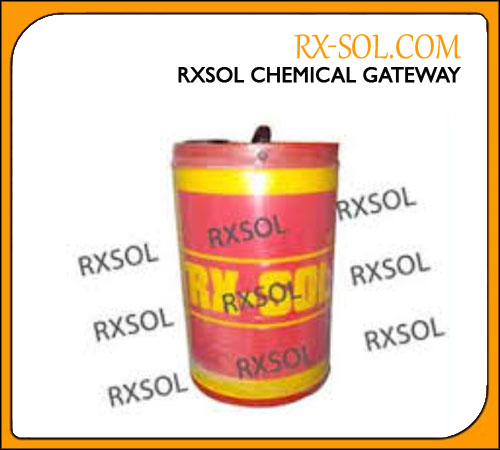
Dibutyl Sebacate
Part No: RXSOL-19-1296-050
RXSOL H is a low aromatic white spirit with a flash point above 61ºC, higher than conventional Low Aromatic White Spirit.
RXSOL H is a low aromatic white spirit with a flash point above 61ºC, higher than conventional Low Aromatic White Spirit.
Application
RXSOL H is used as an extraction solvent, as a cleaning solvent, as a degreasing solvent and as a solvent in aerosols, paints, wood preservatives, lacquers, varnishes, and asphalt products. RXSOL H is the most widely used solvent in the paint, and oil Field Idustries.
Dosage
Technical Specification
| Property | Unit | Method | Value |
| Density @15°C | kg/l | ASTM D4052 | 0.785 |
| Cubic Expansion Coefficient @20°C | (10^-4)/°C | Calculated | 9 |
| Refractive Index @20°C | - | ASTM D1218 | 1.437 |
| Color | Saybolt | ASTM D156 | + 30 |
| Bromine Index | mg Br/100g | ASTM D2710 | 200 |
| Copper Corrosion (3hr @100°C) | ASTM D 130 | 1 | |
| Doctor Test | D 235 | Negative | |
| Non Volatile Matter | mg/100ml | ASTM D1353 | 1 |
| Distillation, IBP | °C | ASTM D86 | 182 |
| Distillation, EP | °C | ASTM D86 | 206 |
| Relative Evaporation Rate (nBuAc=1) | ASTM D3539 | 0.05 | |
| Relative Evaporation Rate (Ether=1) | DIN 53170 | 200 | |
| Antoine Constant A # | kPa, °C | 6.14569 | |
| Antoine Constant B # | kPa, °C | 1636.33 | |
| Antoine Constant C # | kPa, °C | 200.436 | |
| Antoine Constants: Temperature range | °C | +50 to +175 | |
| Vapor Pressure @20°C | kPa | Calculated | 0.05 |
| Saturated Vapor Concentration @20°C | g/m³ | Calculated | 3 |
| Paraffins | % m/m | GC | 47 |
| Naphthenes | % m/m | GC | 40 |
| Aromatics | %v/v | ASTM D1319 | 12 |
| Benzene | mg/kg | GC | < 3 |
| Sulfur | mg/kg | SMS 1897 | < 0.5 |
| Flash Point | °C | ASTM D93 | 64 |
| Auto Ignition Temperature | °C | ASTM E659 | 281 |
| Explosion Limit: Lower | %v/v | - | 0.7 |
| Electrical Conductivity @20°C | pS/m | - | < 1 |
| Pour Point | °C | ASTM D97 | <-30 |
| Surface Tension @20°C | mN/m | Du Nouy ring | 26 |
| Viscosity @25°C | mm²/s | ASTM D445 | 1.5 |
| Hildebrand Solubility Parameter | (cal/cm³)^½ | 7.7 | |
| Hydrogen Bonding Index | 0.5 | ||
| Fractional Polarity | 0 | ||
| Heat of Vaporization @Tboil | kJ/kg | 270 | |
| Heat of Combustion (Net) @25°C | kJ/kg | 44500 | |
| Specific Heat @20°C | kJ/kg/°C | 2.0 | |
| Thermal Conductivity @20°C | W/m/°C | 0.14 | |
| Molecular Weight | g/mol | Calculated | 158 |
For quality control analyses, local test methods may be applied that are different from those mentioned in this datasheet. Such methods have been validated and can be obtained through other. Rxsol H does not contain detectable quantities of polycyclic aromatics, heavy metals or chlorinated compounds.
MSDS

| Product Name | RXSOL H (Aromatic Hydrocarbon) |
| Part Number | RXSOL-16-1558-210 |
Company Details:
RX MARINE INTERNATIONAL
105, A wing , BSEL , TECH PARK.
VASHI ,NEW BOMBAY 400703 INDIA
Branch : Sikka, Kandla, Dahej , Hazira, JNPT, Goa, Mngalore, Cochin, Tuticorin,Chennai, Kakinada,Vizag, Paradip, Haldia, Kolkata,Fujairah
| Phone | +91 22 27815540 / 27815542 |
| Fax | +91 22 2781 1318 :::AOH :0091 9821214367 |
| 123 @ rxmarine.com | |
| Website | www.rxmarine.com |

| Component | Cas Number | EC Number | Classification | Concentration |
| White spirit | 64742-82-1 | 919-446-0 |
Flam. Liq. 3; STOT SE 3; Asp. Tox. 1; Aquatic Chronic 2; H226, H336, H304, H411 |
100 % |

| Signal word | Danger |
| Hazard statement(s) |
H226 Flammable liquid and vapour. H304 May be fatal if swallowed and enters airways. H336 May cause drowsiness or dizziness. H411 Toxic to aquatic life with long lasting effects. |
| Precautionary statement(s) |
P210 Keep away from heat, hot surfaces, sparks, open flames and other ignition sources. No smoking. P273 Avoid release to the environment. P301 + P310 + P331 IF SWALLOWED: Immediately call a POISON CENTER/doctor. Do NOT induce vomiting. |
| Other hazards | This substance/mixture contains no components considered to be either persistent, bioaccumulative and toxic (PBT), or very persistent and very bioaccumulative (vPvB) at levels of 0.1% or higher. |

| General advice | Consult a physician. Show this safety data sheet to the doctor in attendance. |
| If inhaled | If breathed in, move person into fresh air. If not breathing, give artificial respiration. Consult a physician. |
| In case of skin contact | Wash off with soap and plenty of water. Consult a physician. |
| In case of eye contact | Flush eyes with water as a precaution. |
| If swallowed | Do NOT induce vomiting. Never give anything by mouth to an unconscious person. Rinse mouth with water. Consult a physician. |
| Most important symptoms and effects, both acute and delayed | The most important known symptoms and effects are described in the labelling (see section 2.2) and/or in section 11 |
| Indication of any immediate medical attention and special treatment needed | No data available |

| Suitable Extinguishing Media | Dry powder Dry sand |
| Unsuitable extinguishing media | Do NOT use water jet. |
| Special hazards arising from the substance or mixture | Nature of decomposition products not known. |
| Advice for firefighters | Wear self-contained breathing apparatus for firefighting if necessary. |
| Further Information | Use water spray to cool unopened containers. |

| Personal precautions, protective equipment and emergency procedures |
Use personal protective equipment. Avoid breathing vapours, mist or gas. Ensure adequate ventilation. Remove all sources of ignition. Evacuate personnel to safe areas. Beware of vapours accumulating to form explosive concentrations. Vapours can accumulate in low areas. For personal protection see section 8. |
| Environmental precautions |
Prevent further leakage or spillage if safe to do so. Do not let product enter drains. Discharge into the environment must be avoided. |
| Methods and materials for containment and cleaning up | Contain spillage, and then collect with non-combustible absorbent material, (e.g. sand, earth, diatomaceous earth, vermiculite) and place in container for disposal according to local / national regulations (see section 13). |
| Reference to other sections | For disposal see section 13. |

| Precautions for safe handling |
Avoid contact with skin and eyes. Avoid inhalation of vapour or mist. Keep away from sources of ignition - No smoking.Take measures to prevent the build up of electrostatic charge.For precautions see section 2.2 |
| Conditions for safe storage, including any incompatibilities | Store in cool place. Keep container tightly closed in a dry and well-ventilated place. Containers which are opened must be carefully resealed and kept upright to prevent leakage. |
| Specific end use(s) | Apart from the uses mentioned in section 1.2 no other specific uses are stipulated. |

| Appropriate engineering controls | Handle in accordance with good industrial hygiene and safety practice. Wash hands before breaks and at the end of workday. |
| Personal protective equipment |
Eye/face protection Face shield and safety glasses Use equipment for eye protection tested and approved under appropriate government standards such as NIOSH (US) or EN 166(EU). |
| Skin protection |
Handle with gloves. Gloves must be inspected prior to use. Use proper glove removal technique (without touching glove's outer surface) to avoid skin contact with this product. Dispose of contaminated gloves after use in accordance with applicable laws and good laboratory practices. Wash and dry hands. The selected protective gloves have to satisfy the specifications of Regulation (EU) 2016/425 and the standard EN 374 derived from it. |
| Body Protection | Complete suit protecting against chemicals, Flame retardant antistatic protective clothing., The type of protective equipment must be selected according to the concentration and amount of the dangerous substance at the specific workplace. |
| Respiratory protection | Where risk assessment shows air-purifying respirators are appropriate use a fullface respirator with multi-purpose combination (US) or type ABEK (EN 14387) respirator cartridges as a backup to engineering controls. If the respirator is the sole means of protection, use a full-face supplied air respirator. Use respirators and components tested and approved under appropriate government standards such as NIOSH (US) or CEN (EU). |
| Control of environmental exposure |
Prevent further leakage or spillage if safe to do so. Do not let product enter drains. Discharge into the environment must be avoided. |

| Appearance | Clear |
| Colour | Colourless, light yellow |
| Odour | Pungent |
| Odour threshold | No data available |
| pH (as supplied) | No data available |
| Initial boiling point and boiling range | 150 - 200 °C |
| Melting Point (°C) | < -20 °C |
| Flash Point (°F) | > 30 °C - ASTM D 56 |
| Evaporation rate | No data available |
| Flammability (solid, gas) | No data available |
| Explosive limits |
Upper explosion limit: 7,0 %(V) Lower explosion limit: 0,6 %(V) |
| Vapour pressure | < 27,00 hPa at 20 °C |
| Vapour density | (Air = 1.0) |
| Relative density | 0,78 g/mL at 20 °C |
| Water solubility | Negligible |
| Partition coefficient n-octanol / water | Not Available |
| Autoignition Temperature (°C) | > 200 °C |
| Decomposition Temperature (°C) | No data available |
| Viscosity | 1 - 2,5 mm2/s at 20 °C - |
| Explosive properties | Not Available |
| Oxidizing properties | No data available |
| Other safety information | Relative vapour (Air = 1.0) density |

| Reactivity | No data available |
| Chemical stability | Stable under recommended storage conditions. |
| Possibility of hazardous reactions | No data available |
| Conditions to avoid | Heat, flames and sparks. |
| Incompatible materials | Strong oxidizing agents |
| Hazardous decomposition products | Other decomposition products - No data available |
| Hazardous decomposition products formed under fire conditions |
Nature of decomposition products not known. In the event of fire: see section 5 |

| Acute toxicity |
LD50 Oral - Rat - > 5.000 mg/kg (OECD Test Guideline 401) LC50 Inhalation - Rat - 4 h - > 13,1 mg/l (OECD Test Guideline 403) LD50 Dermal - Rabbit - > 2.000 mg/kg (OECD Test Guideline 402) Remarks: Repeated exposure may cause skin dryness or cracking. |
| Skin corrosion /irritation | Chronic exposure causes drying effect on the skin and eczema. |
| Serious eye damage/eye irritation | Based on available data, the classification criteria are not met. |
| Respiratory or skin sensitisation | Did not cause sensitisation on laboratory animals. |
| Germ cell mutagenicity | Did not show mutagenic effects in animal experiments. |
| Carcinogenicity | IARC: No component of this product present at levels greater than or equal to 0.1% is identified as probable, possible or confirmed human carcinogen by IARC. |
| Reproductive toxicity | Did not show teratogenic effects in animal experiments. Animal testing did not show any effects on fertility. |
| Specific target organ toxicity - single exposure | May cause drowsiness or dizziness. |
| Specific target organ toxicity - repeated exposure | The substance or mixture is not classified as specific target organ toxicant, repeated exposure. |
| Aspiration hazard | May be fatal if swallowed and enters airways. |
| Additional Information |
RTECS: Not available Inhalation of vapors may cause:, Headache, Drowsiness, Dizziness, Eye irritation, Prolonged or repeated exposure to skin causes defatting and dermatitis., Aspiration may cause pulmonary oedema and pneumonitis. |

| Toxicity |
Toxicity to fish LC50 - Oncorhynchus mykiss (rainbow trout) - 10 - 30 mg/l - 96 h Toxicity to daphnia and other aquatic invertebrates EC50 - Daphnia magna (Water flea) - 10 - 22 mg/l - 48 h NOEC - Daphnia magna (Water flea) - 0,097 mg/l - 21 d Toxicity to algae EC50 - Pseudokirchneriella subcapitata - 4,6 - 10 mg/l - 72 h |
| Persistence and degradability | Biodegradability Result: 74,7 % - Readily biodegradable. |
| Bioaccumulative potential | No data available |
| Mobility in soil | No data available |
| Results of PBT and vPvB assessment | This substance/mixture contains no components considered to be either persistent, bioaccumulative and toxic (PBT), or very persistent and very bioaccumulative (vPvB) at levels of 0.1% or higher. |
| Other adverse effects | Toxic to aquatic life with long lasting effects. |

| Product | Offer surplus and non-recyclable solutions to a licensed disposal company. Waste material must be disposed of in accordance with the Directive on waste 2008/98/EC as well as other national and local regulations. Leave chemicals in original containers. No mixing with other waste. Handle uncleaned containers like the product itself. |
| Contaminated packaging | Dispose of as unused product. |

Land transport (ADR):
| UN Number | 1300 |
| Proper Shipping Name | TURPENTINE SUBSTITUTE |
| Hazard Class(es) | 3 |
| Packaging Group | III |
| Environmental hazard | yes |
| Special precautions for user | Not Applicable |
IMDG
| UN Number | 1300 |
| Proper Shipping Name | TURPENTINE SUBSTITUTE |
| Hazard Class(es) | 3 |
| Packaging Group | III |
| Environmental hazard | yes |
| Special precautions for user | Not Applicable |
IATA

|
Safety, health and environmental regulations/legislation specific for the substance or mixture |
This safety datasheet complies with the requirements of Regulation (EC) No. 1907/2006. |
| Authorisations and/or restrictions on use |
REACH - Restrictions on the manufacture, placing on the market and use of certain dangerous substances, preparations and articles (Annex XVII) |
| REACH - Restrictions on the manufacture, | placing on the market and use of certain dangerous substances, preparations and articles (Annex XVII) |
| REACH - Restrictions on the manufacture | placing on the market and use of certain dangerous substances, preparations and articles (Annex XVII) : White spirit |
| Chemical safety assessment | For this product a chemical safety assessment was not carried out. |

| Other Information |
The information above is believed to be accurate and represents the best information currently available to us. However, we make no warranty of merchantability or any other warranty, express or implied, with respect to such information, and we assume no liability resulting from its use. Users should make their own investigations to determine the suitability of the information for their particular purposes. In no event shall be liable for any claims, losses, or damages of any third party or for lost profits or any special, indirect, incidental, consequential or exemplary damages, howsoever arising, even if Rx Marine International has been advised of the possibility of such damages. DISCLAIMER OF LIABILITY :The information in this SDS was obtained from sources which we believe are reliable. However, the information is provided without any warranty, express or implied, regarding its correctness. The conditions or methods of handling, storage, use or disposal of the product are beyond our control and may be beyond our knowledge. For this and other reasons, we do not assume responsibility and expressly disclaim liability for loss, damage or expense arising out of or in any way connected with the handling, storage, use or disposal of the product. This MSDS was prepared and is to be used only for this product. If the product is used as a component in another product, this MSDS information may not be applicable. |