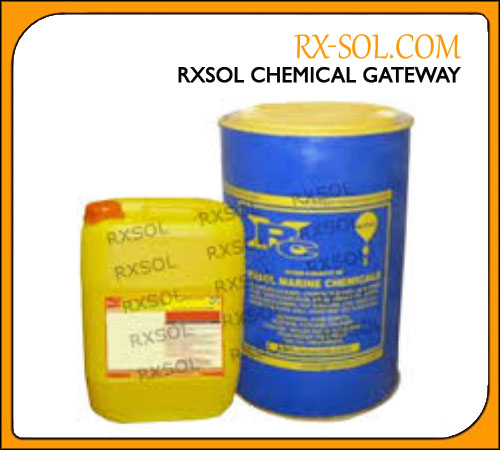
Disinfectant Liq
Part No: RXSOL-15-3008-001
Methanol Reformer fuel mixture is 60 to 66% Methanol / 33 to 40 % Distilled Water on a volumetric basis
Methanol Reformer Fuel Specification : The First Element Methanol Reformer fuel mixture is 66% Methanol / 33% Distilled Water on a volumetric basis. The mixture is prepared in a blend tank of suitable volume. The selected blend tank must be thoroughly cleaned and free of all contaminants. Ensure the mixture is sufficiently blended to produce a homogeneous mixture.
Application
Dosage
MSDS

| Product Name |
Methanol Water Mix |
| Product Type |
RXSOL-20-2162-210 |
Company Details:
RX MARINE INTERNATIONAL
105, A wing , BSEL , TECH PARK.
VASHI ,NEW BOMBAY 400703 INDIA
| Phone | +91 22 27815540 / 41 / 42 |
| Fax | +91 22 2781 1318 :::AOH :0091 9322594669 |
| mail @ rxmarine.com |

| Component | CAS-No | Weight % |
| Water | 7732-18-5 | 20 - 50 |
| Methyl alcohol | 67-56-1 | 50 - 80 |

|
Target Organs |
Gastrointestinal tract (GI), Central nervous system (CNS), Eyes, Respiratory system, Skin, Optic nerve, Liver, Kidney, spleen, Blood |
|
Potential Health Effects |
|
|
Acute Effects |
|
|
Principle Routes of Exposure |
|
|
Eyes |
Irritating to eyes. |
|
Skin |
Toxic in contact with skin. Irritating to skin. |
|
Inhalation |
Toxic by inhalation. Vapor harmful. May cause irritation of respiratory tract. |
|
Ingestion |
Poison, may be fatal or cause blindness if swallowed. Cannot be made non-poisonous. Ingestion may cause gastrointestinal irritation, nausea, vomiting and diarrhea. |
|
Chronic Effects Toxic |
Dnger of very serious irreversible effects through inhalation, in contact with skin and if swallowed. Experiments have shown reproductive toxicity effects on laboratory animals. May cause adverse liver effects. May cause adverse kidney effects. Component substance is listed on California Proposition 65 as a developmental hazard. |
|
Aggravated Medical Conditions |
Central nervous system disorders. Gastrointestinal tract. Preexisting eye disorders. Skin disorders. Kidney disorders. Liver disorders. |

|
Eye Contact |
Rinse immediately with plenty of water, also under the eyelids, for at least 15 minutes. Obtain medical attention. |
|
Skin Contact |
Wash off immediately with plenty of water for at least 15 minutes. Immediate medical attention is required. |
|
Inhalation |
Move to fresh air. If breathing is difficult, give oxygen. Do not use mouth-to-mouth resuscitation if victim ingested or inhaled the substance; induce artificial respiration with a respiratory medical device. Immediate medical attention is required. |
|
Ingestion |
Do not induce vomiting. Call a physician or Poison Control Center immediately. |
|
Notes to |
Treat symptomatically. |

|
Flash Point |
> 11°C |
|
Method |
No information available. |
|
Autoignition Temperature |
464°C |
|
Explosion Limits |
|
|
Upper |
~ 36% |
|
Lower |
~ 6% |
|
Suitable Extinguishing Media |
CO2, dry chemical, dry sand, alcohol-resistant foam. Use water spray to cool unopened containers. |
|
Unsuitable Extinguishing Media |
Water may be ineffective |
|
Hazardous Combustion Products |
No information available. |
|
Sensitivity to mechanical impact |
No information available. |
|
Sensitivity to static discharge |
No information available. |
|
Specific Hazards Arising from the Chemical |
Flammable. Risk of ignition. Vapors may form explosive mixtures with air. Vapors may travel to source of ignition and flash back. Containers may explode when heated. |
|
Protective Equipment and Precautions for Firefighters |
As in any fire, wear self-contained breathing apparatus pressure-demand, MSHA/NIOSH approved or equivalent) and full protective gear. Thermal decomposition can lead to release of irritating gases and vapors. |
| NFPA | Health 1 | Flammability 3 | Instability 0 | Physical hazards N/A |

|
Personal Precautions |
Remove all sources of ignition. Evacuate personnel to safe areas. Keep people away from and upwind of spill/leak. Use personal protective equipment. Ensure adequate ventilation. |
|
Environmental recautions |
Should not be released into the environment |
|
Methods for Containment and Clean Up |
Remove all sources of ignition. Soak up with inert absorbent material. Take precautionary measures against static discharges. Keep in suitable, closed containers for disposal.. |

Handling:
Use only under a chemical fume hood. Use explosion-proof equipment. Keep away from open flames, hot surfaces and sources of ignition. Take precautionary measures against static discharges. Do not breathe vapors or spray mist. Do not get in eyes, on skin, or on clothing.
Storage:
Keep containers tightly closed in a dry, cool and well-ventilated place. Keep away from open flames, hot surfaces and sources of ignition. Flammables area.

Engineering Measures:
Ensure adequate ventilation, especially in confined areas.
Exposure Guidelines:
This product does not contain any hazardous materials with occupational exposure limits established by the region specific regulatory bodies.
| Component | ACGIH TLV | OSHA PEL | NIOSH IDLH |
| Methyl alcohol |
TWA: 200 ppm STEL: 250 ppm Skin. |
(Vacated) TWA: 200 ppm (Vacated) TWA: 260 mg/m3 (Vacated) STEL: 250 ppm (Vacated) STEL: 325 mg/m3 Skin TWA: 200 ppm TWA: 260 mg/m3 |
IDLH: 6000 ppm TWA: 200 ppm TWA: 260 mg/m3 STEL: 250 ppm STEL: 325 mg/m3 |
| Component | Quebec Mexico | OEL (TWA) | Ontario TWAEV |
| Methyl alcohol |
TWA: 200 ppm TWA: 262 mg/m3 STEL: 250 ppm STEL: 328 mg/m3 Skin |
TWA: 200 ppm TWA: 260 mg/m3 STEL: 250 ppm STEL: 310 mg/m3 |
TWA: 200 ppm STEL: 250 ppm Skin |
NIOSH IDLH:
Immediately Dangerous to Life or Health Personal Protective Equipment.
|
Eye/face Protection |
Wear appropriate protective eyeglasses or chemical safety goggles as described by OSHA's eye and face protection regulations in 29 CFR 1910.133 or European Standard EN166 |
|
Skin and body protection |
Antistatic boots. Wear fire/flame resistant/retardant clothing. Impervious gloves. |
|
Respiratory Protection |
Follow the OSHA respirator regulations found in 29 CFR 1910.134 or European Standard EN 149. Use a NIOSH/MSHA or European Standard EN 149 approved respirator if exposure limits are exceeded or if irritation or other symptoms are experienced |

| Physical State | Liquid |
| Appearance | Colorless |
| Odor | Alcohol-like |
| Odor Threshold | No information available. |
| pH No | No information available. |
| Vapor Pressure | 12.8 kPa @ 20°C |
| Vapor Density | 1.105 @ °C (Air = 1.0) |
| Viscosity | No information available. |
| Boiling Point/Range | >64°C |
| Melting Point/Range | No data available |
| Decomposition temperature | No information available. |
| Flash Point | > 11°C |
| Evaporation Rate | No information available. |
| Specific Gravity | < 1.0 |
| Solubility | Soluble in water |
| log Pow | No data available |

|
Stability |
Stable under normal conditions. |
|
Conditions to Avoid |
Incompatible products. Heat, flames and sparks. |
|
Incompatible Materials |
Strong oxidizing agents, Strong acids, Acid anhydrides, Acid chlorides, Strong bases, Metals, Peroxides |
|
Hazardous Decomposition Products |
Carbon monoxide (CO), Formaldehyde |
|
Hazardous Polymerization |
Hazardous polymerization does not occur. |
|
Hazardous Reactions |
None under normal processing. |

|
Acute Toxicity |
|
||||||||
|
Component Information |
|
||||||||
|
Irritation |
Irritating to eyes and skin |
||||||||
|
Toxicologically Synergistic Products |
Carbon tetrachloride |
||||||||
|
Chronic Toxicity |
|
||||||||
|
Carcinogenicity |
There are no known carcinogenic chemicals in this product |
||||||||
|
Sensitization |
No information available. |
||||||||
|
Mutagenic Effects |
Mutagenic effects have occurred in experimental animals. |
||||||||
|
Reproductive Effects |
Experiments have shown reproductive toxicity effects on laboratory animals. |
||||||||
|
Developmental Effects |
Developmental effects have occurred in experimental animals. Component substance is listed on California Proposition 65 as a developmental hazard. |
||||||||
|
Teratogenicity |
Teratogenic effects have occurred in experimental animals. |
||||||||
|
Other Adverse Effects |
The toxicological properties have not been fully investigated. |
||||||||
|
Endocrine Disruptor Information |
No information available |

Ecotoxicity:
Do not empty into drains
| Component | Freshwater Algae | Freshwater Fish | Microtox | Water Flea |
| Methyl alcohol | Not listed |
Pimephales promelas: LC50 > 10000 mg/L 96h |
EC50 = 39000 mg/L 25 min EC50 = 40000 mg/L 15 min EC50 = 43000 mg/L 5 min |
EC50 > 10000 mg/L 24h |
| Persistence and Degradability | : No information available |
| Bioaccumulation/ Accumulation | : No information available |
| Mobility | : No information available |
| Component | log Pow |
| Methyl alcohol | -0.74 |

Waste Disposal Methods:
Chemical waste generators must determine whether a discarded chemical is classified as a hazardous waste. Chemical waste generators must also consult local, regional, and national hazardous waste regulations to ensure complete and accurate classification
|
Component |
RCRA - U Series Wastes |
RCRA - P Series Wastes |
|
Methyl alcohol - 67-56-1 |
U154 |
|

| DOT | |
| UN-No | : UN1230 |
| Proper Shipping Name | : METHANOL SOLUTION |
| Hazard Class | : 3 |
| Packing Group | : II |
|
TDG |
|
| UN-No | : UN1230 |
| Proper Shipping Name | : METHANOL SOLUTION |
| Hazard Class | : 3 |
| Subsidiary Hazard Class | : 6.1 |
| Packing Group | : II |
|
IATA |
|
| UN-No | : UN1230 |
| Proper Shipping Name | : METHANOL SOLUTION |
| Hazard Class | : 3 |
| Subsidiary Hazard Class | : 6.1 |
| Packing Group | : II |
|
IMDG/IMO |
|
| UN-No | : UN1230 |
| Proper Shipping Name | : METHANOL SOLUTION |
| Hazard Class | : 3 |
| Subsidiary Hazard Class | : 6.1 |
| Packing Group | : II |

International Inventories:
|
Component |
TSCA |
DSL |
NDSL |
EINECS |
ELINCS |
NLP |
PICCS |
ENCS |
AICS |
CHINA |
KECL |
|
Water |
X |
X |
|
231-791- 2 |
|
|
X |
|
X |
X |
X |
|
Methyl alcohol |
X |
X |
|
200-659- 6 |
|
|
X |
X |
X |
X |
X |
Legend:
X - Listed
E - Indicates a substance that is the subject of a Section 5(e) Consent order under TSCA.
F - Indicates a substance that is the subject of a Section 5(f) Rule under TSCA.
N - Indicates a polymeric substance containing no free-radical initiator in its inventory name but is considered to cover the designated polyme made with any free-radical initiator regardless of the amount used.
P - Indicates a commenced PMN substance
R - Indicates a substance that is the subject of a Section 6 risk management rule under TSCA.
S - Indicates a substance that is identified in a proposed or final Significant New Use Rule
T - Indicates a substance that is the subject of a Section 4 test rule under TSCA.
XU - Indicates a substance exempt from reporting under the Inventory Update Rule, i.e. Partial Updating of the TSCA Inventory Data Base Production and Site Reports (40 CFR 710(B).
Y1 - Indicates an exempt polymer that has a number-average molecular weight of 1,000 or greater.
Y2 - Indicates an exempt polymer that is a polyester and is made only from reactants included in a specified list of low concern reactants that comprises one of the eligibility criteria for the exemption rule.
U.S. Federal Regulations:
TSCA 12(b) Not applicable
SARA 313 Not applicable
|
Component |
CAS-No |
Weight % |
SARA 313 - Threshold Values % |
|
Methyl alcohol |
67-56-1 |
50 - 80 |
1.0 |
SARA 311/312 Hazardous Categorization:
| Acute Health Hazard | : Yes |
| Chronic Health Hazard | : Yes |
| Fire Hazard | : Yes |
| Sudden Release of Pressure Hazard | : No |
| Reactive Hazard | : No |
Clean Water Act :
Not applicable
|
Component |
CWA -Hazardous Substances |
CWA - Reportable Quantities |
CWA - Toxic Pollutants |
CWA - Priority Pollutants |
|
Water |
|
1 LB |
|
|
Clean Air Act:
Not applicable
| Component | HAPS Data | Class 1 Ozone Depletors | Class 1 Ozone Depletors |
| Methyl alcohol | X |
OSHA :
Not applicable
CERCLA :
Not Applicable
| Component | Hazardous Substances RQs | CERCLA EHS RQs |
| Methyl alcohol | 5000 lb |
California Proposition 65:
This product does not contain any Proposition 65 chemicals.
| Component | CAS-No | California Prop. 65 | Prop 65 NSRL |
| Methyl alcohol | 67-56-1 | Methanol |
State Right-to-Know:
Not applicable
| Component | Massachusetts | New Jersey | Pennsylvania | Illinois | Rhode Island |
| Methyl alcohol | x | x | x | x | x |
U.S. Department of Transportation:
| Reportable Quantity (RQ) | : Y |
| DOT Marine Pollutant | : N |
| DOT Severe Marine Pollutant | : N |
U.S. Department of Homeland Security:
This product does not contain any DHS chemicals.
Other International Regulations:
Mexico - Grade : Serious risk, Grade 3
Canada:
This product has been classified in accordance with the hazard criteria of the Controlled Products Regulations (CPR) and the MSDS contains all the information required by the CPR.
WHMIS Hazard Class:
B2 Flammable liquid
D1B Toxic materials
D2B Toxic materials

The information provided about the product on this Safety Data Sheet has been compiled from knowledge of the individual constituents The data given here is based on current knowledge and experience. This Safety Data Sheet describes the product in terms of safety requirements and does not signify any warranty with regard to the product's properties The data given here only applies when product used for proper application(s). The product is not sold as suitable for other applications usage in such may cause risks not mentioned in this sheet. Do not use for other application(s) without seeking advice from manufacturer.