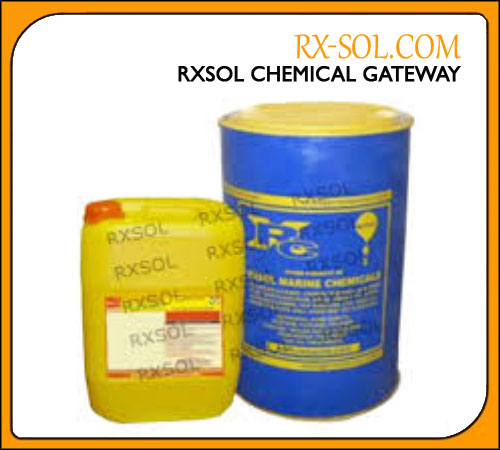
Glycol Ether
Part No: RXSOL-20-2062-210
Lab Reagent
Add value to your laboratory supply chain with RXSOL titrants. Our competitive pricing, multiple facilities, and rigorous quality systems to help you reduce costs and increase throughput in your laboratory processes.
From the discussion above, it should be clear that to make 1 Normal solution we need to know the, equivalent of NaOH, which is calculated by dividing Molecular weight by 1, that is 40 divided by 1= 40. So the equivalent weight of NaOH is 40. To make 1 N solution, dissolve 40.00 g of sodium hydroxide in water to make volume 1 liter. For a 0.1 N solution (used for wine analysis) 4.00 g of NaOH per liter is needed.
Application
| Reference | Method | Test | Reagent Name | |
|---|---|---|---|---|
| APHA | EDTA Titrimetric Method | Hardness | Sodium hydroxide, NaOH, 0.1 N | |
| ASTM | Salt-Splitting Capacity of Cation Exchange Resins | Ion-Exchange Resins | Sodium Hydroxide Solution Standard (0.10 N) | |
| APHA | Titration Method | Acidity | Standard sodium hydroxide titrant, 0.1 N | |
| APHA | Mercuric Nitrate Method | Chloride | Sodium Hydroxide, 0.1 N | |
| APHA | Nitrate Electrode Method | Nitrogen (Nitrate) | Sodium Hydroxide, 0.1 N | |
| APHA | Eriochrome Cyanine R Method | Aluminum | Sodium Hydroxide, 0.1 N | |
| TAPPI | Analysis of bleaching powder, calcium hypochlorite bleach liquor, and bleach sludge | N/A | Standardized 0.1 N NaOH | |
| TAPPI | Water-soluble sulfates in pulp and paper | N/A | Sodium hydroxide, approximately 0.1 N | |
| TAPPI | Analysis of casein | N/A | Sodium Hydroxide, 0.1 N | |
| TAPPI | Forming handsheets for reflectance testing of pulp (Büchner funnel procedure) | N/A | Sodium hydroxide, approximately 0.1 M | |
| TAPPI | Forming handsheets for reflectance testing of pulp (sheet machine procedure) | N/A | Sodium hydroxide approximately 0.1 M | |
| ASTM | Standard Specification for Substitute Ocean Water | Substitute Ocean Water | Sodium Hydroxide Solution, Standard (0.10 N) | |
| EPA (SW-846) | Anion Chromatography | Chloride from HCl/Cl2 Emission Sampling Train | Sodium Hydroxide (0.1 N) | |
| EPA (SW-846) | Emission Sampling Train | Isokinetic HCl/Cl2 | Sodium Hydroxide (0.1 M) | |
| EPA (SW-846) | Emission Sampling Train | Midget Impinger HCl/Cl2 | Sodium Hydroxide (0.1 M) | |
| TAPPI | Water-soluble chlorides in pulp and paper | N/A | Sodium hydroxide, approximately 0.1 N | |
| EPA (SW-846) | Ammonium Acetate | Cation-Exchange Capacity of Soils | Sodium Hydroxide, 0.1 N standard | |
| ASTM | Percent Regeneration of Hydrogen-Form Cation-Exchange Resins | Ion-Exchange Resins | Sodium Hydroxide, Standard Solution (0.10 N) | |
| ASTM | Quinoline Phosphomolybdate Method | Phosphorus in Lubricating Oils and Additives | Sodium Hydroxide Solution (0.1 M) | |
| TAPPI | Preparation of indicators and standard solutions | N/A | Sodium hydroxide, 0.1 N | |
| ASTM | Liquid Chromatography | Analysis of Oil-Soluble Petroleum Sulfonates | Sodium Hydroxide Solution, Standard (0.1 mol/L) | |
| ASTM | Anion-Cation Balance of Mixed Bed Ion-Exchange Resins | Anion-Cation Balance | Sodium Hydroxide Solution, Standard (0.10 N) | |
| TAPPI | Alkalinity of paper as calcium carbonate (alkaline reserve of paper) | N/A | Standardized 0.1 N sodium hydroxide | |
| ASTM | Percent Regeneration of Anion Exchange Resins | Ion-Exchange Resins | Sodium Hydroxide Solution, Standard (0.10 N) | |
| TAPPI | Analysis of crude tall oil | N/A | Sodium hydroxide, 0.1 N | |
| ASTM | Ionic Content of Anion Exchange Resins | Ion-Exchange Resins | Sodium Hydroxide Solution Standard (0.10 N) | |
| ACS | Volumetric Solutions | N/A | Sodium Hydroxide, 0.1 Normal Volumetric Solution | |
| ASTM | Reagent Solutions | N/A | Sodium Hydroxide, 0.1 Normal Volumetric Solution | |
| EP | Volumetric Solutions | N/A | 0.1 M Sodium hydroxide Volumetric Solution | |
| USP | Volumetric Solutions | N/A | Sodium Hydroxide, Tenth-Normal (0.1 N) Volumetric Solution |
Dosage
MSDS

| Product Name | RXSOL-60-6252-100 |
| Product Type | Sodium Hydroxide (N/10) 0.1 Normal Solution |
Company Details:
RX MARINE INTERNATIONAL
105, A wing , BSEL , TECH PARK.
VASHI ,NEW BOMBAY 400703 INDIA
Stock Point ::: Kandla, Mumbai, Kolkata, Chennai, Visakhapatnam, Fujairah
| Phone | +91 22 27815541 / 42 |
| Fax | +91 22 2781 1318 :::AOH :0091 9821214367 |
| mail @ rxmarine.com |

| SARA 313 Component | CAS Number | Percent Comp. |
Dimension |
Exposure Limits |
| Sodium Hydroxide | CAS-1310-73-2 | 0.40% | W/V |
OSHA PEL 2 mg/mƒ ACGIH 2mg/mƒ |
| Water, Deionized ASTM Type II | CAS-7732- 18-5 | 99.6% | V/V |
None Established |

May be harmful if swallowed. May cause irritation. Avoid breathing vapors, or dusts. Use with adequate ventilation. Avoid contact with eyes, skin, and clothes. Wash thoroughly after handling.
Emergency Overview:Harmful If Swallowed Or Inhaled. May Cause Burns To Any Area Of
Contact. Reacts With Water, Acids And Other Materials.
Inhalation:Mists May Irritate Respiratory Tract.
Ingestion:Swallowing may Cause Burns of the Mouth, Throat and Stomach.
Skin:May Cause Irritation to Skin
Eye Contact:May Cause Irritation to Eyes, and with Greater Exposures, Severe Buns with Possibly Blindness
Chronic Exposure:Persons with Pre-Existing Skin Disorders may be Susceptible to these
Solutions.
Aggravated by Exposure:Persons with Pre-existing Skin Disorders or Eye Problems or Impaired Respiratory Function May be More Susceptible to the Effects of the Substance.

May be harmful if swallowed. May cause irritation. Avoid breathing vapors, or dusts. Use with adequate ventilation. Avoid contact with eyes, skin, and clothes. Wash thoroughly after handling.
|
SKIN: |
Remove contaminated clothing. Wash exposed area with soap and |
|
| EYES: |
Wash eyes with plenty of water for at least 15 minutes, lifting lids occasionally. Seek Medical Aid. |
|
| INHALATION: |
Remove to fresh air. If not breathing, give artificial respiration. If breathing is difficult, give oxygen |
|
| INGESTION | Give several glasses of milk or water. Vomiting may occur spontaneously, but DO NOT INDUCE! Never give anything by mouth to anunconscious person. |

|
Fire Extinguisher Type: |
Any means suitable for extinguishing |
| Fire / Explosion Hazards: | None |
| Fire Fighting Procedure: |
Wear self-contained breathing apparatus and protective clothing to prevent contact with skin and clothing. |

Absorb spill with inert material, then place in a chemical waste container. Neutralize with a weak acid.
Ventilate area of Leak or Spill. Keep Unnecessary and Unprotected People away from the area of Spill. Wear Appropriate Personal Protective Equipment as Specified in Section 7. Contain and Recover Liquid when Possible. Use Non-Sparking Tools and Equipment. Collect Liquid in an Appropriate Container or Absorb with an Inert Material (e.g., Vermiculite, Dry Sand, Earth). Do Not use Combustible Materials, such as Saw Dust. Do Not Flush to Sewer! US Regulations (CERCLA) Require Reporting Spills and Releases to Soil, Water and Air in Excess of Reportable Quantities.

Store in a cool dry place. Do not get in eyes, on skin,or on clothing. Wash thoroughly after handling

|
Respiratory Protection |
None required |
|
Ventilation |
Local |
| OTHER | Mechanical |
| Protective Gloves | Wear appropriate gloves to prevent skin exposure |
| EYE PROTECTION | Splash Goggles |
| Other Protective Equipment | Wear appropriate clothing to prevent skin exposure |

| BOILING POINT | ~212°F (100deg C) |
| VAPOR PRESSURE | Information not available |
| MELTING POINT | 32deg F (0deg C) |
| VAPOR DENSITY | Information not available |
| EVAPORATION RATE | Information not available |
| Appearance /Odors | Clear, colorless, odorless liquid |
| Flash Point | Not flammable |
| Specific Gravity | Appx 1.03 to 1.05 |
| Percent Volatile by | >99 |
| Evaporation Standard | |
| Auto Ignition Temp |
Not applicable |
| Lower Flamm. Limit in Air |
Not applicable |
| Upper Flamm. Limit in Air | Not applicable |
| Solubility in Water | Completely Miscible with water |

|
STABILITY |
Stable |
|
CONDITIONS TO AVOID |
None known |
|
MATERIALS TO AVOID |
Strong oxidizing agents, metals, acids. |
|
HAZARDOUS DECOMPOSITION PRODUCTS |
None |
|
HAZARDOUS POLYMERIZATION |
Will Not Occur |
| Conditions to Avoid | None known |

Carcinogenic References: NTP Carcinogen - Known: No, IARC Category- None

Environmental Fate: No Information Found.

Whatever cannot be saved for recovery or recycling should be managed in an appropriate and approved waste facility. Although not a listed RCRA hazardous waste, this material may exhibit one or more characteristics of a hazardous waste and require appropriate analysis to determine
specific disposal requirements. Processing, use or contamination of this product may change the waste management options. State and local disposal regulations may differ from federal disposal regulations. Dispose of container and unused contents in accordance with federal, state and local requirements.

DOT Classification: Not Regulated
DOT Regulations may change from time to time. Please consult the most recent D.O.T. regulations.

Chemical Inventory Status –
Part 1:Ingrdient
Sodium Hydroxide (1310-73-2))
TSCA Yes
EC Yes
Japan YES
Australia Yes
Chemical Inventory Status –
Part 2:Ingredient
Sodium Hydroxide (1310-73-2)
Korea Yes
DSL Yes
NDSL No
Phil. Yes
Federal, State & International Regulations –
Part 1: Ingredient.
Sodium Hydroxide (1310-73-2)
RQ No
TPQ No
List NO
Chemical Catg No
Federal, State &
International Regulations –
Part 2:Ingredient
Sodium Hydroxide (1310-73-2)
CERCLA NO
261.33 No
8(d) No
Chemical Weapons Convention: No
TSCA 12 (b):No
CDTA:No PURE/LIQUID
SARA 311/312: Acute:YES
Chronic: No
Fire: No
Pressure: No
Reactivity: No
Australian Hazchem Code: 2R
Poison Schedule:S5

Overexposure symtoms: Corrosive effects. Acute-Irritation and burns to skin, eyes, lungs, mucous membranes, and GI tract. Chronic Dermatitis. Conditions aggravated/Target organs: Persons with preexisting skin or eye disorders may be more susceptible.
|
Revisions |
NFPA |
| 7/30/2010 | 0.1 updated msds to 16 section from 10 section msds. STN |
| 0 |
The information herein is believed to be accurate and is offered in good faith for the user's consideration and investigation. No warranty either expressed or implied is made for the completeness or accuracy of the information whether originating from the above mentioned company or not. Users of this material should satisfy themselves by independent investigation of current scientific and medical knowledge that the material