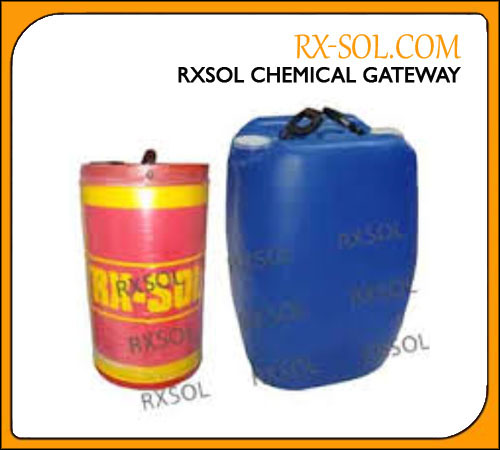
HCF Remover Neutral
Part No: RXSOL-20-2007-020
Especially formulated to soften up / remove baked on drying oils and also used after animal and vegetable oils, fish oils, tall oils,tug oil etc. It is low toxic product with an exceptional solvency power on soil & oily matter .It is free from hydroc
Product Description
RXSOL HCF Remover is a heavy-duty, low-foaming marine tank cleaning chemical specially developed for removing hydrocarbon residues, baked-on drying oils, animal and vegetable oils, fish oils, grease, wax, sludge and other stubborn organic deposits.
Its blend of surfactants, wetting agents and cleaning solvents helps penetrate and loosen difficult residues, allowing effective removal through tank cleaning machines, circulation systems and spray washing.
The product is particularly useful when preparing cargo tanks for subsequent cargoes where residual hydrocarbon contamination must be minimized.
Especially formulated to soften up / remove baked on drying oils and also used after animal and vegetable oils, fish oils, tall oils,tug oil etc. It is low toxic product with an exceptional solvency power on soil & oily matter .It is free from hydrocarbon solvents and minimizes the extreme hazards to personnel in handling materials.
RXSOL-20-2007-025 is a very strong low foaming cleaner.
Tank Lining– Stainless / Epoxy / Phenolic / Zinc-silicate coatings and from most metal surfaces (ferrous alloys, tin, zinc, aluminum and galvanized surfaces).
Application
Applications
-
Cargo tank cleaning after petroleum and chemical cargoes.
-
Removal of animal oils, vegetable oils, fish oils and tall oil residues.
-
Cleaning tanks contaminated with grease, wax and oily sludge.
-
Removal of soot, carbon deposits and general grime.
-
Cleaning of stainless steel and compatible coated cargo tanks.
-
Final cleaning stages before hydrocarbon-sensitive cargoes.
First of all flush the system with cold water to prevent evaporation rates and polymerization then the most economical method of using RXSOL-20-2007-025 is by direct injection followed by recirculation washing, using tank cleaning machines.
Dosage
Recommended Cleaning Procedure
1. Initial Washing: Flush cargo tanks with cold water to remove loose residues and reduce the risk of polymerization of drying oils.
2. Chemical Cleaning: Prepare an appropriate dilution of RXSOL HCF Remover according to the cargo residue, tank coating and approved cleaning procedure.
3. Recirculation: Circulate through tank cleaning machines, ensuring suitable filtration or straining.
4. Spot Cleaning: For persistent residues, apply the cleaner directly and allow approximately 10–45 minutes of contact without letting it dry.
5. Final Rinsing: Wash thoroughly with fresh water, inspect the tank and confirm that residues and foam have been removed.
The published application instructions also describe warm-water washing at approximately 60°C for suitable systems. Temperature limits must be checked against tank coating specifications.
RXSOL TANK CLEANER
Spraying Method:-Using HCF as delivered in drums, spray onto areas where residue remains following rough washing leave for 10-45 minutes (but do not allow to dry), then butterworth at maximum pressure and warm water 60oC for at least 3 hours, checking that there is no foam remaining in the final stages. Inspects tanks(s) and if desired result has been achieved fresh water rinse and dry.
** Make sure to take all safety precautions are followed when handling / spraying HCF **
Injection Method:– Not applicable.
Re-circulation Method:–Fill tank with fresh water and heat up to warm 50oC . IF a drop line is available on the tank line system, then start to circulate the water and add the required amount of Caustic flakes and HCF to make a 2.5% solution. A stronger solution can be made, but be advised that too much Caustic and too high temperature will result in white powder all over the tank. Under normal circumstances, between 2.5% and 4.5% will be sufficient strength. If there is no drop line, then lower butterworth hoses into the tank from the pump stack header without machines attached and circulate through these hoses while you fill the solution material.
**Use a strainer at the pump stack when circulating any solution.**
Tank Lining– Stainless / Epoxy / Phenolic / Zinc-silicate.
Note:- Completely miscible with sea water.Using-Procedure:-First of all flush the system with cold water to prevent evaporation rates and polymerization then the most economical method of using RXSOL-20-2007-020 is by direct injection followed by recirculation washing, using tank cleaning machines.
Spraying Method:-Using HCF as delivered in drums, spray onto areas where residue remains following rough washing leave for 10-45 minutes (but do not allow to dry), then butterworth at maximum pressure and warm water 60oC for at least 3 hours, checking that there is no foam remaining in the final stages. Inspects tanks(s) and if desired result has been achieved fresh water rinse and dry.
** Make sure to take all safety precautions are followed when handling / spraying HCF **
Injection Method:– Not applicable.
Re-circulation Method:–Fill tank with fresh water and heat up to warm 50oC . IF a drop line is available on the tank line system, then start to circulate the water and add the required amount of Caustic flakes and HCF to make a 2.5% solution. A stronger solution can be made, but be advised that too much Caustic and too high temperature will result in white powder all over the tank. Under normal circumstances, between 2.5% and 4.5% will be sufficient strength. If there is no drop line, then lower butterworth hoses into the tank from the pump stack header without machines attached and circulate through these hoses while you fill the solution material.
**Use a strainer at the pump stack when circulating any solution.**
Tank Lining– Stainless / Epoxy / Phenolic / Zinc-silicate.
Characteristics: -
- Removes grease, oil, carbon deposits, soil and grime.
- Keeps loosened deposits in suspension preventing re-deposition.
- Low toxic. , Non-flammable.
- Free from hydrocarbon solvents.
- Effective and economical in use , Water-based cleaner.
- RXSOL-20-2007-HCF has numerous cleaning applications including removal of greases, waxes, oil, sludge, soot, carbon deposits and general dirt and grime.
- Non-corrosive to ferrous metals. Suitable for all tank-coatings.
- Can be used for gas and hydrocarbon freeing of tanks.
- Can be used for deodorizing
-
Contains wetting agents.
Note:- Completely miscible with sea water.
Using-Procedure:-First of all flush the system with cold water to prevent evaporation rates and polymerization then the most economical method of using RXSOL-20-2007-020 is by direct injection followed by recirculation washing, using tank cleaning machines.
Spraying Method:-Using HCF as delivered in drums, spray onto areas where residue remains following rough washing leave for 10-45 minutes (but do not allow to dry), then butterworth at maximum pressure and warm water 60oC for at least 3 hours, checking that there is no foam remaining in the final stages. Inspects tanks(s) and if desired result has been achieved fresh water rinse and dry.
** Make sure to take all safety precautions are followed when handling / spraying HCF **
Injection Method:– Not applicable.
Re-circulation Method:–Fill tank with fresh water and heat up to warm 50oC . IF a drop line is available on the tank line system, then start to circulate the water and add the required amount of Caustic flakes and HCF to make a 2.5% solution. A stronger solution can be made, but be advised that too much Caustic and too high temperature will result in white powder all over the tank. Under normal circumstances, between 2.5% and 4.5% will be sufficient strength. If there is no drop line, then lower butterworth hoses into the tank from the pump stack header without machines attached and circulate through these hoses while you fill the solution material.
**Use a strainer at the pump stack when circulating any solution.**
Tank Lining– Stainless / Epoxy / Phenolic / Zinc-silicate.
Characteristics: -
- Removes grease, oil, carbon deposits, soil and grime.
- Keeps loosened deposits in suspension preventing re-deposition.
- Low toxic. , Non-flammable.
- Free from hydrocarbon solvents.
- Effective and economical in use , Water-based cleaner.
- RXSOL-20-2007-HCF has numerous cleaning applications including removal of greases, waxes, oil, sludge, soot, carbon deposits and general dirt and grime.
- Non-corrosive to ferrous metals. Suitable for all tank-coatings.
- Can be used for gas and hydrocarbon freeing of tanks.
- Can be used for deodorizing
-
Contains wetting agents.
Note:- Completely miscible with sea water.
Technical Specification
Typical Technical Properties
|
Parameter |
Published / Indicative Value |
|---|---|
|
Appearance |
Clear to yellowish liquid |
|
pH |
Above 7 |
|
Specific Gravity at 20°C |
Approx. 1.01 |
|
Water Miscibility |
Fully miscible |
|
Foaming |
Low |
|
Cleaning Chemistry |
Non-ionic surfactants and glycol ethers |
RXSOL – Manufacturer & Supplier of Tank Cleaner
Characteristics: -
- Removes grease, oil, carbon deposits, soil and grime.
- Keeps loosened deposits in suspension preventing re-deposition.
- Low toxic. , Non-flammable.
- Free from hydrocarbon solvents.
- Effective and economical in use , Water-based cleaner.
- RXSOL-20-2007-025 has numerous cleaning applications including removal of greases, waxes, oil, sludge, soot, carbon deposits and general dirt and grime.
- Non-corrosive to ferrous metals. Suitable for all tank-coatings.
- Can be used for gas and hydrocarbon freeing of tanks.
- Can be used for deodorizing
-
Contains wetting agents.
Note:- Completely miscible with sea water.
MSDS

| Product Name | RXSOL-20-2007-020 |
| Product Type | HCF REMOVER |
Company Details:
RX MARINE INTERNATIONAL
105, A wing , BSEL , TECH PARK.
VASHI ,NEW BOMBAY 400703 INDIA
| Phone | +91 22 65113333 / 5555 / 9999 / 27611360 |
| Fax | +91 22 2781 1318 :::AOH :0091 9821214367 |
| mail @ rxmarine.com |

* Chemical characterization
* Description: Mixture of the substances listed below with harmless additions.
* Dangerous components:
CAS : 111-76-2 2-butoxyethanol Xn; R 20/21/22-36/38 5-10%
EINECS : 203-905-0
Alco Xi; R 38 < 7.0%
CAS : 112-34-5 2-(2-butoxyethoxy)ethanol Xi; R 36 2.5-5%
EINECS : 203-961-6
*See Section 16

|
Chemical characterization |
|
|
Description |
Mixture of substances listed below with nonhazardous additions. Cleansing agent |
|
Dangerous components |
non-ionic surfactants Xn, Xi; R 22-41 10-25 % CAS: 111-76-2 |
|
Einecs |
203-905-0 2-butoxyethanol Xn, Xi; R 20/21/22-36/38 2.5-10% |

|
General Information |
Immediately remove any clothing soiled by the product. Symptoms of poisoning may even occur after several hours; therefore medical observation for at least 48 hours after the accident. |
|
After inhalation |
Supply fresh air; consult doctor in case of complaints. |
|
After skin contact |
Generally the product does not irritate the skin. |
|
After eye contact |
Rinse opened eye for several minutes under running water. Then consult a doctor. |
|
After swallowing |
Call for a doctor immediately |

|
Suitable extinguishing agents |
CO2, powder or water spray. Fight larger fires with water spray or alcohol resistant foam. |
|
Protective equipment |
No special measures required. |

|
Person-related safety precautions |
Wear protective clothing. |
|
Measures for environmental protectio |
Dilute with plenty of water. |
|
|
Do not allow to enter sewers/ surface or ground water. |
|
Measures for cleaning/collecting |
Absorb with liquid-binding material (sand, diatomite, acid binders, universal binders, sawdust).Dispose contaminated material as waste according to item 13.Ensure adequate ventilation.Dispose Of The Material Collected According To Regulations. |

|
Handling |
|
|
Information for safe handling |
Store in cool, dry place in tightly closed receptacles..Prevent formation of aerosols. |
|
Information about fire- and explosion protection |
No special measures required. |
|
Storage |
|
|
Requirements to be met by storerooms and receptacles |
No special requirements. |
|
Information about storage in one common storage facility |
Not required. |
|
Further information about storage conditions |
None. |

|
Additional information about design of technical facilities: No further data; see item 7. • Ingredients with limit values that require monitoring at the workplace: 111-76-2 2-butoxyethanol WEL Short-term value: 50 ppm Long-term value : 25 ppm • Additional information : The lists valid during the making were used as basis. • Personal protective equipment: • General protective and hygienic measures: Keep away from foodstuffs, beverages and feed. • Respiratory protection : Not required. • Protection of hands : Protective gloves The glove material has to be impermeable and resistant to the product/ the substance/ the preparation. • Material of gloves The selection of the suitable gloves does not only depend on the material, but also on further marks of quality and varies from manufacturer to manufacturer. • Penetration time of glove material The exact break trough time has to be found out by the manufacturer of the protective gloves and has to be observed. • Eye protection : Safety glasses • Body protection : Protective work clothing |
 |
 |

|
General Information |
|
|
Form |
Fluid |
|
Colour |
Yellowise / Clear |
|
Odour |
Characteristic |
|
• Change in condition |
|
|
Melting point/Melting range |
Undetermined. |
|
Boiling point/Boiling range |
171°C |
|
• Ignition temperature |
240°C |
|
• Self-igniting |
Product is not selfigniting. |
|
• Danger of explosion |
Product does not present an explosion hazard. |
|
• Explosion limits |
|
|
Lower |
1.1 Vol % |
|
Upper |
10.6 Vol % |
|
• Vapour pressure at 20°C |
23 hPa |
|
• Density at 20°C |
1.01 g/cm³ |
|
• Solubility in / Miscibility with |
|
|
water |
Fully miscible. |
|
• pH-value at 20°C |
> 7 |

|
Thermal decomposition / conditions to be avoided |
No decomposition if used according to specifications.- |
|
Dangerous reactions No dangerous reactions known. |
|
|
Dangerous decomposition products |
Carbon monoxide and carbon dioxide. |

|
Acute toxicity |
Primary irritant effect: |
|
on the skin |
No irritant effect. |
|
on the eye |
No irritating effect. |
|
Sensitization |
No sensitizing effects known. |
|
Additional toxicological information |
The product shows the following dangers according to the calculation method of the General EU |
|
Classification Guidelines for Preparations as issued in the latest version |
Harmful |

|
General notes |
Water hazard class 2 (German Regulation) (Self-assessment): hazardous for water.Do not allow product to reach ground water, water course or sewage system..Danger to drinking water if even small quantities leak into the ground. |

|
Product Recommendation |
Must not be disposed together with household garbage. Do not allow product to reach sewage system. |
|
Uncleaned packaging Recommendation |
Disposal must be made according to official regulations. |
|
Recommended cleansing agents |
Water, if necessary together with cleansing agents. |

• Land transport ADR/RID (cross-border)
• ADR/RID class : -
• Maritime transport IMDG:
• IMDG Class : -
• Marine pollutant : No
• Air transport ICAO -TI and IATA-DGR :
• ICAO/IATA Class : -

|
Labelling according to EU guidelines |
The product has been classified and marked in accordance with EU Directives / Ordinance on Hazardous Materials. |
|
Code letter and hazard designation of product |
Xn Harmful |
|
Risk phrases |
22 Harmful if swallowed. |
|
Safety phrases |
23 Do not breathe gas/fumes/vapour/spray (appropriate wording to be specified by the manufacturer). 26 In case of contact with eyes, rinse immediately with plenty of water and seek medical advice. 36/37/39 Wear suitable protective clothing, gloves and eye/face protection. 60 This material and its container must be disposed of as hazardous waste. |
|
National regulations |
|
|
Waterhazard class |
Water hazard class 2 (Self-assessment): hazardous for water. |

This information is based on our present knowledge. However, this shall not constitute a guarantee for any specific product features and shall not establish a legally valid contractual relationship. • Relevant R-phrases. 20/21/22 Harmful by inhalation, in contact with skin and if swallowed..22 .Harmful if swallowed. 36/38 Irritating to eyes and skin. 41 Risk of serious damage to eyes.
DISCLAIMER OF LIABILITY :The information in this SDS was obtained from sources which we believe are reliable. However, the information is provided without any warranty, express or implied, regarding its correctness. The conditions or methods of handling, storage, use or disposal of the product are beyond our control and may be beyond our knowledge. For this and other reasons, we do not assume responsibility and expressly disclaim liability for loss, damage or expense arising out of or in any way connected with the handling, storage, use or disposal of the product. This MSDS was prepared and is to be used only for this product. If the product is used as a component in another product, this MSDS information may not be applicable.