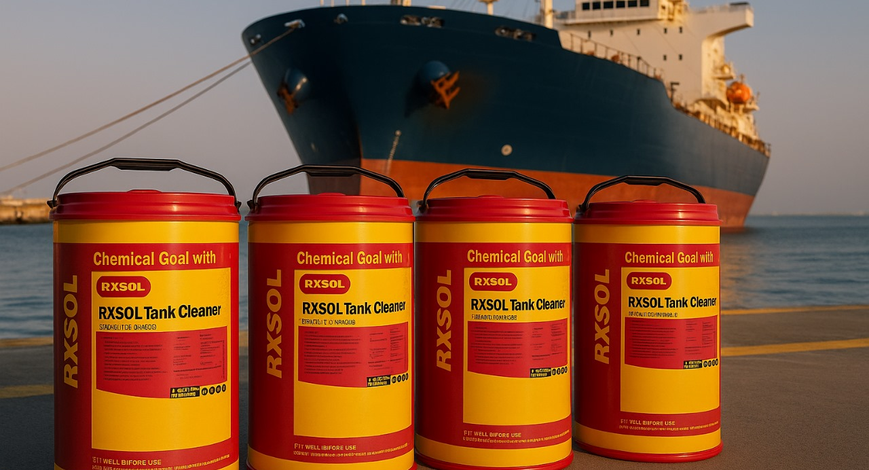
Hydro Testing Corrosion Inhibitor
Part No: RXSOL-43-4035-210
Hydro-testing corrosion protection for Pipeline, Tank contains corrosion inhibitor, oxygen scavenger and biocide
Hydro Testing Corrosion Inhibitor RXSOL 4000 is a multicomponent, multifunctional formulation which prevents corrosion, microbiological growth in single product treatment programme. Inhibitor, corrosion, multicomponent, multifunctional: For prevention of corrosion and microbiological growth in water flood systems during hydrostatic testing and other applications.
Application
PERFORMANCE:
CORROSION: Effectively prevents corrosion due to Carbon Dioxide, inorganic salts, dissolved oxygen & Hydrogen sulphide contamination from sour fluid or bacterial action. The inhibitor acts as a cathodic polarizer
MICROBIOLOGICAL GROWTH: Effectively prevents the metabolic function necessary for reproduction of the bacteria cell. Successfully prevents anaerobic/aerobic and sulphate reducing bacteria.
Dosage
Hydro Testing Corrosion Inhibitor RXSOL can be fed directly or through chemical doses pump. Doses may vary with the quality of water to be treated and the residence time of the water in the system.
Actual consumption is determined under operating conditions.
Recommended Dosage of Hydro Testing Corrosion Inhibitor RXSOL 4000
Hydro Testing Corrosion Inhibitor RXSOL 4000 dosage levels typically are 500ppm for hydrotest operations and between 1000- 4000 ppm when used as a packer fluid inhibitor. The exact dose rate for a specific job would depend on the environment and fluid that the chemical was being deployed into. We are happy to advise on this if required.
Technical Specification
| Form | Liquid |
| Colour | Colourless to slightly Yellow |
| Odour | Sharp |
| Flash Point | > 100 degree C |
| Density | 1.05-1.11 g/cm3 (25 degree C) |
| pH |
3 - 7 |
Non-Flammable
Safe Plant Handling
Low Odor
Provides corrosion protection in the liquid and the vapor phase
When used in hydrostatic testing the product provides protection in liquids below, above and at the liquid levels. Protection of recessed and hard to reach areas. Complicated valves and the interior surfaces of piping and equipment, which are often difficult or impossible to reach, are protected with true Vapor Corrosion Inhibitor action. Can be applied for hydrotest solution, metalworking fluids, coatings, adhesives and water treatment formulations.
MSDS

| Product Name | : Hydro Testing Corrosion Inhibitor RXSOL 4000 |
| Part Number | : RXSOL-40-4035-210 |
Company Details:
RX MARINE INTERNATIONAL
105, A wing , BSEL , TECH PARK.
VASHI ,NEW BOMBAY 400703 INDIA
Branch : Kandla, JNPT, Mumbai, Chennai, Vizag, Kolkata, Fujairah UAE, Muscat Barka Oman
| Phone | +91 22 27815540 / 41 / 42 |
| Fax | +91 22 2781 1318 :::AOH :0091 9821214367 |
| 123 @ rxmarine.com | |
| Website | www.rxmarine.com |

| Name of Substance | Cas Number | EINECS No | Wt.% | Symbol |
| Ammonium Bisulphite | 10192-30-0 | 203-469-7 | 10 -30 % | Xi |
| Ethanediol | 107-21-1 | 203-473-3 | 10 - 30% | Xn |
| Quaternary Ammonium Chloride | 68391-01-5 | 269-919-4 | 10 - 30% | C |
| Propan-2-ol | 67-63-0 | 200-661-7 | 1 - 5 % | Xi |
| Proprietary Blend of Corrosion Inhibitors, Oxygen Scavengers, Biocides | - | - | >60% | - |

| Signal Word | None |
| Hazard Statements |
Causes severe skin burns and eye damage. |
| Precautionary statements - prevention | Keep only in original container. Wash skin thoroughly after handling. Wear protective gloves/ protective clothing/ eye protection/ face protection.. |
| Precautionary statements - response |
IF SWALLOWED: Rinse mouth. Do NOT induce vomiting. IF ON SKIN (or hair): Take off immediately all contaminated clothing. Rinse skin with water/shower. IF INHALED: Remove person to fresh air and keep comfortable for breathing. Immediately call a POISON CENTER or doctor/ physician. IF IN EYES: Rinse cautiously with water for several minutes. Remove contact lenses, if present and easy to do. Continue rinsing. Immediately call a POISON CENTER or doctor/ physician. Wash contaminated clothing before reuse. Absorb spillage to prevent material damage. Storage: Store locked up. Store in corrosive resistant stainless steel container with a resistant inner liner. Disposal: Dispose of contents/ container to an approved waste disposal plant. |

| Eye Contact | Rinse immediately with plenty of water, also under the eyelids, for at least 15 minutes. Remove contact lenses, if present and easy to do. Continue rinsing. Get medical attention immediately. |
| Skin Contact | Wash off immediately with plenty of water for at least 15 minutes. Use a mild soap if available. Wash clothing before reuse. Thoroughly clean shoes before reuse. Get medical attention immediately. |
| Inhalation: | If inhaled, If inhaled, remove to fresh air. If not breathing, give artificial respiration. If breathing is difficult, give oxygen. Call a physician. |
| Ingestion: | If swallowed, do not induce vomiting. Allow victim to rinse his mouth and then to drink 2-4 cupfuls of water. Never give anything by mouth to an unconscious person. Call a physician. |
| Notes to Physicians | Treat symptomatically. |

| Suitable extinguishing media | Use extinguishing measures that are appropriate to local circumstances and the surrounding environment. |
| Protective Equipment | Use personal protective equipment. |
| Hazardous combustionproducts |
Decomposition products may include the following materials: Nitrous gases (NOx),Sulphur oxides,Ammonia (NH3) ,Amines. |
| Advice for firefighters | Wear self-contained breathing apparatus. Wear full protective equipment. |
| Specific extinguishing methods | Fire residues and contaminated fire extinguishing water must be disposed of in accordance with local regulations. In the event of fire and/or explosion do not breathe fumes. |

| Personal precautions, protective equipment and emergency procedures |
Ensure adequate ventilation. Keep people away from and upwind of spill/leak. Avoid inhalation, ingestion and contact with skin and eyes. Wear suitable personal protective equipment.Respiratory protective equipment. |
| Enviromental Precaution | Do not allow contact with soil, surface or ground water.If the products get into drains, inform the relevant authorities immediately. |
|
Methods and materials for containment and cleaning up |
Stop leak if safe to do so. Contain spillage, and then collect with noncombustible absorbent material, (e.g. sand, earth, diatomaceous earth, vermiculite) and place in container for disposal according to local / national regulations (see section 13). Flush away traces with water. For large spills, dike spilled material or otherwise contain material to ensure runoff does not reach a waterway. |

| Advice on safe handling | Do not ingest. Do not get in eyes, on skin, or on clothing. Do not breathe dust/ fume/ gas/ mist/ vapors/ spray. Use only with adequate ventilation. Wash hands thoroughly after handling. |
| Storage | Do not store near acids. Keep out of reach of children. Store in suitable labeled containers. Storage temperature : 10 °C to 50 °C |
| Advice on general occupational hygiene | Wash hands after use. Do not to eat, drink and smoke in work areas. Remove contaminated clothing and protective equipment before entering eating areas. |

| Engineering Control | Effective exhaust ventilation system. Maintain air concentrations below occupational exposure standards. | |||||||||||||||||||||||||||||||||||
| Personal Protection |
Eye protection : Wear eye protection/ face protection. Hand protection : Wear the following personal protective equipment: Standard glove type. Gloves should be discarded and replaced if there is any indication of degradation or chemical breakthrough. Skin protection : Personal protective equipment comprising: suitable protective gloves, safety goggles and protective clothing Respiratory protection :When workers are facing concentrations above the exposure limit they must use appropriate certified respirators. |
|||||||||||||||||||||||||||||||||||
|
Exposure Limits: |
|
|||||||||||||||||||||||||||||||||||
| Hygiene measures | Handle in accordance with good industrial hygiene and safety practice. Remove and wash contaminated clothing before re-use. Wash face, hands and any exposed skin thoroughly after handling. Provide suitable facilities for quick drenching or flushing of the eyes and body in case of contact or splash hazard. |


Gloves Suit

| Form | Liquid |
| Colour | Colourless to slightly Yellow |
| Odour | Acrid, slight odour of Sulphur dioxide |
| Boiling point and boiling range | No Data Available |
| Flash Point | >100°C |
| Freezing Point | No Data Available |
| pH | 6 |
| Evaporation rate | No data available |
| Flammability (solid, gas) | No data available |
| Upper explosion limit | No data available |
| Lower explosion limit | No data available |
| Explosive properties | No data available |
| Vapor pressure | No data available |
| Relative vapor density | No data available |
| Relative density | 1.05-1.11 g/cm3 (25C) |
| Water solubility | Soluble |
| Solubility in other solvents | No data available |
| Partition coefficient: octanol | No data available |
| Autoignition temperature | No data available |
| Thermal decomposition | No data available |
| Viscosity, kinematic | No data available |
| Explosive properties | No data available |
| Oxidizing properties | No data available |
| Molecular weight | No data available |
| VOC | No data available |

| Recativity | None |
| Stability | Stable under normal conditions. |
| Possibility of hazardous reactions | No dangerous reaction known under conditions of normal use. |
| Incompatible materials |
Avoid to contact with strong acids Avoid to contact with oxidizing agents. Store away from aldehydes. |
| Hazardous Decomposition |
Decomposition products may include the following materials: |
| Condition to Avoid | None Known |
| Polymerization | Will not occur. |

| Route of Exposure | Inhalation, Eye contact, Skin contact |
| Eyes |
Causes serious eye damage. |
| Skin | Causes severe skin burns. |
| Ingestion | Causes digestive tract burns |
| Inhalation | Inhalation of vapours leads to irritation of respiratory tract and mucous membranes, headache, nausea, dizziness, vomiting. Sensitisation possible through inhalation |
| Chronic Exposure | Health injuries are not known or expected under normal use. |
| Acute oral toxicity | LD50 200-2,000mg/kg |
| Acute inhalation toxicity | No data available |
| Acute dermal toxicity | No data available |
| Classification | The classification was made by the conventional (calculation) method of Dangerous Preparations Directive(1999/45/EC) |

| Environmental Effects | No data available |
| Toxicity to fish | No data available |
| Toxicity to daphnia and others | No data available |
| Toxicity to algae | No data available |
| Biodegradability | > 60% (28 d) |
| Persistence and degradability | No data available |
| Bioaccumulative potential | No data available |
| Mobility in soil | No data available |

| Remarks | Please consider the relevant national or regional provisions. Waste shall be separated into the categories that can be handled separately by the local or national waste management facilities. |
| Waste Disposal | The product should not be allowed to enter drains, water courses or the soil. Where possible recycling is preferred to disposal or incineration. If recycling is not practicable, dispose of in compliance with local regulations. Dispose of wastes in an approved waste disposal facility |

Land transport (DOT)
| UN Number | 1760 |
| Proper shipping name | Corrosive liquid, n.o.s. |
| Class | 8 |
| Packing Group | II |
| Remarks | Shipment Permitted |
| Hazardous Indoucer(S) | Quaternary ammonium chloride |
ADR/ ADNR
| UN Number | 1760 |
| Proper shipping name | Corrosive liquid, n.o.s. |
| Class | 8 |
| Packing Group | II |
| Remarks | Shipment Permitted |
| Hazardous Indoucer(S) | Quaternary ammonium chloride |
IATA
| UN Number | 1760 |
| Proper shipping name | Corrosive liquid, n.o.s. |
| Class | 8 |
| Packing Group | II |
| Remarks | Shipment Permitted |
| Hazardous Indoucer(S) | Quaternary ammonium chloride |
International Maritime Dangerous Goods Code (IMDG) :
| UN Number | 1760 |
| Proper shipping name | Corrosive liquid, n.o.s. |
| Class | 8 |
| Packing Group | II |
| Remarks | Shipment Permitted |
| Hazardous Indoucer(S) | Quaternary ammonium chloride |

| Labelling in accordance with EC-Directives: |
Hazardous symbols C Corrosive |
| R phrases |
22 Harmful is swallowed 31 Contact with acids liberates toxic gas 34 Causes burns |
| S pharses |
26 In case of contact with eyes, rinse immediately with plenty of water and seek medical advice. 27 Take off immediately all contaminated clothing. 36/37/39 Wear suitable protective clothing, gloves and eye/face protection 45 In case of accident or if you feel unwell, seek medical advice immediately (show the label where possible). 60 This material and its container must be disposed of as hazardous waste. |
| HMIS | |
| Health Hazard | : 2 |
| Fire Hazard | : 2 |
| Reactivity | : 0 |
| Personal Protection | : H |
| Fire : | |
| Health Hazard | : 2 |
| Fire Hazard | : 2 |
| Reactivity | : 0 |
| Specific Hazard | : 0 |

| Other Information |
The information above is believed to be accurate and represents the best information currently available to us. However, we make no warranty of merchantability or any other warranty, express or implied, with respect to such information, and we assume no liability resulting from its use. Users should make their own investigations to determine the suitability of the information for their particular purposes. In no event shall be liable for any claims, losses, or damages of any third party or for lost profits or any special, indirect, incidental, consequential or exemplary damages, howsoever arising, even if RX Marine International has been advised of the possibility of such damages. DISCLAIMER OF LIABILITY :The information in this SDS was obtained from sources which we believe are reliable. However, the information is provided without any warranty, express or implied, regarding its correctness. The conditions or methods of handling, storage, use or disposal of the product are beyond our control and may be beyond our knowledge. For this and other reasons, we do not assume responsibility and expressly disclaim liability for loss, damage or expense arising out of or in any way connected with the handling, storage, use or disposal of the product. This MSDS was prepared and is to be used only for this product. If the product is used as a component in another product, this MSDS information may not be applicable. |