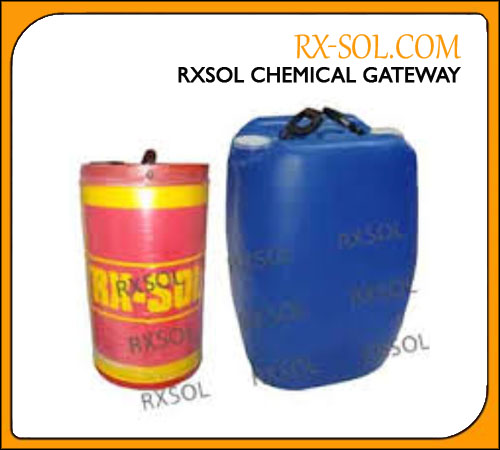
ISOAMYL ALCOHOL
Part No: RXSOL-19-1325-025
This is antivanaduim and protect system from SODIUM problem . It is specifically intended to prevent damage of exhaust valve , formulated for treatment and reduction of corrosive deposits formed on exhaust valve seats and turbocharger compone
RXSOL-70-7006-025 is antivanaduim and protect system from SODIUM problem . It is specifically intended to prevent damage of exhaust valve , formulated for treatment and reduction of corrosive deposits formed on exhaust valve seats and turbocharger components.
COMMON NAME : VALV CARE
Application
For physically modifies fuel ash, raising the sinter melting points of the ash above the normal engine operating temperatures. Modified ash particles are solid, small and non-adhesive and are ejected with the exhaust gas steam.
Dosage
Typical dose rates vary between 1 : 1000 and 1:5000 ( 1 Ltr / 1-5 MT ) depending on the nature and severity of the problem. For more detail prefer to technical bulletine.
Technical Specification
MSDS

| Product Name | RXSOL-70-7006-025 |
| Product Type | Valvocare Fuel Additive |
Company Details:
RX MARINE INTERNATIONAL
105, A wing , BSEL , TECH PARK.
VASHI ,NEW BOMBAY 400703 INDIA
Stock Point : Mumbai, Kandla, Kolkata, Chennai, Vizag, Fujairah, Muscat
| Phone | +91 22 65113333 / 5555 / 9999 / 27815540 |
| Fax | +91 22 2781 1318 :::AOH :0091 9821214367 |
| mail @ rxmarine.com | |
| Website | www.rxmarine.com |

|
Chemical Name |
Concentration |
CAS Number |
EC Number |
R Phrases* |
Symbols |
|
Naphtha (petroleum), |
30-60 |
64742-82-1 |
265-185-4 | 65, 66 |
Xn |
| Fatty Alcohol Polyethoxylated Polymer Exemption | 1 -20% | ......... | ......... | .......... | ...... |
| Manganese Octoate | 10 -30% | 6535-19-9 |
*See Section 16


Irritant
|
Odour |
Smells of hydrocarbon |
|
Appearance |
Liquid, light, yellow |
| Contact with eyes | Causes redness and irritation |
| Inhalation | In cases of severe exposure, anaesthesia may develop, May cause chronic pneumonitis |
| Classification of the substance or mixture | Counsil Directive 1999/45/E EC Classification, packing and labelling of dangerous preparations. |
| Risk Phrases | Harmful: may cause lung damage if swallowed (R65). Repeated exposure may cause skin dryness or cracking (R66) |
| Safety Phrases | Do not breathe spray/mists (S23). Avoid contact with skin (S24).Wear suitable protective clothing, eye/face protection and gloves (S36/37/39) If swallowed, do not induce vomiting: seek medical advice immediately and show this container or label (S62) |

Description of first aid measures
|
Contact with skin |
Remove contaminated clothing immediately and drench affected skin with plenty of water. Then wash with soap and water Contaminated clothing should be laundered before reuse. Seek medical attention if irritation persists |
|
Contact with eyes |
If substance has got into eyes, immediately wash out with plenty of water for at least 15 minutes.Irrigate eyes thoroughly whilst lifting eyelids When in doubt or symptoms persist, seek medical attention |
| Ingestion | Do not induce vomiting because of risk of aspiration into the lungs. If aspiration is suspected obtain immediate medical attention If vomiting occurs turn patient on side Give water or milk to drink. Obtain immediate medical attention |
|
Inhalation |
Remove patient to fresh air. Seek medical attention if ill effects occur |
| General |
In case of accident or if you feel unwell, seek medical advice immediately (show the label where possible) (S45) |

Auto-ignition point 220 deg C
Flash point > 62 deg C (CC)
Decomposition products may include carbon oxides, Decomposition products may include carbon dioxide
In case of fire use water spray or fog, alcohol resistant foam, dry chemical or carbon dioxide (S43)
Do not use water jets
Prevent run off water from entering drains if possible
Vapours are heavier than air and may travel considerable distances to a source of ignition and flashback

|
Personal Precautions |
Wear protective clothing as per section 8. Shut off all ignition sources. Vapours are heavier than air and may travel considerable distances to a source of ignition and flashback |
|
Environmental Precautions |
Do not allow to enter public sewers and watercourses |
|
Clean Up Actions |
Absorb spillage in inert material and shovel up. Ventilate the area and wash spill site after material pick-up is complete |
| Special Precautions | Do not allow to enter public sewers and watercourses. Wear protective clothing as per section 8 |

Precautions for safe handling
- See Section 8
- Eyewash bottles should be available
- Avoid contact with skin and eyes (S24/25)
- Keep away from heat/sparks/open flames/hot surfaces. - No smoking.
Conditions for safe storage, including any incompatibilities
- Keep only in the original container in a cool, well ventilated place (S3/9/49)
- Keep container tightly closed (S7)
- Keep away from open flames, hot surfaces and sources of ignition.

|
Control parameters |
TLV (TWA) (Naphtha (petroleum), hydrodesulfurized heavy) 275 mg/m3 ( ) |
|
Exposure controls |
The undiluted product must not be used in a confined space without good ventilation. Ensure adequate ventilation |
|
Occupational exposure controls |
Wear suitable protective clothing, including eye/face protection and gloves (neoprene or nitrile are recommended). Wear suitable respiratory protection. Gas cartridge (organic substances). Ensure adequate ventilation |
| Gloves Suit Goggles | Respirator |


Gloves Suit Goggles Respirator

|
Odour |
Smells of hydrocarbon |
|
Appearance |
Liquid, light, yellow |
|
pH |
not applicable |
|
Boiling point |
175 °C to 220 °C at 760 mm /Hg |
| Melting point | not known |
| Density | 0,85 g/cm3 at 20 deg C |
| Flash point | > 62 deg C (CC) |
| Auto-ignition point | 220 deg C |
| Lower explosive limit | 0.6 % (in air) |
| Upper explosive limit | 7 % (in air) |

- This article is considered stable under normal conditions
- Keep away from naked flames, incandescent or hot surfaces
- See Section 5

|
Inhalation |
Inhalation of solvent vapours may give rise to nausea, headaches and dizziness |
|
Contact with skin |
Prolonged skin contact will result in defatting of the skin, leading to irritation, and in some |
|
Contact with eyes |
May cause redness and irritation |
| Ingestion | Aspiration hazard. The ingestion of significant quantities may cause damage to lungs |

| Ecotoxicity | This product does not contain ingredients which are classified in the EU as dangerous for the environment. LC50 (fish) 10-100 mg/l (96 hr) |
|
Persistence and degradability |
OECD-test. 28 days >60% (Naphta) |
|
Bioaccumulation Potential |
Hydrocarbon solvents have the potential to bioaccumilate. |

|
Waste treatment methods |
Do not discharge into drains or the environment, dispose to an authorised waste collection point. Disposal should be in accordance with local, state or national legislation |
| Classification | EU Waste class: 07.01. This material and/or its container must be disposed of as hazardous waste |

Special precautions for user
- Not classified as hazardous for transport

Classification and labelling Counsil Directive 1999/45/EEC Classification, packing and labelling of dangerous preparations.. This Safety Data Sheet is provided in compliance with TheDangerous Substances Directive (67/548/EEC) Safety, health and environmentalregulations/legislation specific for the substance or mixture. This Safety Data Sheet has been prepared in accordance with article 31 and annex II in REACH and Directive 453/2010/EU.

Text of R and S phrase codes used in this safety data sheet:- R65: Harmful: may cause lung damage if swallowed; R66: Repeated exposure may cause skin dryness or cracking. The information provided about the product on this Safety Data Sheet has been compiled from knowledge of the individual constituents The data given here is based on current knowledge and experience. This Safety Data Sheet describes the product in terms of safety requirements and does not signify any warranty with regard to the product's properties The data given here only applies when product used for proper application(s). The product is not sold as suitable for other applications - usage in such may cause risks not mentioned in this sheet. Do not use for other application(s) without seeking advice from manufacturer
DISCLAIMER OF LIABILITY :The information in this SDS was obtained from sources which we believe are reliable. However, the information is provided without any warranty, express or implied, regarding its correctness. The conditions or methods of handling, storage, use or disposal of the product are beyond our control and may be beyond our knowledge. For this and other reasons, we do not assume responsibility and expressly disclaim liability for loss, damage or expense arising out of or in any way connected with the handling, storage, use or disposal of the product. This MSDS was prepared and is to be used only for this product. If the product is used as a component in another product, this MSDS information may not be applicable.