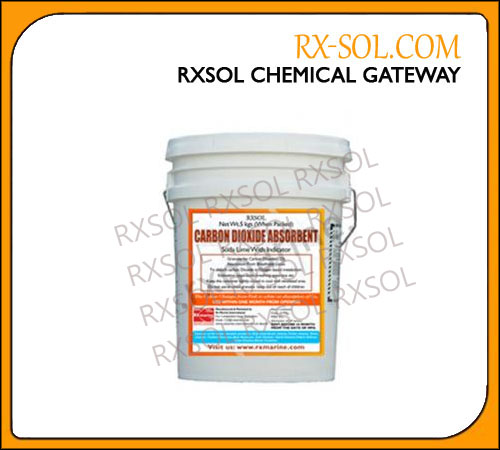
Odorizer Absorbant
Part No: RXSOL-24-2402-500
Flocculation in municipal water supply, sewage and industrial effluent and for Paper manufacture.
Poly Aluminium Chloride PAC a powerful Water Treatment Chemical
Polyaluminium Chloride Liquid supreme grade Polyaluminium Chloride Liquid. We formulate these chemicals using quality compounds to obtain pure chemicals. The Polyaluminium Chloride is widely used in water treatment plants for purification of water. Its also used in deodorants and antiperspirants. Our experienced quality examiners test the Polyaluminium Chloride Powder on the basis of various parameters before forwarding it for delivery. Furthermore, we are able to deliver these chemicals within the time-specified by our clients.
Application
Polyaluminium Chloride Applications
A part from the use in water treatment and urban water supply, Polyaluminium Chloride also finds application in drilling exploration, cosmetic, chemical, paper and various other industries.
Advantages of Polyaluminium Chloride:
• A wide range of pH value from 5 to 9 can be adapted by Polyaluminium Chloride and can be easily reduced to basicity, after processing
• It can easily adapt the different temperature of water during summer and winter and at different regions, i.e, the south and the north of China.
• It is best suited for an automatic dosing device of alum (hydrated double sulphate of potassium and aluminium)
• Its purifying effect is much better than other organic flocculants. It easily purifies the water on low-temperature and low turbidity. Also, it lower the water treatment cost by 20-80%.
• The dosage of Polyaluminium Chloride is smaller than other flocculants, which efficiently improves the quality of treated water.
• With huge size and rapid condensation service life of cellular filter (sedimentation basin), the quick formation of FOLC at low temperature is easily possible using the chloride.
Dosage
Polyaluminium Chloride Usage
• The user can allocate the remedy concentration of the product by test and can easily determine the appropriate dosage, which is to be added after they are dissolved and diluted.
• The perfect dilution ratio of liquid product is 5 to 50% and the solid product is 2 to 20%.
• The solid product dosages is 1-15kg/1000 tons water and liquid product dosage is 3-40kg/1000 tons water
• The perfect amount of dosage can be determined after coagulation tests and experiments.
| Items | Data |
| Appearance |
Solid powder, yellow |
| Al2O3 % |
29 min |
| Basicity % |
.0~90.0 |
| Insolubles % | 1.5 max |
| pH(1% water solution |
.5~5.0 |
Technical Specification
Technical Specification:
| Classification | Chemical Auxiliary Agent |
| CAS No | 1327-41-9 |
| Other Names | Polyaluminium Chloride |
| MF | pac |
| Purity | 30% |
| Type | water treatment chemical |
| Usage | Paper Chemicals, Water Treatment Chemicals |
| Brand Name | RXSOL |
| Model Number | PAC |
| white | Powder |
MSDS

| Product Name |
Poly aluminum Chloride |
| Product Type | RXSOL-40-4097-250 |
Company Details:
RX MARINE INTERNATIONAL
105, A wing , BSEL , TECH PARK.
VASHI ,NEW BOMBAY 400703 INDIA
Stock Point : Mumbai, Kandla, Kolkata, Chennai, Vizag Visakhapatnam, Fujairah, Muscat, Canada, Kenya Africa
| Phone | +91 22 65113333/ 5555 / 9999 / 27611360 / 27815540 |
| Fax | +91 22 2781 1318 |
| mail @ rxmarine.com |

| Components | CAS Number | Proportion |
Hazard Codes |
| Water with Stabilizer | 7732-18-5 | 40-50% | - |
| Polyaluminium Chloride | 1327-41-9 | 50% | H302 H315 H319 |

Not classified as a Dangerous Good under NZS 5433:2012 Transport of Dangerous Goods on Land.
Classified as hazardous according to criteria in the HS (Minimum Degrees of Hazard) Regulations 2001.
SIGNAL WORD: WARNING
Subclasses:
| Subclass 6.1 Category D | Substances which are acutely toxic. |
| Subclass 6.3 Category A | Substances that are irritating to the skin. |
| Subclass 6.4 Category A | tances that are irritating to the eye, |
Hazard Statement(s):
| H302 | Harmful if swallowed. |
| H315 | Causes skin irritation. |
| H319 | Causes serious eye irritation. |
Precautionary Statement(s):
Prevention:
| P102 | Keep out of reach of children. |
| P264 | Wash hands thoroughly after handling. |
| P270 | Do not eat, drink or smoke when using this product. |
| P280 | Wear protective gloves/protective clothing/eye protection/face protection |
Response:
| P301+P312 IF SWALLOWED | Call a POISON CENTER or doctor/physician if you feel unwell. |
| P330 | Rinse mouth. |
| P302+P352 IF ON SKIN | Wash with plenty of soap and water. |
| P321 | Specific treatment (see First Aid Measures on the Safety Data Sheet). |
| P332+P313 If skin irritation occurs | Get medical advice/attention. |
| P362 | Take off contaminated clothing before re-use. |
| P305+P351+P338 IF IN EYES | Rinse cautiously with water for several minutes. Remove contact lenses, if present and easy to do. Continue rinsing. |
| P337+P313 If eye irritation persists | Get medical advice/attention. |
Storage: No storage statements.
Disposal:
P501 In case of a substance that is in compliance with a HSNO approval other than a Part 6A (Group Standards) approval, a label must provide a description of one or more appropriate and achievable methods for the disposal of a substance in accordance with the Hazardous Substances (Disposal) Regulations 2001. This may also include any method of disposal that must be avoided.

| Inhalation | Remove victim from area of exposure - avoid becoming a casualty. Remove contaminated clothing and loosen remaining clothing. Allow patient to assume most comfortable position and keep warm. Keep at rest until fully recovered. Seek medical advice if effects persist. |
| Skin Contact | If skin or hair contact occurs, immediately remove any contaminated clothing and wash skin and hair thoroughly with running water. If swelling, redness, blistering or irritation occurs seek medical assistance. |
|
Eye Contact |
If in eyes, hold eyelids apart and flush the eye continuously with running water. Continue flushing until advised to stop by a Poisons Information Centre or a doctor, or for at least 15 minutes. |
| Ingestion | Rinse mouth with water. If swallowed, give a glass of water to drink. If vomiting occurs give further water. Seek medical assistance.. |
Indication of immediate medical attention and special treatment needed:
Treat symptomatically.

Suitable Extinguishing Media:
Not combustible, however, if material is involved in a fire use: Extinguishing media appropriate to surrounding fire conditions.
Specific hazards arising from the substance or mixture:
Non-combustible material.
Special protective equipment and precautions for fire-fighters:
Decomposes on heating emitting toxic fumes, including those of hydrogen chloride . Fire fighters to wear self-contained breathing apparatus and suitable protective clothing if risk of exposure to products of decomposition.

Emergency procedures/Environmental precautions:
Clear area of all unprotected personnel. If contamination of sewers or waterways has occurred advise local emergency services.
Personal precautions/Protective equipment/Methods and materials for containment and cleaning up:
Slippery when spilt. Avoid accidents, clean up immediately. Wear protective equipment to prevent skin and eye contact. Contain - prevent run off into drains and waterways. Use absorbent (soil, sand or other inert material). Collect and seal in properly labelled containers or drums for disposal.

Precautions for safe handling:
Avoid skin and eye contact and breathing in vapour, mists and aerosols.
Conditions for safe storage, including any incompatibilities:
Store in a cool, dry, well ventilated place and out of direct sunlight. Store away from incompatible materials described in Section 10. Keep containers closed when not in use - check regularly for leaks.

Workplace Exposure Standards:
No value assigned for this specific material by the New Zealand Department of Labour (Health & Safety). However, Workplace Exposure Standard(s) for constituent(s):
Aluminium, as Al: Soluble salts WES-TWA 5 mg/m3
As published by the New Zealand Department of Labour (Health & Safety).
WES - TWA (Workplace Exposure Standard - Time Weighted Average) - The eight-hour, time-weighted average exposure standard is designed to protect the worker from the effects of long-term exposure.
These Workplace Exposure Standards are guides to be used in the control of occupational health hazards. All atmospheric contamination should be kept to as low a level as is workable. These workplace exposure standards should not be used as fine dividing lines between safe and dangerous concentrations of chemicals. They are not a measure of relative toxicity.
Appropriate engineering controls:
Ensure ventilation is adequate and that air concentrations of components are controlled below quoted Workplace Exposure Standards.Keep containers closed when not in use.
Individual protection measures, such as Personal Protective Equipment (PPE):
The selection of PPE is dependant on a detailed risk assessment. The risk assessment should consider the work situation, the physical form of the chemical, the handling methods, and environmental factors.
Orica Personal Protection Guide No. 1, 1998: F - OVERALLS, SAFETY SHOES, CHEMICAL GOGGLES, GLOVES, DUST MASK.
Wear overalls, chemical goggles and impervious gloves.Always wash hands before smoking, eating, drinking or using the toilet. Wash contaminated clothing and other protective equipment before storage or re-use.If risk of inhalation exists, wear suitable mist respirator meeting the requirements of AS/NZS 1715 and AS/NZS 1716.

Information on basic physical and chemical properties:
| Physical state | Clear Liquid |
| Colour | Pale Amber |
| Odour | Mild |
| Solubility | Soluble in water. |
| Specific Gravity | 1.20 @20°C (at 10.1% Al2O3) |
| Relative Vapour Density (air=1) | Not available |
| Vapour Pressure (20 °C) | Not available |
| Flash Point (°C): | Not available |
| Autoignition Temperature (°C): | Not available |
| Flammability Limits (%): | Not available |
| Boiling Point/Range (°C | Not available |
| Decomposition Point (°C) | Not available |
| pH | 2.6 +/- 0.3 @25°C |
| Freezing Point/Range (°C) | 12.0 (approx.) |

| Reactivity | Reacts with chlorates. Reacts with chlorites. |
| Chemical stability: | Slowly corrodes metals. |
| Possibility of hazardous reactions | Reacts with calcium hypochlorite , acids , and alkalis . |
| Conditions to avoid | None known. |
| Incompatible materials | Incompatible with calcium hypochlorite , acids , alkalis , and metals . |
|
Hazardous decomposition products: |
Hydrogen chloride. |

No adverse health effects expected if the product is handled in accordance with this Safety Data Sheet and the product label. Symptoms or effects that may arise if the product is mishandled and overexposure occurs are:
| Ingestion | Swallowing can result in nausea, vomiting, diarrhoea, and gastrointestinal irritation. |
|
Eye contact |
An eye irritant. |
| Skin contact | Contact with skin will result in irritation. |
| Inhalation | Breathing in mists or aerosols may produce respiratory irritation. |
| Acute toxicity |
No LD50 data available for the product. However, for constituent(s) POLYALUMINIUM CHLORIDE: Oral LD50 (rat): 681 mg/kg. Oral LD50 (mice): 316 mg/kg. |
| Chronic effects | No information available for the product. |

Ecotoxicity
Avoid contaminating waterways.

Disposal Methods:
Refer to local government authority for disposal recommendations. Dispose of material through a licensed waste contractor.Normally suitable for disposal at approved land waste site.

| Road and Rail Transport | Not classified as a Dangerous Good under NZS 5433:2012 Transport of Dangerous Goods on Land. |
| Marine Transport | Not classified as Dangerous Goods by the criteria of the International Maritime Dangerous Goods Code (IMDG Code) for transport by sea; NON-DANGEROUS GOODS. |
| Air Transport | Not classified as Dangerous Goods by the criteria of the International Air Transport Association (IATA) Dangerous Goods Regulations for transport by air; NON-DANGEROUS GOODS. |

Classification:
Classified as hazardous according to criteria in the HS (Minimum Degrees of Hazard) Regulations 2001.
Subclasses:
| Subclass 6.1 Category D | Substances which are acutely toxic. |
|
Subclass 6.3 Category A |
Substances that are irritating to the skin. |
| Subclass 6.4 Category A | Substances that are irritating to the eye. |
Water Treatment Chemicals (Subsidiary Hazard) Group Standard 2006
Hazard Statement(s):
| H302 | Harmful if swallowed |
| H315 |
Causes skin irritation. |
| H319 | Causes serious eye irritation. |

Text of R and S phrase codes used in this safety data sheet:- R34: Causes burns; R36: Irritating to eyes; R37: Irritating to respiratory system; R41: Risk of serious damage to eyes. The information provided about the product on this Safety Data Sheet has been compiled from knowledge of the individual constituents The data given here is based on current knowledge and experience. This Safety Data Sheet describes the product in terms of safety requirements and does not signify any warranty with regard to the product's properties The data given here only applies when product used for proper application(s). The product is not sold as suitable for other applications - usage in such may cause risks not mentioned in this sheet. Do not use for other application(s) without seeking advice from manufacturer.
DISCLAIMER OF LIABILITY :The information in this SDS was obtained from sources which we believe are reliable. However, the information is provided without any warranty, express or implied, regarding its correctness. The conditions or methods of handling, storage, use or disposal of the product are beyond our control and may be beyond our knowledge. For this and other reasons, we do not assume responsibility and expressly disclaim liability for loss, damage or expense arising out of or in any way connected with the handling, storage, use or disposal of the product. This MSDS was prepared and is to be used only for this product. If the product is used as a component in another product, this MSDS information may not be applicable.