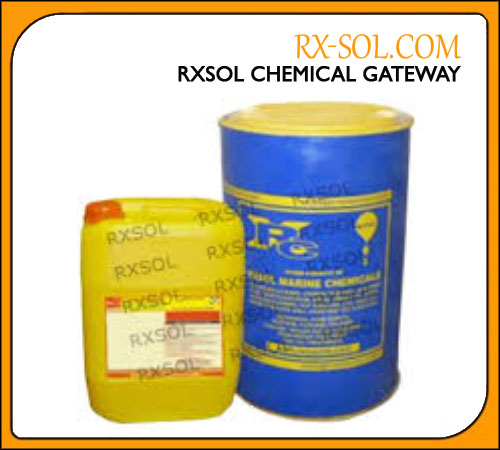
Palm Fatty Acid Cleaner
Part No: RXSOL-20-2045-210
Polyols
Application
Dosage
Technical Specification
MSDS

| Product Name | RXSOL-19-1644-210 |
| Product Type | Polyols 220Kg |
Company Details:
RX MARINE INTERNATIONAL
105, A wing , BSEL , TECH PARK.
VASHI ,NEW BOMBAY 400703 INDIA
| Phone | +91 22 65113333 / 5555 / 9999 |
| Fax | +91 22 2781 1318 :::AOH :0091 9821214367 |
| mail @ rxmarine.com |

Type of product:
Mixture polyether polyol No dangerous ingredients according to Regulation (EC) No. 1907/2006

Classification of the substance or mixture
GHS Classification: Not a dangerous substance according to GHS.
GHS-Labelling : Not a dangerous substance according to GHS.

Description of first aid measures
| General advice: | Remove contaminated clothing. |
| If inhaled: |
Take the person into the fresh air and keep him warm, let him rest; if there is difficulty in breathing, medical advice is required. |
| In case of skin contact: |
In case of skin contact wash affected areas thoroughly with soap and plenty of water. Consult a doctor in the event of a skin reaction |
| In case of eye contact: |
Hold the eyes open and rinse with preferably lukewarm water for a sufficiently long period of time (at least 10 minutes). Contact an ophthalmologist |
| If swallowed: | DO NOT induce the patient to vomit, medical advice is required |

| Suitable extinguishing media: |
Carbon dioxide (CO2), Foam, extinguishing powder, in cases of larger fires, water spray should be used. |
| Unsuitable extinguishing media: | High volume water jet |
| Special hazards arising from the substance or mixture: |
Burning releases carbon monoxide, carbon dioxide, oxides of nitrogen and traces of hydrogen cyanide. In the event of fire and/or explosion do not breathe fumes |
| Advice for fire-fighters: |
Firemen must wear self-contained breathing apparatus. Do not allow contaminated extinguishing water to enter the soil, ground-water or surface waters. |

Personal precautions, protective equipment and emergency procedures:
Put on protective equipment (see section 8). Ensure adequate ventilation/exhaust extraction. Keep unauthorized persons away.
Environment related measures:
Do not allow to escape into waterways, wastewater or soil.
Methods and material for containment and cleaning up:
Take up with absorbent for chemicals or, if necessary with dry sand and store in closed containers.
Reference to other sections:
For further disposal measures see section 13.

Precautions for safe handling:
When handling observe the usual precautionary measures for chemicals. Avoid contact with the skin and the eyes.
In all workplaces or parts of the plant where high concentrations of aerosols and/or vapors may be generated (e.g. during pressure release, mold venting or when cleaning mixing heads with an air blast), appropriately located exhaust ventilation must be provided in such a way that the WEL is not exceeded. The air should be drawn away from the personnel handling the product The efficiency of the exhaust equipment should be periodically checked.
Precautions should generally be taken against electrostatic charges according to the equipment used and the way the product is handled and packaged.
Keep away from foodstuffs, drinks and tobacco. Wash hands before breaks and at the end of workday. Keep working clothes separately. Change contaminated or soaked clothing.
Conditions for safe storage, including any incompatibilities:Keep container tightly closed and dry.
Storage temperature regarding personal safety: max. 50 °C.
Further specific information see our :"Technical Information"

Control parameters :
No information on Exposure Limit Values necessary according to EC directive 2006/121/EG For technical protective measures to limit exposure see also Chapter 7 "Handling and storage".
Exposure controls
Respiratory protection:
Unless the product is entirely enclosed, do not handle it until you have studied the respiratory precautions issued by the appropriate authority or accident prevention association. At substantial vapor concentrations respirators must be used. Put on full-mask respirator with filter type ABEK.
Hand protection:
Protective gloves are recommended. Conditionally suitable materials for protective gloves; EN 374:
Nitrile rubber - NBR (>= 0.35 mm) Breakthrough time not tested; dispose of immediately after contamination.
Eye protection:
Wear eye/face protection.
Skin and body protection:
Wear suitable protective clothing.
Safety precautions for handling freshly molded polyurethane parts: see section 16

| Appearance: | viscous |
| Colour: | colourless |
| Odour: | slight inherent odour |
| Odour Threshold: | not established |
| pH: | ca. 6,5 |
| Pour point | ca. -36 °C |
| Initial boiling point: | > 200 °C |
| Flash point: | ca. 235 °C |
| Evaporation rate: | not established |
| Flammability (solid, gas): | not applicable |
| Burning number: | not applicable |
| Vapour pressure: | 0,00133 hPa at 25 °C |
| Vapour density: | not established |
| Density: | 1,02 g/cm³ at 20 °C |
| Water solubility: | slightly soluble |
| Surface tension: | not established |
| Partition coefficient(n−octanol/water): | not established |
| Autoignition temperature: | not applicable |
| Ignition temperature: | not established |
| Decomposition temperature: | not established |
| Viscosity, dynamic: |
788 mPa.s at 20 °C 575 mPa.s at 25 °C 50 mPa.s at 95 °C |
| Explosive properties: |
not established |
| Dust explosion class: | not applicable |
| Oxidising properties: |
not established |

Chemical stability: No decomposition below initial boiling point.
Possibility of hazardous reactions: No hazardous reactions when used as directed.
Hazardous decomposition products: No hazardous decomposition products when stored and
handled correctly.

Toxicological studies on the product are not yet available.
An expected acute oral toxicity as LD50 in rats will be in the order of >2000 mg/kg as derived from products with similar composition.
Irritant/caustic action in analogy to a comparable product.
Skin effect: No skin irritation is expected.
Eye effect: Weak irritation of the eyes possible

Ecotoxicological studies of the product are not available.
Do not allow to escape into waterways, wastewater or soil.

Dispose in accordance with applicable international, national and local laws, ordinances and statutes. For disposal within the EC, the appropriate code according to the European Waste Catalogue (EWC) should be used.
Waste treatment methods :
After containers have been emptied as thoroughly as possible (e.g. by pouring, scraping or draining until "drip-dry"), they can be sent to an appropriate collection point set up within the framework of the existing take-back scheme of the chemical industry. Containers must be recycled in compliance with national legislation and environmental regulations.
None disposal into waste water.

ADR/RID :Not dangerous goods
ADN : Not dangerous goods
ADNR : (tanker only) Not dangerous goods
IATA : Not dangerous goods
IMDG : Not dangerous goods
Special precautions for user : Not dangerous cargo.Keep away from foodstuffs, acids and alkalis.
Transport in bulk according to Annex II of MARPOL73/78 and the IBC Code Product name: Glycerol propoxylated/ethoxylated, Pollution category: Z - Ship type: 3

Imformatiom Not Fund

Safety precautions for handling freshly molded polyurethane parts:
Depending on the production parameters, any uncovered surfaces of polyurethane moldings produced using this raw material may contain traces of substances (e. g. starting and reaction products, catalysts, release agents) with hazardous characteristics. Skin contact with traces of these substances must be avoided. When demolding or otherwise handling freshly molded polyurethane parts, protective textile gloves must be worn as a minimum. Their palm and finger areas should preferably be coated on the outside with nitrilerubber, PVC or polyurethane.Protective gloves should be changed daily. The wearing of protective clothing suited to the conditions normally encountered when handling freshly molded polyurethane parts is
recommended.
Changes since the last version are highlighted in the margin. This version replaces all previous versions.
Further information:
The information provided in this Safety Data Sheet is correct to the best of our knowledge,information and belief at the date of its publication. The information given is designed only as a guidance for safe handling, use, processing, storage, transportation, disposal and release and is not to be considered a warranty or quality specification. The information relates only to the specific material designated and may not be valid for such material used in combination with any other materials or in any process, unless specified in the text.
DISCLAIMER OF LIABILITY :The information in this SDS was obtained from sources which we believe are reliable. However, the information is provided without any warranty, express or implied, regarding its correctness. The conditions or methods of handling, storage, use or disposal of the product are beyond our control and may be beyond our knowledge. For this and other reasons, we do not assume responsibility and expressly disclaim liability for loss, damage or expense arising out of or in any way connected with the handling, storage, use or disposal of the product. This MSDS was prepared and is to be used only for this product. If the product is used as a component in another product, this MSDS information may not be applicable.