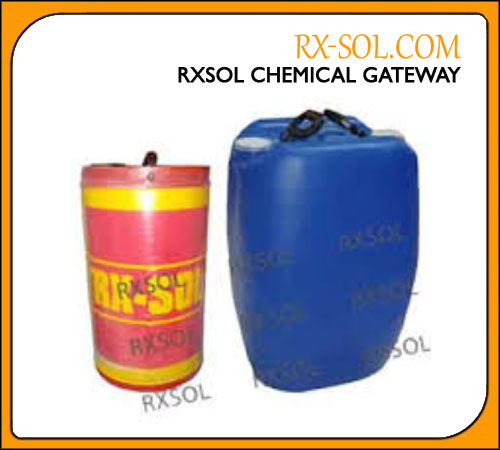
Professional Natural Stone Countertop Sealer
Part No: RXSOL-41-8907-025
For top up in inverter and all types of batteries also Add with coolant in radiator (as per ratio recommended) , and to keep stain free glass add in wiper tank of a car for cleaning windshield
Distilled Water, Battery Distilled Water, Windshield Wiper Fluid, Distilled Water For Home, Industrial Water, SPA & Saloon Distilled Water, Radiator Coolant Water, Laboratory Water, Medicated Water, Aquarium Water and Saloon Distilled Water.
Application
Different grades and types of distilled water offered by us is formulated employing highly advanced cold process technology.
Commercial Distilled Water:
-
Distilled Water 3 in 1 ( Distilled Water 3 In 1 can be used in:::-
For top up in inverter and all types of batteries
Add with coolant in radiator (as per ratio recommended)
Add in wiper tank of a car for cleaning windshield
- Aquarium Water
- Battery Distilled Water
- Windshield Wiper Water
- Distilled Water For Home
- Industrial Water
- Distilled water for Pathology Laboratory
- Radiator Coolant Water
- SPA & Saloon Distilled Water
Dosage
MAINTENANCE SCHEDULE ::: The maintenance schedule given here is divided in daily, weekly, monthly and yearly maintenance. The actions to be taken, checks and recording required are given herewith.
A.DAILY MAINTENANCE
1. A daily general maintenance should include a check and record of the following :
2. Overall float voltage measured at the battery terminals
3.Charger output current and voltage
4.Specific gravity, voltage and temperature of pilot cells.
B.WEEKLY MAINTENANCE
A weekly maintenance should include all the items mentioned in “daily maintenance” and the following :
1. Check electrolyte level of all cells and if required, top-up with battery grade water conforming to IS 1069. Never use metal vessels for topping up because of the risk of electrolyte continuation and accidental short circuit.
2. Visually check the conditions of each cell and battery bank. If abnormal or very high amount of sulphation on the terminals or connectors are observed, take immediate action in removing them.
3.Visually check the cleanliness of battery, battery stands and battery room area for accessibility, cell integrity and acid leakage.
C.MONTHLY MAINTENANCE
1. A monthly maintenance shall include all checks listed under “daily” and “weekly” maintenance schedule and also the following:
2.Check and record specific gravity, voltage and temperature of all cells in the battery bank.
3.Adjustment of specific gravity by addition of battery grade water is to be done only after charging and under skilled supervision (Never use acid for this purpose unless specifically suggested by manufacturer). After adjustment of specific gravity, charge the battery at a voltage around 2.4 volts per cell for a period of 2 hours for mixing of the electrolyte properly.
D.QUARTERLY MAINTENANCE
A quarterly maintenance shall include all checks listed under “daily”, “weekly” and “monthly” maintenance schedule and also the following :
1. Check and record specific gravity, voltage and temperature of all cells in the battery bank.
2.If the specific gravity of most of the cells are found to be lagging by an average of 10 to 15 points, the battery bank would call for an equalizing charge at a current equivalent to 3% - 5% of its rated value for 6-10 hours to restore the state of charge to full..
3.The temperature of the electrolyte normally is higher than the ambient. But for a bank, unless it has undergone a discharge within previous 24 hours, the electrolyte temperature should lie within 3
5 deg. C higher than the corresponding ambient temperature. In case of a deviation from this range, the charger needs to be checked for its quality of power output in terms of the ripple contents in the charging voltage and current. Corrective action should be immediately taken to avoid any deterioration in the battery bank due to this anomaly
E.HALF YEARLY MAINTENANCE
A half yearly maintenance shall include all checks listed under “daily”, “weekly”, “monthly” and “quarterly”
maintenance schedule and also the following :
1.Remove all corrosion product and clean connector thoroughly. Use enough amount of petroleum jelly on the connectors to prevent farther corrosion and put back shrouds in place.
2. Check the tightness of fasteners on inter-cell, inter-row and inter-tier connections to prescribed torque values as suggested by manufacturer. If required, tighten the connections to the required torque value .
F.YEARLY MAINTENANCE
A yearly maintenance should include all items listed under 'daily', 'weekly' and 'monthly' maintenance schedule and also the following : Discharge the battery at C10 current for 10 hours followed by a constant current recharge.
The charging to start at the “starting rate” as mentioned in the product catalogue for the respective size till the cell voltage
reached 2.36 volts per cell followed by charging at “finishing rate” pertaining to the specific size of the battery as mentioned in manufacturer's catalogue. The charging to be stopped when the cell voltage and specific gravity readings are constant for four consecutive half hourly readings. The expected end-of-charge voltage is of the order of 2.7 2.75 volts per cell.
During charging it has to be ensured that a minimum Ah input of 125% of the previous discharged Ah is administered to the battery.
The temperature during charging should not increase beyond 450 C. In such cases, the charging to be stopped and the cells to be allowed to cool down till 400 C when the charging can be resumed. The timings are to be noted so that the duration of charge can be compensated accordingly to ensure that the minimum Ah input requirement is fulfilled. After the charging is over, gravity and level adjustments are to be carried out after a rest of 4 hour.
The battery bank, then, is to be given an equalisation charge at a current equivalent to 3% - 5% of rated C10 capacity for 12-24 hrs. The battery bank can be given back to the system after the equalising charge is over
.
MSDS

| Product Name | RXSOL-15-1104-005 |
| Product Type | Distilled Water |
Company Details:
RX MARINE INTERNATIONAL
105, A wing , BSEL , TECH PARK.
VASHI ,NEW BOMBAY 400703 INDIA
| Phone | +91 22 27815540 / 41 / 42 / 43 |
| Fax | +91 22 2781 1318 :::AOH :0091 9821214367 |
| mail @ rxmarine.com |

|
Chemical Name |
Concentration |
CAS Number |
|
Water Deionized |
100% |
7732-18-5 |

Target Organs None known.
Potential Health Effects
Acute Effects
Principle Routes of Exposure
Eyes No hazard from product as supplied.
Skin No hazard from product as supplied.
Inhalation Low hazard for usual industrial or commercial handling.
Ingestion Low hazard for usual industrial or commercial handling.
Chronic Effects None known.
Aggravated Medical Conditions No information available.

Eye Contact Flush eyes with water as a precaution. Get medical attention immediately if symptoms occur.
Skin Contact Rinse with water. Get medical attention immediately if symptoms occur.
Inhalation Move to fresh air. Get medical attention immediately if symptoms occur.
Ingestion Do not induce vomiting. Get medical attention immediately if symptoms occur.
Notes to Physician Treat symptomatically.

Method No information available.
Autoignition Temperature No information available.
Explosion Limits
Upper No data available
Lower No data available
Suitable Extinguishing Media Substance is nonflammable; use agent most appropriate to
extinguish surrounding fire..
Unsuitable Extinguishing Media No information available.
Hazardous Combustion Products No information available.
Sensitivity to mechanical impact No information available.
Sensitivity to static discharge No information available.
Specific Hazards Arising from the Chemical
None known.

Personal Precautions Use personal protective equipment.
Environmental Precautions Should not be released into the environment.
NFPA Health 0 Flammability 0
Methods for Containment and Clean
Up
Soak up with inert absorbent material. Keep in suitable and closed containers for disposal.

Handling Handle in accordance with good industrial hygiene and safety practice.
Storage Keep containers tightly closed in a dry, cool and well-ventilated place.

Engineering Measures Ensure that eyewash stations and safety showers are close to the workstation location.
Exposure Guidelines This product does not contain any hazardous materials with occupational exposure limits
established by the region specific regulatory bodies.
NIOSH IDLH: Immediately Dangerous to Life or Health
Personal Protective Equipment
Eye/face Protection Wear appropriate protective eyeglasses or chemical safety goggles as described by OSHA's
eye and face protection regulations in 29 CFR 1910.133 or European Standard EN166
Skin and body protection Wear appropriate protective gloves and clothing to prevent skin exposure
Respiratory Protection Follow the OSHA respirator regulations found in 29 CFR 1910.134 or European Standard EN
149. Use a NIOSH/MSHA or European Standard EN 149 approved respirator if exposure limits
are exceeded or if irritation or other symptoms are experienced

|
Mol. Formula |
H2O |
|
M.W |
18.015 |
|
Conductivity |
< 2.0 μS/CM |
|
PH |
6.00 – 7.50 |
|
Total Hardness |
< 0.2 mg/l as CaCo3 |
|
Chloride |
< 0.1 mg/l as Cl |
|
Total Alkalinity |
< 0.1 mg/l as CaCo3 |
|
Iron |
< 0.02 mg/l as Fe |
|
Copper |
< 0.03 mg/l as Cu |
|
Nickel |
< 0.01 mg/l as Ni |
|
Oxygen |
< 0.01 mg/as O2 |
|
Silica |
< 0.005 mg/l as SiO2 |
|
Substances reducing permanganate |
0.00004 |

Stability Stable under normal conditions.
Conditions to Avoid None known.
Incompatible Materials None known
Hazardous Decomposition Products None known
Hazardous Polymerization Hazardous polymerization does not occur
Hazardous Reactions . None under normal processing

Acute Toxicity
Component Information
Component LD50 Oral LD50 Dermal LC50 Inhalation
Water 90 mL/kg ( Rat ) Not listed Not listed
Irritation No information available.
Toxicologically Synergistic
Products
No information available.
Chronic Toxicity
Carcinogenicity There are no known carcinogenic chemicals in this product
Sensitization No information available.
Mutagenic Effects No information available.
Reproductive Effects No information available.
Developmental Effects No information available.
Teratogenicity No information available.
Other Adverse Effects See actual entry in RTECS for complete information.
Endocrine Disruptor Information No information available

Ecotoxicity
Contains no substances known to be hazardous to the environment or that are not degradable in waste water treatment plants.
Persistence and Degradability No information available
Bioaccumulation/ Accumulation No information available
Mobility No information available

Waste Disposal Methods Chemical waste generators must determine whether a discarded chemical is classified as a
hazardous waste. Chemical waste generators must also consult local, regional, and national
hazardous waste regulations to ensure complete and accurate classification

- Not classifiedashazardousfortransport
DOT Not regulated
TDG Not regulated
IATA Not regulated
IMDG/IMO Not regulated

Not APPLICABLE

The information provided about the product on this Safety Data Sheet has been compiled from knowledge of the individual constituents The data given here is based on current knowledge and experience. This Safety Data Sheet describes the product in terms of safety requirements and does not signify any warranty with regard to the product's properties The data given here only applies when product used for proper application(s).