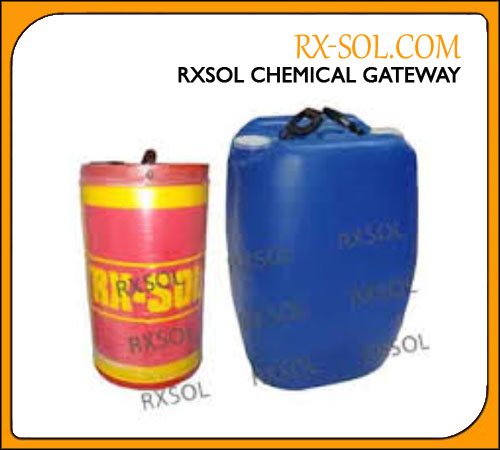
PROPYLENE GLYCOL I. P. food grade
Part No: RXSOL-19-1615-025
Sodium Silicate liquid both Neutral & Alkaline We manufacture large range of Sodium Silicate both in Neutral and Alkaline grade of the typical qualities.
Silica gel production
Builder or anti-soil-redeposition agent for detergent
Peroxide stabilizer in bleaching for textile and pulp
Solubilizer in ink, flux binder for welding rods
Deflocculant for ceramic
Buffer
Fireproofing paper catalysts
Water treatment
Concrete hardner and acid-proof
Petroleum processing by emulsion breaking and corrosion prevention
Timber treatment.
Oil Field use
Application
Range of Products:
We manufacture large range of Sodium Silicate both in Neutral and Alkaline grade of the typical qualities.
We also manufacture Sodium Silicate as per the customer's requirements and specification.
| Sodium Silicates | Concentration | Mole Ratio | Baume |
| Alkaline Sil | 40 - 54 % | 2.1 to 2.6 | 45 - 57 |
| Neutral Sil | 27 - 39 % | 3.0 to 3.5 |
30 - 41.5 |
Dosage
|
Sodium Silicate is a compound mixture of sodium oxide i.e. Na2o with silica sand i.e. Sio2 with water. Sodium silicate is also called water glass. There are two process to manufacture liquid Sodium Silicate. To manufacture a lower ratio of Sodium Silicate by Hydrothermal process. Mixture at Na2Co3 (Soda Ash) with Sio2(Silica sand) in furnace fuses of more then 1100oC gives sodium silicate glass in lumps form which is easily dissolved in hot water.We manufacture large range of sodium silicates, as per the customer's specific requirements. |
|
Sodium Silicate is a compound mixture of sodium oxide i.e. Na2o with silica sand i.e. Sio2 with water. Sodium silicate is also called water glass. There are two process to manufacture liquid Sodium Silicate. To manufacture a lower ratio of Sodium Silicate by Hydrothermal process. Mixture at Na2Co3 (Soda Ash) with Sio2(Silica sand) in furnace fuses of more then 1100oC gives sodium silicate glass in lumps form which is easily dissolved in hot water.We manufacture large range of sodium silicates, as per the customer's specific requirements. |
MSDS

|
Product Nam |
Sodium Silicate Water Glass |
|
Product Type |
RXSOL-81-8107-010 |
Company Details:
RX MARINE INTERNATIONAL
105, A wing , BSEL , TECH PARK.
VASHI ,NEW BOMBAY 400703 INDIA
| Phone | +91 22 65113333/ 5555 / 9999 / 27611360 / 27815540 |
| Fax | +91 22 2781 1318 :::AOH :0091 9322594669 |
| mail @ rxmarine.com |

|
Ingredient |
CAS No |
Percent Hazardous |
|
Sodium Silicate |
1344-09-8 |
35 - 40% Yes |
|
Water |
7732-18-5 |
60 - 65% No |

Emergency Overview
WARNING! HARMFUL IF SWALLOWED OR INHALED. CAUSES SEVERE IRRITATION TO EYES, SKIN AND RESPIRATORY TRACT.
SAF-T-DATA(tm) Ratings (Provided here for your convenience)
| Health Rating | : 2 - Moderate |
| Flammability Rating | : 1 - Slight |
| Reactivity Rating | : 1 - Slight |
| Contact Rating | : 3 - Severe |
| Lab Protective Equip | : GOGGLES & SHIELD;LAB COAT&APRON;VENT HOOD;PROPER GLOVES |
| Storage Color Code | : Green (General Storage) |
Potential Health Effects
Diluted solutions of sodium silicate are strong alkaline irritants. The solid sodium silicate is corrosive. Exposure to alkaline corrosives may result in severe burns depending on the concentration and duration of exposure. Sodium silicate is a type of amorphous silica and does not cause pulmonary silicosis.
Inhalation:
A strong alkaline irritant. Inhalation can cause severe irritation of mucous membranes and upper respiratory tract. Symptoms may include burning sensation, coughing, wheezing, laryngitis, shortness of breath, headache, nausea and vomiting. High concentrations may cause lung damage.
Ingestion:
A strong alkaline irritant. Causes irritation to the gastrointestinal tract. Symptoms may include nausea, vomiting and diarrhea. Solid sodium silicate: Alkaline corrosive ingestion may produce burns to the lips, tongue, oral mucosa, upper airway, esophagus and occasionally stomach.
Skin Contact:
A strong alkaline irritant. Causes severe irritation. Symptoms include redness, itching and pain. Dries to form a glass film which can cut skin. Solid sodium silicate: Dermal contact with alkaline corrosives may produce pain, redness, severe irritation or full thickness burns.
Eye Contact:
A strong alkaline irritant. Alkaline eye exposures produce severe irritation with effects similar to those of dilute caustics. Inflammation or burns with possible damage to the eye tissues can occur together with tearing and considerable pain.
Chronic Exposure:
No information found.
Aggravation of Pre-existing Conditions:
Persons with pre-existing skin disorders or impaired respiratory function may be more susceptible to the effects of the substance

Inhalation:
Remove to fresh air. If not breathing, give artificial respiration. If breathing is difficult, give oxygen. Get medical attention.
Ingestion:
If swallowed, DO NOT INDUCE VOMITING. Give large quantities of water. Never give anything by mouth to an unconscious person. Get medical attention immediately.
Skin Contact:
Immediately flush skin with plenty of water for at least 15 minutes. Remove contaminated clothing and shoes. Get medical attention. Wash clothing before reuse. Thoroughly clean shoes before reuse.
Eye Contact:
Immediately flush eyes with plenty of water for at least 15 minutes, lifting lower and upper eyelids occasionally. Get medical attention immediately.

Fire:
Not considered to be a fire hazard.
Explosion:
Not considered to be an explosion hazard.
Fire Extinguishing Media:
Use any means suitable for extinguishing surrounding fire.
Special Information:
In the event of a fire, wear full protective clothing and NIOSH-approved self-contained breathing apparatus with full facepiece operated in the pressure demand or other positive pressure mode.

Caution! Floor and other surfaces may be slippery. Ventilate area of leak or spill. Wear appropriate personal protective equipment as specified in Section 8. Contain and recover liquid when possible. Collect liquid in an appropriate container or absorb with an inert material (e. g., vermiculite, dry sand, earth), and place in a chemical waste container. Do not use combustible materials, such as saw dust. Do not flush to sewer!

Keep in a tightly closed container, stored in a cool, dry, ventilated area. Protect against physical damage. Isolate from incompatible substances. Containers of this material may be hazardous when empty since they retain product residues (vapors, liquid); observe all warnings and precautions listed for the product.

Airborne Exposure Limits:
For Nitric Acid:
OSHA Permissible Exposure Limit (PEL): (80 mg/m3) / (%SiO2) (TWA).
Ventilation System:
A system of local and/or general exhaust is recommended to keep employee exposures below the Airborne Exposure Limits. Local exhaust ventilation is generally preferred because it can control the emissions of the contaminant at its source, preventing dispersion of it into the general work area. Please refer to the ACGIH document, Industrial Ventilation, A Manual of Recommended Practices, most recent edition, for details.
Personal Respirators (NIOSH Approved):
If the exposure limit is exceeded, a half-face dust/mist respirator may be worn for up to ten times the exposure limit or the maximum use concentration specified by the appropriate regulatory agency or respirator supplier, whichever is lowest. A full-face piece dust/mist respirator may be worn up to 50 times the exposure limit, or the maximum use concentration specified by the appropriate regulatory agency, or respirator supplier, whichever is lowest. For emergencies or instances where the exposure levels are not known, use a full-facepiece positive-pressure, air-supplied respirator. WARNING: Air-purifying respirators do not protect workers in oxygen-deficient atmospheres.
Skin Protection:
Wear impervious protective clothing, including boots, gloves, lab coat, apron or coveralls, as appropriate, to prevent skin contact.
Eye Protection:
Use chemical safety goggles and/or a full face shield where splashing is possible. Maintain eye wash fountain and quick-drench facilities in work area.

|
Appearance |
Clear to cloudy,viscous liquid. |
|
Odor |
Odorless. |
|
Solubility |
Complete (100%) |
|
Specific Gravity |
1.3 - 1.5 |
|
pH |
11 - 12.5 |
|
% Volatiles by volume @ 21(70F) |
ca. 70 |
|
Boiling Point |
102C (216F) |
|
Melting Point |
No information found. |
|
Vapor Density (Air=1) |
Not applicable. |
|
Vapor Pressure (mm Hg) |
18 @ 20C (68F) |
|
Evaporation Rate (BuAc=1) |
No information found. |

Stability:
Stable under ordinary conditions of use and storage.
Hazardous Decomposition Products:
No information found.
Hazardous Polymerization:
Will not occur.
Incompatibilities:
Fluorine, mineral acids, organic acids, organic materials. May produce hydrogen gas on prolonged contact with metals. Gels when mixed with acids. Solution is a strong base; reacts with acids, organic anhydrides, alkylene oxides, epichlorohydrin, aldehydes, alcohols, glycols, phenols, cresols, caprolactam solution. Attacks chemically active metals.
Conditions to Avoid:
Incompatibles.

Sodium silicate:
Oral rat LD50: 1960 mg/kg;
Skin rabbit LD50: > 4640 mg/kg;
Standard Draize Test: skin rabbit 500 mg/24H severe; eye rabbit 10 mg/24H severe.
| Cancer Lists | ||||
| NTP Carcinogen | ||||
| Ingredient | Known | Anticipated | IARC Category | |
| Sodium Silicate (1344-09-8) | No | No | None | |
| Water (7732-18-5) | No | No | None | |

Environmental Fate:
No information found.
Environmental Toxicity:
Sodium silicate:
96 Hr LC50 Lepomis macrochirus: 301-478 mg/L;
96 Hr LC50 Brachydanio rerio: 3185 mg/L [semi-static];
96 Hr EC50 Daphnia magna: 216 mg/L.

Whatever cannot be saved for recovery or recycling should be managed in an appropriate and approved waste disposal facility. Processing, use or contamination of this product may change the waste management options. State and local disposal regulations may differ from federal disposal regulations. Dispose of container and unused contents in accordance with federal, state and local requirements.

Not regulated.

Chemical Inventory Status - Part 1
| Ingredient | TSCA | EC | Japan | Australia |
| Sodium Silicate (1344-09-8) | Yes | Yes | Yes | Yes |
| Water (7732-18-5) | Yes | Yes | Yes | Yes |
Chemical Inventory Status - Part 2
| Ingredient | Korea | DSL | NDSL | Phil. |
| Sodium Silicate (1344-09-8) | Yes | Yes | No | Yes |
| Water (7732-18-5) | Yes | Yes | No | Yes |
Federal, State & International Regulations - Part 1
SARA 302-SARA 313
| Ingredient | RQ | TPQ | TPQ | Chemical Catg. |
| Sodium Silicate (1344-09-8) | No | No | No | No |
| Water (7732-18-5) | No | No | No | No |
Federal, State & International Regulations - Part 2
| Ingredient | CERCLA | -RCRA- 261.33 | TSCA 8(d) |
| Sodium Silicate (1344-09-8) | No | No | No |
| Water (7732-18-5) | No | No | No |
Chemical Weapons Convention: No TSCA 12(b): No CDTA: No
SARA 311/312: Acute: Yes Chronic: No Fire: No Pressure: No
Reactivity: No (Mixture / Liquid)
Australian Hazchem Code: None allocated.
Poison Schedule: None allocated.
WHMIS:
This MSDS has been prepared according to the hazard criteria of the Controlled Products Regulations (CPR) and the MSDS contains all of the information required by the CPR.

Text of R and S phrase codes used in this safety data sheet:- R34: Causes burns; R36: Irritating to eyes; R37:Irritating to respiratory system; R41: Risk of serious damage to eyes. The information provided about the product on this Safety Data Sheet has been compiled from knowledge of the individual constituents The data given here is based on current knowledge and experience. This Safety Data Sheet describes the product in terms of safety requirements and does not signify any warranty with regard to the product's properties The data given here only applies when product used for proper application(s). The product is not sold as suitable for other applications usage in such may cause risks not mentioned in this sheet. Do not use for other application(s) without seeking advice from manufacturer.