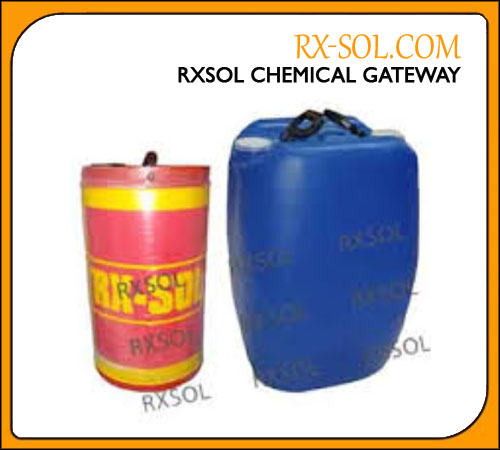
QUAKE
Part No: RXSOL-41-8388-025
It is a n Anti-Agglo merate Hydr ate Inhibitor that effectively p r events gas h ydrates forming blockages.
Corrosion Protection and Inhibition Solutions
MSDS

| Product Name |
Corrosion Inhibitor 1304 |
| Part Number | RXSOL-81-8195-210 |
Company Details:
RX MARINE INTERNATIONAL
105, A wing , BSEL , TECH PARK.
VASHI ,NEW BOMBAY 400703 INDIA
| Phone | +91 22 27815540 / 41 / 42 |
| Fax | +91 22 2781 1318 :::AOH :0091 9821214367 |
| 123 @ rxmarine.com | |
| Website | www.rxmarine.com |

| Component | CAS-No | Weight % | R Phrases |
| Tall Oil, DETA Imidazoline Acetates | 68140-11-4 | 5 -10 | R41,R38,R43 |
|
Benzyl-(C12-C16 Linear Alkyl)- |
68424-85-1 | 3 - 5 | R22, R34,R50 |
| Thioglycolic Acid | 68-11-1 | 1- 5 | R23/24/25,R35 |

| Signal Word | : | Irritant , Harmful |
| Hazard Statements | : | Causes severe skin burns and eye damage.May cause an allergic skin reaction.Harmful if inhaled.Toxic to aquatic life with long lasting effects. |
| Label Elements | : | Avoid breathing dust/ fume/ gas/ mist/ vapours/ spray.Avoid release to the environment.Wear protective gloves/ protective clothing/ eye protection/ face protection. |
| Environmental hazards | : | Environmental effects Dangerous for the environment Very toxic to aquatic organisms; may cause long term adverse effects in the aquatic environment. |

| Inhalation | : | Remove to fresh air, treat symptomatically. Get immediate medical attention. |
| Skin Contact | : |
Wash off immediately with plenty of water for at least 15 minutes.Use a mild soap if available.Wash clothing before reuse. Thoroughly clean shoes before reuse.Get medical attention immediately. |
| Eye Contact | : | Immediate medical attention is required. Rinse immediately with plenty of water, also under the eyelids, for at least 15 minutes. |
| Ingestion | : | Seek medical advice immediately, showing the label and/or SDS. If conscious, washout mouth and give water to drink. If unconsious, do not give anything by mouth, place in the recovery position, check breathing and pulse. If necessary give artifical respiration. Do not induce vomiting without medical advice. |
| If Swallowed | : | Rinse mouth with water.Do NOT induce vomiting.Never give anything by mouth to an unconscious person. |
| Important symptoms | : |
See Section 11 for more detailed information on health effects and symptoms. |

| Suitable Extinguishing Media | : | This product would not be expected to burn unless all the water is boiled away. The remaining organics may be ignitable. Use extinguishing media appropriate for surrounding fire. |
| Fire Hazard | : | Fire Hazard Keep away from heat and sources of ignition. Flash back possible over considerable distance.Decomposition products may include the following materials: Carbon oxides nitrogen oxides (NOx) Sulphur oxides Oxides of phosphorus |
| Special Fire Fighting Procedure | : | In case of fire, wear a full face positive-pressure self contained breathing apparatus and protective suit. |

Personal precautions, protective equipment and emergency procedures
| Personal Precautions | : | Remove all sources of ignition. Keep people away from and upwind of spill/leak.Avoid inhalation, ingestion and contact with skin and eyes. When workers are facing concentrations above the exposure limit they must use appropriate certified respirators. Ensure clean-up is conducted by trained personnel only. Refer to protective measures listed in sections 7 and 8. |
| Environmental Precautions | : |
Do not allow contact with soil, surface or ground water. |
| Methods for Containment and Clean Up | : |
Eliminate all ignition sources if safe to do so. Stop leak if safe to do so. Contain spillage, and then collect with non-combustible absorbent material, (e.g. sand, earth, diatomaceous earth, vermiculite) and place in container for disposal according to local / national regulations (see section 13). Flush away traces with water. For large spills, dike spilled material or otherwise contain |

| Handling |
Prevent contact with skin, eyes and clothing. Use with adequate ventilation. Do not breathe vapors/gases/dust. Keep the containers closed when not in use. Ensure all containers are labeled. Have emergency equipment (for fires, spills, leaks, etc.) readily available. Use only in a closed system. Use personal protective equipment recommended in Section 8 (Exposure Controls/Personal Protection). Handle in accordance with good industrial hygiene and safety practice. Remove and wash contaminated clothing before re-use. Wash face, hands and any exposed skin thoroughly after handling. Provide suitable facilities for quick drenching or flushing of the eyes and body in case of contact or splash hazard. |
| Storage | Requirements for storage areas and containers Keep away from heat and sources of ignition. Keep away from oxidizing agents. Keep out of reach of children. Keep container tightly closed. Store in suitable labeled containers. Avoid direct sunlight. At temperatures greater than 30°C a component of this product may degrade leading to the production of hydrogen sulfide (H2S). |
| Suitable Construction Material | HDPE (high density polyethylene), Stainless Steel 304, Nitrile, PTFE, Surface-modified HDPE (high density polyethylene), CPVC (rigid), Polypropylene, PVC, Polyvinylidene difluoride, Plexiglass, Plasite 4300 |
| Unsuitable Construction Material | Neoprene, Carbon Steel C1018, Perfluoroelastomer, Fluoroelastomer, Stainless Steel 316L, Brass, Mild steel, Nylon, EPDM, Nitrile, Plasite 7122. |

OCCUPATIONAL EXPOSURE LIMITS
| Components | CAS-No. | Value type (Form of exposure) | Control parameters | Update | Basis |
| Thioglycolic | 68-11-1 | TWA | 1 ppm | 2005-04-06 | UKCOSSTD |
| Acid | 3.8 mg/m3 |
MONITORING MEASURES
A small volume of air is drawn through an absorbant or barrier to trap the substance(s) which can then be desorbed or removed and analyzed as referenced below:
| Substance(s) | Method | Analysis | Absorbant |
| Thioglycolic Acid | US OSHA: CIM | High pressure liquid chromatography | Impinger containing De-ionised water |
DNEL
| Tall Oil, DETA Imidazoline Acetates |
End Use: Workers Exposure routes: Skin contact Potential health effects: Long-term systemic effects Value: 0.21 mg/cm2 |
|
|
End Use: Workers Exposure routes: Inhalation Potential health effects: Long-term systemic effects Value: 1.47 mg/m3 |
||
|
End Use: Consumers Exposure routes: Ingestion Potential health effects: Long-term systemic effects Value: 0.125 ppm |
||
| Thioglycolic Acid |
End Use: Workers Exposure routes: Inhalation Potential health effects: short-term - systemic Value: 4.5 mg/m3 |
|
|
End Use: Workers Exposure routes: Inhalation Potential health effects: short-term - local Value: 4.5 mg/m3 |
||
|
End Use: Workers Exposure routes: Dermal Potential health effects: long term - systemic |
||
|
End Use: Workers Exposure routes: Inhalation Potential health effects: long term - systemic Value: 1.13 mg/m3 |
PNEC
| Tall Oil, DETA Imidazoline Acetates |
Fresh water Value: 0.00686 mg/l |
|
|
Marine water Value: 0.02 mg/l |
||
|
Water Value: 0.0018 mg/l |
||
|
Fresh water sediment Value: 0.136 mg/kg |
||
|
Marine sediment Value: 5.474 mg/kgSoil Value: 0.0232 mg/kg |
||
|
Soil Value: 0.0232 mg/kgWater Value: 5.57 mg/kg |
||
|
Water Value: 5.57 mg/kg |
||
| Thioglycolic Acid |
Fresh water Value: 0.027 mg/l |
|
|
Marine water Value: 0.0027 mg/l |
||
|
Intermittent release Value: 0.27 mg/l |
||
|
STP Value: 0.5 mg/l |
||
|
Sediment Value: 0.009 mg/kg |
||
|
Soil Value: 0.0053 mg/kg |
Exposure controls
| Engineering Measures | : | General ventilation is recommended. The use of local exhaust ventilation is recommended to control emissions near the source. Laboratory samples should be handled in a fumehood. Provide mechanical ventilation of confined spaces. |
| Personal Protection | : |
Eye/Face Protection: Wear a face shield with chemical splash goggles. |
| Hygiene Measures | : | Handle in accordance with good industrial hygiene and safety practice. Use only with adequate ventilation. Avoid contact with skin, eyes and clothing. Remove contaminated clothing and protective equipment before entering eating areas. Wash hands before breaks and immediately after handling the product. |
| Respiratory Protection | Where concentrations in air may exceed the limits given in this section, the use of a half face filter mask or air supplied breathing apparatus is recommended.A suitable filter material depends on the amount and type of chemicals being handled.Consider the use of filter type:A-B-E-K-PIn event of emergency or planned entry into unknown concentrations a positive pressure, full-facepiece SCBA should be used.If respiratory protection is required, institute a complete respiratory protection program including selection, fit testing, training, maintenance and inspection. |


Gloves Suit

| Physical State | : | Liquid |
| Appearance | : | Clear Liquid |
| Odor | : | Pungent |
| Odor Threshold | : | No information available. |
| PH | : | 4 100 % |
| Melting / Freezing Point | : | 1.51 °C, ASTM D-97 |
| Boiling Point/Range | : | No data available |
| Flash Point | : | 83 °C |
| Evaporation Rate | : | No information available. |
| Lower Explosion Limit | : | No data available. |
| Vapor Pressure | : | No data available. |
| Vapor Density | No data available. | |
| Relative Density | : | 0.97 to 1.0 (15.6 °C) |
| Solubility in Water | : | Complete |
| Pour point | : | No data available |
| Partition coefficient n octanol/water | : | Not available. |
| Viscosity | : | No data available |
| Explosive Properties | : | Not applicable |
| Oxidizing Properties | : | Not applicable |

|
Reactivity |
: | No dangerous reaction known under conditions of normal use. |
| Chemical stability | : | At temperatures greater than 30°C a component of this product may degrade leading to the production of hydrogen sulfide (H2S) |
| Hazardous reactions | : | No dangerous reaction known under conditions of normal use |
| Conditions to avoid | : | Heat, flames and sparks. |
| Hazardous decomposition products | Hazardous decomposition products Decomposition products may include the following materials:Carbon oxides,nitrogen oxides (NOx),Sulphur oxides,Oxides of phosphorus | |
| Materials to avoid | : |
Contact with strong acids (e.g. sulfuric, phosphoric, nitric, hydrochloric, chromic, sulfonic) may generate heat, splattering or boiling and toxic vapors. Contact with strong oxidizers (e.g. chlorine, peroxides, chromates, nitric acid, perchlorate, concentrated oxygen, permanganate) may generate heat, fires, explosions and/or toxic vapors. Avoid contact with SO2 or acidic bisulfite products, which may react to form visible airborne amine salt particles. Certain amines in contact with nitrous acid, organic or inorganic nitrites or atmospheres with high nitrous oxide concentrations may produce N-nitrosamines, many of which are cancer-causing agents to laboratory animals. |

| Acute toxicity | Product LD50 Dermal rat > 2,000 mg/kg Essentially non-hazardous. | |
| Acute inhalation toxicity |
Acute toxicity estimate : 11.36 mg/l |
|
|
Acute dermal toxicity |
Acute toxicity estimate : > 2,000 mg/kg |
|
|
Skin corrosion/irritation |
There is no data available for this product. |
|
|
Serious eye damage/eye irritation |
There is no data available for this product. |
|
|
Respiratory or skin sensitization |
There is no data available for this product. |
|
| Carcinogenicity | There is no data available for this product. | |
| Reproductive effects | No toxicity to reproduction | |
| Aspiration toxicity | No aspiration toxicity classification | |
| Acute oral toxicity |
Tall Oil, DETA Imidazoline Acetates LD50 rat: > 2,500 mg/kg Benzyl-(C12-C16 Linear Alkyl)-Dimethyl-Ammonium Chloride LD50 rat: 344 mg/kg Thioglycolic Acid LD50 rat: 73 mg/kg |
|
| Acute inhalation toxicity |
Benzyl-(C12-C16 Linear Alkyl)-Dimethyl-Ammonium Chloride LC50 rat: > 0.054 mg/l Exposure time: 4 h Thioglycolic Acid LC50 rat: 1.38 mg/l Exposure time: 4 h Test substance: Aerosol |
|
| Acute dermal toxicity |
Benzyl-(C12-C16 Linear Alkyl)-Dimethyl-Ammonium Chloride LD50 rabbit: 3,340 mg/kg Thioglycolic Acid LD50 rabbit: 848 mg/kg |
|
| Potential Health Effects |
Eyes-Causes serious eye damage. Skin-Causes severe skin burns. May cause allergic skin reaction. Ingestion-Causes digestive tract burns. Inhalation-Harmful if inhaled. May cause nose, throat, and lung irritation. Chronic Exposure-Health injuries are not known or expected under normal use. |
|
| Experience with human exposure |
Eye contact-Redness, Pain, Corrosion Skin contact-Redness, Pain, Irritation, Corrosion, Allergic reactions Ingestion-Corrosion, Abdominal pain Inhalation-Respiratory irritation, Cough |

| Environmental effects | : | Very toxic to aquatic life.Toxic to aquatic life with long lasting effects. |
| Toxicity to fish | : |
96 hrs LC50 Fish : 0.85 mg/l Test substance: Hazardous component |
| Toxicity to daphnia and other aquatic invertebrates | : |
48 hrs LC50 Ceriodaphnia dubia : 3.4 mg/l Test substance: Product 48 hrs NOEC Ceriodaphnia dubia : 2.5 mg/l Test substance: Product |
|
Toxicity to algae |
: |
72 hrs LC50 Algae : < 1 mg/l Test substance: Hazardous component |
| Toxicity to fish |
Tall Oil, DETA Imidazoline Acetates 96 h LC50: > 0.23 mg/l Thioglycolic Acid 96 h LC50 Rainbow Trout : > 100 mg/l Method: OECD 203 |
|
| Toxicity to daphnia and other aquatic invertebrates |
Tall Oil, DETA Imidazoline Acetates 48 h EC50: 0.72 mg/l Benzyl-(C12-C16 Linear Alkyl)-Dimethyl-Ammonium Chloride 48 h EC50: 0.0059 mg/l |
|
| Toxicity to algae |
Tall Oil, DETA Imidazoline Acetates 72 h EC50: 0.17 mg/l Thioglycolic Acid 72 h EC50 Green Algae (Pseudokirchneriella subcapitata, previously Selenastrum capricornutum) : 27 mg/l Method: OECD 201 |
|
| Toxicity to bacteria |
Tall Oil, DETA Imidazoline Acetates 175 mg/l Method: OECD Test Guideline 209 Thioglycolic Acid 3 h EC50 Sewage Microorganisms : 530 mg/l Method: OECD 209 |
|
| Biodegradability | The product is readily biodegradable | |
| Biodegradation Assessment | The organic portion of this preparation is expected to be readily biodegradable. | |
| Biodegradability |
Tall Oil, DETA Imidazoline Acetates Result: Not biodegradable Benzyl-(C12-C16 Linear Alkyl)-Dimethyl-Ammonium Chloride Result: rapidly biodegradable Thioglycolic Acid 67 %, Result: Readily biodegradable., Exposure time: 28 d, OECD 301 D (Closed Bottle) Thioglycolic Acid 21 %, Result: Not biodegradable, Exposure time: 28 d, OECD 301 A (DOC Die-Away) |
|
| Bioaccumulative potential | ||
| Bioaccumulation | The product will not bioaccumulate. | |
|
Components Bioaccumulation |
Thioglycolic Acid Bioaccumulation is unlikely |
|
|
Mobility in soil Product |
This substance is water soluble and is expected to remain primarily in water.. | |
|
Results of PBT and vPvB assessment Product Assessment |
This mixture contains no substance considered to be persistent, bioaccumulating nor toxic (PBT)., This mixture contains no substance considered to be very persistent nor very bioaccumulating (vPvB). This substance/mixture contains no components considered to be either persistent, bioaccumulative and toxic (PBT), or very persistent and very bioaccumulative (vPvB) at levels of 0.1% or higher. |

|
Waste treatment methods Product |
: |
The product should not be allowed to enter drains, water courses or the soil. Where possible recycling is preferred to disposal or incineration. If recycling is not practicable, dispose of in compliance with local regulations. Dispose of wastes in an approved waste disposal facility. |
| Contaminated packaging | Dispose of as unused product.Empty containers should be taken to an approved waste handling site for recycling or disposal.Do not re-use empty containers. | |
| European Waste Catalogue | Inorganic wastes containing dangerous substances. If this product is used in any further processes, the final user must redefine and assign the most appropriate European Waste Catalogue Code. |

Land Transport :
| Proper Shipping Name | : | ENVIRONMENTALLY HAZARDOUS SUBSTANCE, LIQUID, N.O.S. (Benzyl-(C12-C16 Linear Alkyl)-Dimethyl-Ammonium Chloride) |
| UN Number | : | UN 3082 |
| Transport hazard class(es) | : | 9 |
| Packing group: | : | III |
| Environmental hazards: | Yes | |
| Special precautions for user: | Not applicable. |
Air Transport (ICAO/ IATA)
| Proper Shipping Name | : | ENVIRONMENTALLY HAZARDOUS SUBSTANCE, LIQUID, N.O.S. |
| UN Number | : | UN 3082 |
| Transport hazard class(es) | : | 9 |
| Transport hazard class(es) | : | II |
| Packing groupIII | : | Not applicable |
Marine Transport (IMDG/IMO)
| Proper Shipping Name | : | Flammable liquids, toxic, n.o.s.(Methanol) |
| UN Number | : | UN1992 |
| Transport hazard class(es) | : | 3 |
| Transport hazard class(es) | : | II |
| Special precautions for user | : | Not applicable |

Safety, health and environmental regulations/legislation specific for the substance or mixture:
INTERNATIONAL CHEMICAL CONTROL LAWS
EUROPE
Safety Data Sheet according to Regulation (EC) No 1907/2006.
Rx Marine International is committed to and fully supports the Registration, Evaluation, Authorization and restriction of CHemicals (REACH) regulation.
CANADA
The substances in this preparation are listed on the Domestic Substances List (DSL), are exempt, or have been reported in accordance with the New Substances Notification Regulations.
UNITED STATES
The substances in this preparation are included on or exempted from the TSCA 8(b) Inventory (40 CFR 710)
Chemical Safety Assessment:
A Chemical Safety Assessment has been carried out for the substance(s) that makes/make up this material or for the material itself.

Full text of R-Phrases
R22 :Harmful if swallowed.
R23/24/25 :Toxic by inhalation, in contact with skin and if swallowed.
R34 :Causes burns.
R35 :Causes severe burns.
R38 :Irritating to skin.
R41 :Risk of serious damage to eyes.
R43 :May cause sensitization by skin contact.
The information above is believed to be accurate and represents the best information currently available to us. However, we make no warranty of merchantability or any other warranty, express or implied, with respect to such information, and we assume no liability resulting from its use. Users should make their own investigations to determine the suitability of the information for their particular purposes. In no event shall Rx Marine International be liable for any claims, losses, or damages of any third party or for lost profits or any special, indirect, incidental, consequential or exemplary damages, howsoever arising, even if RX Marine International has been advised of the possibility of such damages.
DISCLAIMER OF LIABILITY :The information in this SDS was obtained from sources which we believe are reliable. However, the information is provided without any warranty, express or implied, regarding its correctness. The conditions or methods of handling, storage, use or disposal of the product are beyond our control and may be beyond our knowledge. For this and other reasons, we do not assume responsibility and expressly disclaim liability for loss, damage or expense arising out of or in any way connected with the handling, storage, use or disposal of the product. This MSDS was prepared and is to be used only for this product. If the product is used as a component in another product, this MSDS information may not be applicable.