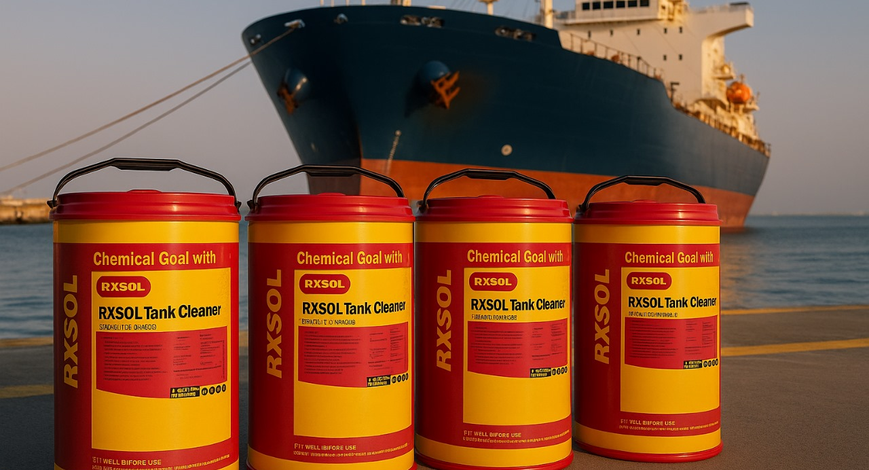
Scotch Bite
Part No: RXSOL-21-1002-012
Methyl Ethyl Ketone
MEK - Methyl Ethyl Ketone Supplier. This product is suitable for for curing of zinc silicate.
Application
Lubricating oil dewaxing
Adhesives
Printing Inks
Magnetic Audio Video tapes
Polyurethane resins
Artificial Leather
PVC film/Leather cloth industry
Specialty Paints
MEK Oxime manufacture
MEK Peroxide manufacture
Aroma Chemicals such as Methyl Pentanone
Degreasing of metal surfaces, particularly Aircraft parts
Epoxy glass laminates for the electronic industry
Technical Specification
| Parameter | Value |
| Molecular Formula | C4H8O |
| Mol Wt | 72.10 |
| CAS # | [78-93-3] |
| Description | Clear colurless liquid |
| Sp gravity @ 20/20 deg cel | 0.806 – 0.808 |
| Flash point in deg cel | (-) 7 |
| Distillation range in deg cel | 79 – 80.5 |
| Purity (%) | 99.7 min |
| Water (%) |
0.1 max |
MSDS

| Product Name | METHYL ETHYL KETONE |
| Part Number | RXSOL-19-1212-025 |
Company Details:
RX MARINE INTERNATIONAL
105, A wing , BSEL , TECH PARK.
VASHI ,NEW BOMBAY 400703 INDIA
Branch : Kandla, Mumbai,Chennai, Kakinada, Vizag, Kolkata,Fujairah
| Phone | +91 22 27815540 / 27815541 |
| Fax | +91 22 2781 1318 :::AOH :0091 9821214367 |
| 123 @ rxmarine.com | |
| Website | www.rxmarine.com |

| Name of Substance | Cas Number | Concentration* |
| METHYL ETHYL KETONE | 78-93-3 | 100% |
* All concentrations are percent by weight unless material is a gas. Gas concentrations are in percent by volume.

| POTENTIAL PHYSICAL / CHEMICAL EFFECTS |
Flammable. Material can release vapors that readily form flammable mixtures. Vapor accumulation could flash and/or explode if ignited. |
| POTENTIAL HEALTH EFFECTS | Irritating to eyes. If swallowed, may be aspirated and cause lung damage. May cause central nervous system depression. |
| Target Organs | Eye |
| NFPA Hazard ID | Health: 2 |
| HMIS Hazard ID | Health: 1 |
| Flammability | 3 Reactivity: 0 |
| Flammability | 3 Reactivity: 0 |
NOTE: This material should not be used for any other purpose than the intended use in Section 1 without expert advice. Health studies have shown that chemical exposure may cause potential human health risks which may vary from person to person.

| Eye contact | Flush thoroughly with water for at least 15 minutes. Get medical assistance. |
| Skin contact: | Wash contact areas with soap and water. Remove contaminated clothing. Launder contaminated clothing before reuse. |
| Ingestion | Seek immediate medical attention. Do not induce vomiting. |
| Inhalation |
Remove from further exposure. For those providing assistance, avoid exposure to yourself or others. Use adequate respiratory protection. If respiratory irritation, dizziness, nausea, or unconsciousness occurs, seek immediate medical assistance. If breathing has stopped, assist ventilation with a mechanical device or use mouth-tomouth resuscitation. |
| NOTE TO PHYSICIA | If ingested, material may be aspirated into the lungs and cause chemical pneumonitis. Treat appropriately. |

| Appropriate Extinguishing Media | Use water fog, foam, dry chemical or carbon dioxide (CO2) to extinguish flames. Inappropriate Extinguishing Media: Straight Streams of Water. |
| FIRE FIGHTING | Fire Fighting Instructions: Evacuate area. If a leak or spill has not ignited, use water spray to disperse the vapors and to protect personnel attempting to stop a leak. Prevent runoff from fire control or dilution from entering streams, sewers, or drinking water supply. Firefighters should use standard protective equipment and inenclosed spaces, self-contained breathing apparatus (SCBA). Use water spray to cool fire exposed surfaces and to protect personnel.Unusual Fire Hazards: Highly flammable. Vapors are flammable and heavier than air. Vapors may travel across the ground and reach remote ignition sources causing a flashback fire danger. Hazardous material, Firefighters should consider protective equipment indicated in Section 8. Hazardous Combustion Products: Smoke, Fume, Incomplete combustion products,Oxides of carbon. |
| FLAMMABILITYPROPERTIES | |
| Flash Point [Method] | -4C (25F) [ ASTM D-56] |
| Flammable Limits (Approximate volume % in air) | LEL: 1.8 UEL: 11.5 |
| AutoignitionTemperature | >450°C (842°F) |

| NOTIFICATION PROCEDURES | In the event of a spill or accidental release, notify relevant authorities in accordance with all applicable regulations. US regulations require reporting releases of this material to the environment which exceed the applicable reportable quantity or oil spills which could reach any waterway including intermittent dry creeks. The National Response Center can be reached at (800)424-8802. |
| PROTECTIVE MEASURES |
Avoid contact with spilled material. Warn or evacuate occupants in surrounding and downwind areas if required due to toxicity or flammability of the material. See Section 5 for firefighting information. See the Hazard Identification Section for Significant Hazards. See Section 4 for First Aid Advice. See Section 8 for Personal Protective Equipment. |
| SPILL MANAGEMENT | Land Spill: Eliminate all ignition sources (no smoking, flares, sparks or flames in immediate area). Stop leak if you can do it without risk. All equipment used when handling the product must be grounded. Do not touch or walk through spilled material. Prevent entry into waterways, sewer, basements or confined areas. A vapor suppressing foam may be used to reduce vapors. Absorb or cover with dry earth, sand or other non-combustible material and transfer to containers. Large Spills: Use clean non-sparking tools to collect absorbed material. |
| Large Spills | Water spray may reduce vapor; but may not prevent ignition in closed spaces. Recover by pumping or with suitable absorbent. |
| Water Spill | Stop leak if you can do it without risk. Eliminate sources of ignition. Warn other shipping. Seek the advice of a specialist before using dispersants. Water spill and land spill recommendations are based on the most likely spill scenario for this material; however, geographic conditions, wind, temperature, (and in the case of a water spill) wave and current direction and speed may greatly influence the appropriate action to be taken. For this reason, local experts should be consulted. |
| Note | Local regulations may prescribe or limit action to be taken. |
| ENVIRONMENTAL PRECAUTIONS | Large Spills: Dike far ahead of liquid spill for later recovery and disposal. Prevent entry into waterways, sewers, basements or confined areas. |

| HANDLING | Avoid contact with skin. Avoid contact with eyes. Prevent exposure to ignition sources, for example use non-sparking tools and explosion-proof equipment. Potentially toxic/irritating fumes/vapors may be evolved from heated or agitated material. Use only with adequate ventilation. Do not enter storage areas or confined spaces unless adequately ventilated. Use proper bonding and/or ground procedures. However, bonding and grounds may not eliminate the hazard from static accumulation. Prevent small spills and leakage to avoid slip hazard. |
| STORAGE |
Ample fire water supply should be available. A fixed sprinkler/deluge system is recommended. Keep container closed. Handle containers with care. Open slowly in order to control possible pressure release. Store in a cool, well-ventilated area.Outside or detached storage preferred. Storage containers should be grounded and bonded. Fixed storage containers, transfer containers and associated equipment should be grounded and bonded to prevent accumulation of static charge. Storage Temperature : [Ambient] Storage Pressure : [Ambient] Suitable Containers/Packing : Tank Trucks; Drums; Barges; Tank Cars Suitable Materials and Coatings (Chemical Compatibility): Carbon Steel; Stainless Steel; Polyester; Teflon; Butyl Rubber Unsuitable Materials and Coatings : Ethylene-proplyene-diene monomer (EPDM); Polyacrylonitrile; Polypropylene; Polystyrene; Polyvinyl Alcohol; PVC; Polyethylene; Natural Rubber. |

EXPOSURE LIMIT VALUES Exposure limits/standards (Note: Exposure limits are not additive
| Source | Form | Limit / Standard | Note | Source | |
| METHYLETHYLKETONE | TWA | 590 mg/m3 | 200 ppm | N/A | OSHA Z1 |
| METHYLETHYL KETONE | STEL | 300 ppm | N/A | ACGIH | |
| METHYLETHYL KETONE | TWA | 200 ppm | N/A | ACGIH | |
NOTE: Limits/standards shown for guidance only. Follow applicable regulations.
| ENGINEERING CONTROLS | The level of protection and types of controls necessary will vary depending upon potential exposure conditions. Control measures to consider: Adequate ventilation should be provided so that exposure limits are not exceeded. Use explosion-proof ventilation equipment. |
| PERSONAL PROTECTION | Personal protective equipment selections vary based on potential exposure conditions such as applications, handling practices, concentration and ventilation. Information on the selection of protective equipment for use with this material, as provided below, is based upon intended, normal usage. |
| Respiratory Protection | If engineering controls do not maintain airborne contaminant concentrations at a level which is adequate to protect worker health, an approved respirator may be appropriate. Respirator selection, use, and maintenance must be in accordance with regulatory requirements, if applicable. Types of respirators to beconsidered for this material include: |
| Half-face filter respirator | For high airborne concentrations, use an approved supplied-air respirator, operated in positive pressure mode. Supplied air respirators with an escape bottle may be appropriate when oxygen levels are inadequate, gas/vapor warning properties are poor, or if air purifying filter capacity/rating may be exceeded. |
| Hand Protection | Any specific glove information provided is based on published literature and glove manufacturer data. Glove suitability and breakthrough time will differ depending on the specific use conditions. Contact the glove manufacturer for specific advice on glove selection and breakthrough times for your use conditions. Inspect and replace worn or damaged gloves. The types of gloves to be considered for this material include: If prolonged or repeated contact is likely, chemical resistant gloves are recommended. If contact with forearms is likely, wear gauntlet style gloves. |
| Eye Protection | Chemical goggles are recommended. |
| Skin and Body Protection | Any specific clothing information provided is based on published literature or manufacturer data. The types of clothing to be considered for this material include: If prolonged or repeated contact is likely, chemical, and oil resistant clothing is recommended. |
| Specific Hygiene Measures |
Always observe good personal hygiene measures, such as washing after handling the material and before eating, drinking, and/or smoking. Routinely wash work clothing and protective equipment to remove contaminants.Discard contaminated clothing and footwear that cannot be cleaned. Practice good housekeeping. |
| ENVIRONMENTALCONTROLS | See Sections 6, 7, 12, 13. |


Gloves Suit

| Physical State | Liquid |
| Form | Clear |
| color | Colorless |
| Odor | Characteristic |
| Odor Threshold | N/D |
| Relative Density (at 20 C) | 0.805 |
| Flash Point [Method] | -4C (25F) [ ASTM D-56] |
| Flammable Limits (Approximate volume % in air) | LEL: 1.8 UEL: 11.5 |
| Autoignition Temperature | >450°C (842°F) |
| Boiling Point / Range | 79C (173F) - 81C (178F) |
| Vapor Density (Air = 1) | > 1 at 101 kPa |
| Vapor Pressure |
9.3 kPa (69.75 mm Hg) at 20 C 22.3 kPa (167.25mm Hg) at 38C 43.6 kPa (327 mm Hg) at 55C |
| Evaporation Rate (n-butyl acetate = 1) | 6 |
| pH | N/D |
| Log Pow (n-Octanol/Water Partition Coefficient) | N/D |
| Solubility in Water | Appreciable |
| Viscosity | [N/D at 40 °C] 0.52 cSt (0.52 mm2/sec) at 25C |
| Freezing Point | -86°C (-123°F) |
| Melting Point | N/D |
| Molecular Weight | 72 |
| Hygroscopic | Yes |
| Coefficient of Thermal Expansion | 0.00129 |
| Decomposition Temperature | N/D |

| STABILITY | Material is stable under normal conditions. |
| CONDITIONS TO AVOID | Avoid heat, sparks, open flames and other ignition sources. |
| MATERIALS TO AVOID | Strong oxidizers |
| HAZARDOUS DECOMPOSITION PRODUCTS | Material does not decompose at ambient temperatures. |
| HAZARDOUS POLYMERIZATION | Will not occur. |

| Route of Exposure | Conclusion / Remarks |
| Inhalation | None |
| Toxicity: Data available. | Minimally Toxic. Based on test data for the material. |
| Irritation: Data available. | May be irritating to the respiratory tract. The effects are reversible. Based on test data for the material. |
| Ingestion | None |
| Toxicity: Data available | Minimally Toxic. Based on test data for the material. |
| Skin | |
| Toxicity: Data available | Minimally Toxic. Based on test data for the material. |
| Irritation: Data available | May dry the skin leading to discomfort and dermatitis.Based on test data for the material. |
| Eye | |
| Irritation: Data available | Irritating and will injure eye tissue. Based on test data for the material. |
For the product itself:
Vapor concentrations above recommended exposure levels are irritating to the eyes and the respiratory tract, may cause headaches and dizziness, are anesthetic and may haveother central nervous system effects.
Prolonged and/or repeated skin contact with low viscosity materials may defat the skin resulting in possible irritation and dermatitis.
Small amounts of liquid aspirated into the lungs during ingestion or from vomiting may cause chemical pneumonitis or pulmonary edema.
METHYL ETHYL KETONE (MEK): Simultaneous exposure to Methyl Ethyl Ketone(MEK) or Methyl Isobutyl Ketone (MIBK) and n-Hexane can potentiate the risk of adverseeffects from n-Hexane on the peripheral nervous system.
--REGULATORY LISTS SEARCHED--
1 = NTP CARC 3 = IARC 1 5 = IARC 2B
2 = NTP SUS 4 = IARC 2A 6 = OSHA CARC

The information given is based on data available for the material, the components of the
material, and similar materials.
| Eco Toxicity | Material -- Not expected to be harmful to aquatic organisms. |
| MOBILITY | Material -- Expected to remain in water or migrate through soil. |
| Biodegradation | Material -- Expected to be readily biodegradable. |
| Hydrolysis | Material -- Transformation due to hydrolysis not expected to be significant. |
| Photolysis | Material -- Expected to degrade at a moderate rate in water when exposed to sunlight. |
| Atmospheric Oxidation | Material -- Transformation due to atmospheric oxidation not expected to be significant. |
|
OTHER ECOLOGICAL INFORMATION VOC (EPA Method 24) |
6.718 lbs/gal |

Disposal recommendations based on material as supplied. Disposal must be in accordance with current applicable laws and regulations, and material characteristics at time of disposal.
| DISPOSAL RECOMMENDATIONS | Product is suitable for burning in an enclosed controlled burner for fuel value or disposal by superv |