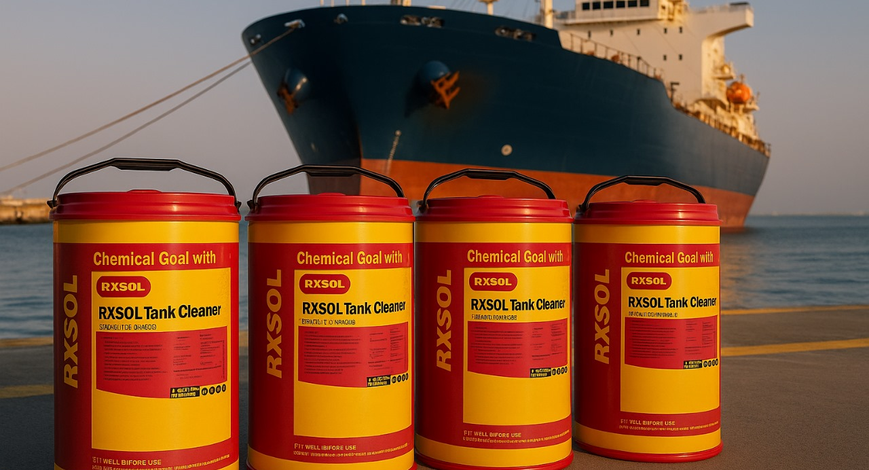
Sewage Defoamer
Part No: RXSOL-19-1016-025
Hypo Chlorite Powder 65-70% Chlorine
Application
Appearance and odour : Off-white granular powder
Boiling/Melting Point @760 mm Hg : None
pH : Vapor Pressure mm Hg @20°C
Vapor Density (Air=1) : None
Percent Volatile by Weight (%):
Specific Gravity or Bulk Density : 0.4 - 0.6:
Solubility in Water : soluble, partly dispersible
Evaporation Rate (BuAc = 1)
Appearance : White powder
Odor : Sharp odor
Dosage
General formulation to calculate how much bleach is needed to add to a tank or a pipeline to disinfect it to a given chlorine residual using a given disinfectant. Usually someone wants to know how to meet an AWWA Standard (like C651-92, Disinfection of Water Mains). The equation below should be used to estimate the amount of sodium / Calcium hypochlorite (Chlorine Water is 6.00% sodium hypochlorite) needed to disinfect a given quantity of water to a desired chlorine concentration.
|
req'd residual in ppm |
For example , say you had installed a new 5,000 gallon tank and wanted to make sure that you had at least a 100 ppm solution of chlorine in it.
How much 6.00% Hypochlorite would you need to add ?
- (5,000 gal x 100 ppm) / (1,000,000 x .06) = 8.33 gallons
How much 12% Hypochlorite solution would you need ?
- (5,000 gal x 100 ppm) / (1,000,000 x .12) = 4.17 gallons
If you use calcium hypochlorite (the white, powder version of chlorine, like HTH pool cleaner), the equation becomes:
|
req'd residual in PPM |
- This is simply the previous equation multiplied by the conversion factor of 8.33 pounds per gallon of water.
Let's assume that we still need to disinfect 5,000 gallons at 100 ppm.
How many pounds of 65% calcium hypochlorite (HTH pool cleaner) are needed?
- (8.33 lbs/ gal. x 5,000 gal x 100 ppm) / (1,000,000 x .65) = 6.4 pounds
MSDS

| Part Number | : | RXSOL-31-3029-025 |
| Product Name | : | Hypo Chlorite Powder 65-70% Chlorine |
RX MARINE INTERNATIONAL
105, A wing , BSEL , TECH PARK.
VASHI ,NEW BOMBAY 400703 INDIA
| Phone | : | +91 22 65113333 / 5555 / 9999 / 27611360 |
| Fax | : | +91 22 2781 1318 :::AOH :0091 9821214367 |
| : | mail @ rxmarine.com , sales @ tankcleaner.net/ | |
| Website | : | www.rxmarine.com/ , www.tankcleaner.net/ |

| Chemica Name | CAS # | % BY WEIGHT |
| Hypo Chlorite Powder | 7778-54-3 | 65-70% Chlorine |

| Potential Acute Health Effects | Hazardous in case of skin contact (irritant), of eye contact (irritant), of ingestion, of inhalation. Slightly hazardous in case of skin contact (permeator). Corrosive to eyes and skin. The amount of tissue damage depends on length of contact. Eye contact can result in corneal damage or blindness. Skin contact can produce inflammation and blistering. Inhalation of dust will produce irritation to gastro-intestinal or respiratory tract, characterized by burning, sneezing and coughing. Severe overexposure can produce lung damage, choking, unconsciousness or death. Prolonged exposure may result in skin burns and ulcerations. Over-exposure by inhalation may cause respiratory irritation. Inflammation of the eye is characterized by redness, watering, and itching. Skin inflammation is characterized by itching, scaling, reddening, or, occasionally, blistering. |
| Potential Chronic Health Effects | CARCINOGENIC EFFECTS: Not available. MUTAGENIC EFFECTS: Not available. TERATOGENIC EFFECTS: Not available. DEVELOPMENTAL TOXICITY: Not available. The substance is toxic to lungs, mucous membranes. Repeated or prolonged exposure to the substance can produce target organs damage. Repeated exposure of the eyes to a low level of dust can produce eye irritation. Repeated skin exposure can produce local skin destruction, or dermatitis. Repeated inhalation of dust can produce varying degree of respiratory irritation or lung damage |

| Eye Contact | Check for and remove any contact lenses. Immediately flush eyes with running water for at least 15 minutes, keeping eyelids open. Cold water may be used. Do not use an eye ointment. Seek medical attention. |
| Skin Contact | If the chemical got onto the clothed portion of the body, remove the contaminated clothes as quickly as possible, protecting your own hands and body. Place the victim under a deluge shower. If the chemical got on the victim's exposed skin, such as the hands : Gently and thoroughly wash the contaminated skin with running water and non-abrasive soap. Be particularly careful to clean folds, crevices, creases and groin. Cold water may be used. If irritation persists, seek medical attention. Wash contaminated clothing before reusing. |
| Serious Skin Contact | Wash with a disinfectant soap and cover the contaminated skin with an anti-bacterial cream. Seek immediate medical attention. |
| Inhalation | Allow the victim to rest in a well ventilated area. Seek immediate medical attention. |
| Serious Inhalation | Evacuate the victim to a safe area as soon as possible. Loosen tight clothing such as a collar, tie, belt or waistband. If breathing is difficult, administer oxygen. If the victim is not breathing, perform mouth-to-mouth resuscitation. WARNING: It may be hazardous to the person providing aid to give mouth-to-mouth resuscitation when the inhaled material is toxic, infectious or corrosive. Seek immediate medical attention. |
| Ingestion | Do not induce vomiting. Examine the lips and mouth to ascertain whether the tissues are damaged, a possible indication that the toxic material was ingested; the absence of such signs, however, is not conclusive. Loosen tight clothing such as a collar, tie, belt or waistband. If the victim is not breathing, perform mouth-to-mouth resuscitation. Seek immediate medical attention. |
| Serious Ingestion | Not available. |

| Flammability of the Product | Non-flammable. |
| Auto-Ignition Temperature | Not applicable |
| Flash Points | Not applicable |
| Flammable Limits | Not applicable. |
| Products of Combustion | Not available |
| Fire Hazards in Presence of Various Substances | Not applicable |
| Explosion Hazards in Presence of Various Substances | Risks of explosion of the product in presence of mechanical impact: Not available. Risks of explosion of the product in presence of static discharge: Not available. |
| Fire Fighting Media and Instructions | Not applicable. |
| Special Remarks on Fire Hazards |
Not available. |
| Special Remarks on Explosion Hazards | Not available. |

| Small Spill | Use appropriate tools to put the spilled solid in a convenient waste disposal container. |
| Large Spill | Oxidizing material. Corrosive solid. Stop leak if without risk. Do not get water inside container. Avoid contact with a combustible material (wood, paper, oil, clothing...). Keep substance damp using water spray. Do not touch spilled material. Clean up spills in a manner that does not disperse dust into the air. Prevent entry into sewers, basements or confined areas; dike if needed. Call for assistance on disposal. |

| Precautions | Keep container dry. Keep away from heat. Keep away from sources of ignition. Keep away from combustible material Do not ingest. Do not breathe dust. Never add water to this product In case of insufficient ventilation, wear suitable respiratory equipment If ingested, seek medical advice immediately and show the container or the label. Avoid contact with skin and eyes Keep away from incompatibles such as reducing agents, combustible materials, organic materials, acids, moisture. |
| Storage | May corrode metallic surfaces. Store in a metallic or coated fiberboard drum using a strong polyethylene inner package. Corrosive materials should be stored in a separate safety storage cabinet or room. |

| Engineering Controls |
Use process enclosures, local exhaust ventilation, or other engineering controls to keep airborne levels below recommended exposure limits. If user operations generate dust, fume or mist, use ventilation to keep exposure to airborne contaminants below the exposure limit. |
| Personal Protection | Splash goggles. Lab coat. Vapor and dust respirator. Be sure to use an approved/certified respirator or equivalent. Gloves. |
| Personal Protection in Case of a Large Spill | Splash goggles. Full suit. Vapor and dust respirator. Boots. Gloves. A self contained breathing apparatus should be used to avoid inhalation of the product. Suggested protective clothing might not be sufficient; consult a specialist BEFORE handling this product |
| Exposure Limits | Not available |

| Physical state and appearance | Solid Granular, White | |
| Odor | Strong Chlorine Orour | |
| Taste | Not available. | |
| Molecular Weight | 142.99 g/mole | |
| pH (5% soln/water) | 10.5 - 11.50 | |
| Boiling Point | Decomposes | |
| Melting Point | 100°C (212°F) | |
| Critical Temperature | Not available. | |
| Specific Gravity | 2.35@20C | |
| Vapor Pressure | Not applicable. | |
| Vapor Density | Not available. | |
| Volatility | Not available. | |
| Odor Threshold | Not available. | |
| Water/Oil Dist. Coeff. | Not available. | |
| Ionicity (in Water) | Not available. | |
| Dispersion Properties | See solubility in water. | |
| Solubility | Not available. |

| Stability |
The product is stable. |
|
| Instability Temperature | Not available. | |
| Conditions of Instability | Not available. | |
| Incompatibility with various substances | Reactive with reducing agents, combustible materials, organic materials, acids,moisture. | |
| Corrosivity | Extremely corrosive in presence of aluminum, of zinc. Corrosive in presence of steel, of copper. Slightly corrosive to corrosive in presence of glass, of stainless steel(304), of stainless steel(316). | |
| Special Remarks on Reactivity | Not available. | |
| Special Remarks on Corrosivity | Not available. | |
| Polymerization | No. |

| Routes of Entry |
Eye contact. Inhalation. Ingestion. |
| Toxicity to Animals | Acute oral toxicity (LD50): 850 mg/kg [Rat]. |
| Chronic Effects on Humans | The substance is toxic to lungs, mucous membranes. |
| Other Toxic Effects on Humans | Hazardous in case of skin contact (irritant), of ingestion, of inhalation. Slightly hazardous in case of skin contact (permeator). |
| Special Remarks on Toxicity to Animals | Not available. |
| Special Remarks on Chronic Effects on Humans | Not available. |
| Special Remarks on other Toxic Effects on Humans | Not available. |

| Ecotoxicity | Not available. | |
| BOD5 and COD | Not available. | |
| Products of Biodegradation | Possibly hazardous short term degradation products are not likely. However, long term degradation products may arise. | |
| Toxicity of the Products of Biodegradation | The products of degradation are more toxic. | |
| Special Remarks on the Products of Biodegradation | Not available. |

| Whatever cannot be saved for recovery or recycling should be handled as hazardous waste and sent to a RCRA approved waste facility. Processing, use or contamination of this product may change the waste management options. State and local disposal regulations may differ from federal disposal regulations. Dispose of container and unused contents in accordance with federal, state and local requirements. |

| DOT Classification | CLASS 5.1: Oxidizing material. | |
| Identification | Calcium hypochlorite, dry : UN1748 PG: II | |
| Special Provisions for Transport | Not available. |

| Federal and State Regulations | Pennsylvania RTK: Calcium hypochlorite Massachusetts RTK: Calcium hypochlorite TSCA 8(b) inventory: Calcium hypochlorite CERCLA: Hazardous substances.: Calcium hypochlorite | |
| Other Regulations | OSHA: Hazardous by definition of Hazard Communication Standard (29 CFR 1910.1200). | |
| Other Classifications | ||
| WHMIS (Canada) | CLASS C: Oxidizing material. CLASS E: Corrosive solid. | |
| DSCL (EEC) | R22- Harmful if swallowed. R38- Irritating to skin. R41- Risk of serious damage to eyes. | |
| HMIS (U.S.A.) | Health Hazard: 3 | |
| Fire Hazard: 0 | ||
| Reactivity: 2 | ||
| Personal Protection: j | ||
| National Fire Protection Association (U.S.A.): | Health: 3 | |
| Flammability: 0 | ||
| Reactivity: 1 | ||
| Specific hazard: | ||
| Protective Equipment: | Gloves. Lab coat. Vapor and dust respirator. Be sure to use an approved/certified respirator or equivalent. Wear appropriate respirator when ventilation is inadequate. Splash goggles. |

The information above is believed to be accurate and represents the best information currently available to us. However, we make no warranty of merchantability or any other warranty, express or implied, with respect to such information, and we assume no liability resulting from its use. Users should make their own investigations to determine the suitability of the information fortheir particular purposes. In no event shall Rx Marine International be liable for any claims, losses, or damages of any third party or for lost profits or any special, indirect, incidental, consequential or exemplary damages, howsoever arising, even if Rx Marine International has been advised of the possibility of such damages.