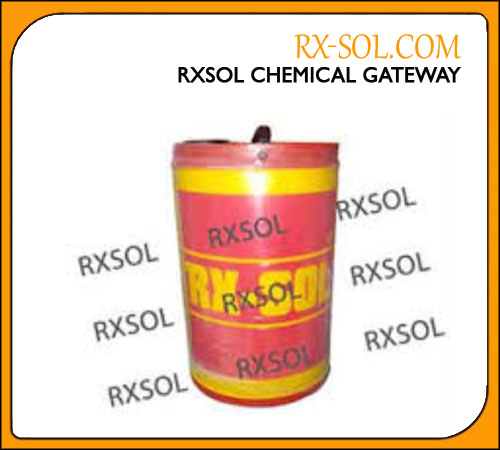
Viper 11 CH 43
Part No: RXSOL-41-8602-025
Dioctyl Phthalate (DOP) is a general use Plasticizer
Dioctyl Phthalate DOP is a colourless clear liquid. We are keeping ready stock of materials at KANDLA, Mumbai, Kolkata, Chennai, Visakhapatnam, Dubai DOP is most common plasticizer product used in the production of flexible polyvinyl chloride (PVC) plastic. Dioctyl Phthalate is one of the most widely used plasticizers in PVC due to its low cost.
Application
Plasticizers can be added to wallboard stucco mixtures to improve workability. In order to reduce the energy in drying wallboard, less water is added, which makes the gypsum mixture very unworkable and difficult to mix, necessitating the use of plasticizers, water reducers or dispersants.
Dosage
DOP is a general-purpose plasticizer and long-time industry standard known for its good stability to heat and ultraviolet light, and broad range of compatibility for use with PVC resins. Dioctyl Phthalate can also be used as dielectric and hydraulic fluids. DOP is also a solvent for many chemicals, such as in glowsticks.
Technical Specification
| PRODUCT NAME | : | DIOCTYLPHTHALATE |
| CAS number | : | 117-81-7 |
| UN number | : | |
| Formula | : | C6H4(COOC8H17)2 |
| Odour | : | MILD |
| Solubility in water | : | INSOLUBLE |
| Density | : | 0.986 at 20 oC |
| Boiling point | : | 386 oC |
| Melting point | : | -55oC |
| Viscosity | : | |
| Flashpoint | : | 199oC |
| Explosive limits | : | 0.3 – 2.4 Vol% |
| Vapour pressure | : | -10 mbarat 20oC |
| Skin absorption/irritation | : | YES |
| TLV Country NL Year 1995 | : | ppm 5 mg/m3 |
| Pollution category | : |
III |
MSDS

| Product Name | Di Octyl Phththalate |
| Part Number | RXSOL-19-1928-200 |
Company Details:
RX MARINE INTERNATIONAL
105, A wing , BSEL , TECH PARK.
VASHI ,NEW BOMBAY 400703 INDIA
| Phone | +91 22 65113333 / 5555 / 9999 |
| Fax | +91 22 2781 1318 :::AOH :0091 9821214367 |
| 123 @ rxmarine.com | |
| Website | www.rxmarine.com |

| Ingrident | CAS Number | Weight Percentage |
| Di Octyl Phththalate | 117-81-7 | 32% |
Toxicological Data on Ingredients: Dioctyl phthalate: ORAL (LD50): Acute: 30000 mg/kg [Rat]. >30000 mg/kg [Mouse].
34000 mg/kg [Rabbit]. DERMAL (LD50): Acute: 25000 mg/kg [Rabbit].

| Signal Word | Hazardus |
| Potential Acute Health Effects: | Slightly hazardous in case of skin contact (irritant), of eye contact (irritant), of ingestion, of inhalation. |
| Potential Chronic Health Effects: | CARCINOGENIC EFFECTS: Classified A3 (Proven for animal.) by ACGIH. Classified 2 (Some evidence.) by NTP. 3 (Not classifiable for human.) by IARC. MUTAGENIC EFFECTS: Mutagenic for bacteria and/or yeast. TERATOGENIC EFFECTS:Not available. DEVELOPMENTAL TOXICITY: Not available. The substance may be toxic to liver. Repeated or prolonged exposure to the substance can produce target organs damage. |
| Skin | May cause skin irritation. May be harmful if absorbed through the skin. Human dermal patch testing showed no irritation or sensitization. |
| Eyes | May cause eye irritation. |
| Inhalation | May be harmful if inhaled. |
| Ingestion | May cause irritation of the digestive tract. May be harmful if swallowed. |

| Skin | Wash with soap and water. Cover the irritated skin with an emollient. Get medical attention if irritation develops. |
| Eyes | Check for and remove any contact lenses. In case of contact, immediately flush eyes with plenty of water for at least 15 minutes. Get medical attention if irritation occurs. |
| Inhalation | If inhaled, remove to fresh air. If not breathing, give artificial respiration. If breathing is difficult, give oxygen. Get medical attention. |
| Ingestion | Do NOT induce vomiting unless directed to do so by medical personnel. Never give anything by mouth to an unconscious person. Loosen tight clothing such as a collar, tie, belt or waistband. Get medical attention if symptoms appear. |

| Flammability of the Product: | May be combustible at high temperature. |
| Auto-Ignition Temperature: | 390.56°C (735°F) |
| Flash Points: | CLOSED CUP: 207°C (404.6°F). OPEN CUP: 215.56°C (420°F) - 218 C (Cleveland). |
| Flammable Limits: | LOWER: 0.3% |
| Products of Combustion: | These products are carbon oxides (CO, CO2). |
| Fire Hazards in Presence of Various Substances: | Slightly flammable to flammable in presence of open flames and sparks, of heat. Non-flammable in presence of shocks. |
| Explosion Hazards in Presence of Various Substances: | Risks of explosion of the product in presence of mechanical impact: Not available. Risks of explosion of the product in presence of static discharge: Not available. |
| Fire Fighting Media and Instructions: | SMALL FIRE: Use DRY chemical powder. LARGE FIRE: Use water spray, fog or foam. Do not use water jet. |
| Special Remarks on Fire Hazards: |
When heated to decomposition it emits acrid smoke and irritating fumes. |

| Small Spillage | Absorb with an inert material and put the spilled material in an appropriate waste disposal. |
| Large Spillage | Absorb with an inert material and put the spilled material in an appropriate waste disposal. Finish cleaning by spreading water on the contaminated surface and allow to evacuate through the sanitary system. Be careful that the product is not present at a concentration level above TLV. Check TLV on the MSDS and with local authorities. |

| Handling | Keep locked up.. Keep away from heat. Keep away from sources of ignition. Empty containers pose a fire risk, evaporate the residue under a fume hood. Ground all equipment containing material. Do not ingest. Do not breathe gas/fumes/ vapor/spray. Wear suitable protective clothing. If ingested, seek medical advice immediately and show the container or the label. Keep away from incompatibles such as oxidizing agents. |
| Storage | Keep container tightly closed. Keep container in a cool, well-ventilated area. |
| Incompatibilities | Storage away from oxidizers and other incompatible materials such as bases. |

| Engineering Control | Provide exhaust ventilation or other engineering controls to keep the airborne concentrations of vapors below their respective threshold limit value. Ensure that eyewash stations and safety showers are proximal to the work-station location. |
| Personal Protective Equipment | |
| Skin Protection | Wear appropriate protective gloves to prevent skin exposure. |
| Eye Protection | Wear appropriate protective eyeglasses or chemical safety goggles as described by OSHA's eye and face protection regulations in 29 CFR 1910.133 or European Standard EN166. |
| Respiratory Protection | Follow the OSHA respirator regulations found in 29 CFR 1910.134 or European Standard EN 149. Use a NIOSH/MSHA or European Standard EN 149 approved respirator if exposure limits are exceeded or if irritation or other symptoms are experienced. |
| Exposure Limit | TWA: 5 (mg/m3) from ACGIH (TLV) [United States] TWA: 5 (mg/m3) from OSHA (PEL) [United States] TWA: 5 STEL: 10 (mg/ m3) from NIOSH [United States]3 Consult local authorities for acceptable exposure limits. |


Gloves Suit

| Appearance | Colourless to Light Yellow |
| Physical State | Liquid |
| Molecular Weight | 390.54 g/Mole |
| Chemical Formula | C24-H38-O4 |
| Odor | Slight |
| pH | Not Applicable |
| Boiling Point | 384°C (723.2°F) |
| Freezing point | -55 C to -46°C (-50.8°F) |
| Critical Temperature: | Not Available |
| Specific Gravity | 0.9861 (Water = 1) |
| Vapor Pressure | 0 kPa (@ 20°C) |
| Vapor Density (Air = 1.0) | 16.0 |
| Evaporation Rate | Not Available |
| Volatiles | Not Available |
| Odor Threshhold | Not Available |
| Water/Oil Dist. Coeff. | The product is more soluble in oil; log(oil/water) = 7.6 |
| Ionicity (in Water) | Not Available |
| Dispersion Properties | Not Available |
| Solubility: | Insoluble in cold water. It is miscible in mineral oil, and hexane. It is slightly soluble in carbon tetrachloride. |

| Stability Of Product | The product is stable. |
| Instability Temperature: | Not Available |
| Conditions of Instability | Excess heat, ignition sources, incompatible materials |
| Incompatibility with various substances |
Reactive with oxidizing agents. |
| Corrosivity: | Non-corrosive in presence of glass. |
| Special Remarks on Reactivity | Not Available |
| Polymerization | Will not occur. |

| Routes of Entry: | Absorbed through skin. Eye contact. |
| Toxicity to Animals: | Acute oral toxicity (LD50): 30000 mg/kg [Rat]. Acute dermal toxicity (LD50): 25000 mg/kg [Rabbit]. |
| Chronic Effects on Humans: | CARCINOGENIC EFFECTS: Classified A3 (Proven for animal.) by ACGIH. Classified 2 (Some evidence.) by NTP. 3 (Not classifiable for human.) by IARC. MUTAGENIC EFFECTS: Mutagenic for bacteria and/or yeast. May cause damage to the following organs: liver. |
| Other Toxic Effects on Humans: | Slightly hazardous in case of skin contact (irritant), of ingestion, of inhalation. |
| Special Remarks on Chronic Effects onHumans: |
Testicular damage in animal. May cause adverse reproductive effects and birth defects (teratogenic). May affect genetic material (mutagenic). May cause cancer based on animal test data |
|
Special Remarks on other Toxic Effects on Humans: |
Acute Potential Health Effects: Skin: It may cause mild skin irritation. It is not easily absorbed through human skin. Eyes: It may cause mild eye irritation. Inhalation: At significant concentrations, it may cause upper respiratory tract (nost, throat) and mucous membrane irritation. Acute larger inhalation exposure may result in tachypnea or dyspnea. Ingestion: Considered innocuous at small doses. Low hazard for normal industrial handling. May cause digestisve tract irritation with mild gastric disturbances and diarrhea may occur following ingestion of larger doses. CNS depression may occur if large amounts of phthalate esters are absorbed. Chronic Potential Heatlh Effects: Ingestion: Prolonged or repeated ingestion may affect the liver |

| Ecotoxicity: | Ecotoxicity in water (LC50): 0.7 mg/l 96 hours [Lepomis macrochirus]. >100 mg/l 96 hours [Channel catfish]. >100 mg/l 96 hours [Trout]. |
| BOD5 and COD: | Not Available |
| Products of Biodegradation: | Possibly hazardous short term degradation products are not likely. However, long term degradation products may arise. |
| Toxicity of the Products of Biodegradation: | The product itself and its products of degradation are not toxic |
| Special Remarks on the Products of Biodegradation: |
Not available. |

| Diaposal Condition | Waste must be disposed of in accordance with federal, state and local environmental control regulations. |

| UN Number | UN3082 |
| DOT Classification | Not a DOT controlled material (United States). |
| Hazard Class | 9 |
| Packing Group | III |
| Special Provisions for Transport: |
Not applicable. |

| Federal and State Regulations: | California prop. 65: This product contains the following ingredients for which the State of California has found to cause cancer, birth defects or other reproductive harm, which would require a warning under the statute: Dioctyl phthalate California prop. 65: This product contains the following ingredients for which the State of California has found to cause cancer which would require a warning under the statute: Dioctyl phthalate Connecticut hazardous material survey.: Dioctyl phthalate Illinois toxic substances disclosure to employee act: Dioctyl phthalate Illinois chemical safety act: Dioctyl phthalate New York release reporting list: Dioctyl phthalate Rhode Island RTK hazardous substances: Dioctyl phthalate Pennsylvania RTK: Dioctyl phthalate Minnesota: Dioctyl phthalate Massachusetts RTK: Dioctyl phthalate Massachusetts spill list: Dioctyl phthalate New Jersey: Dioctyl phthalate New Jersey spill list: Dioctyl phthalate Louisiana spill reporting: Dioctyl phthalate California Director's List of Hazardous Substances: Dioctyl phthalate TSCA 8(b) inventory: Dioctyl phthalate TSCA 8(a) IUR: Dioctyl phthalate TSCA 8(d) H and S data reporting: Dioctyl phthalate: Effective date: 10/4/82; Sunset data: 10/4/92 SARA 313 toxic chemical notification and release reporting: Dioctyl phthalate CERCLA: Hazardous substances.: Dioctyl phthalate: |
| Other Regulations: | OSHA: Hazardous by definition of Hazard Communication Standard (29 CFR 1910.1200). EINECS: This product is on the European Inventory of Existing Commercial Chemical Substances. |
|
Other Classifications: |
Reportable Quantities” (RQs) and/or “Threshold Planning Quantities” (TPQs) exist for the following ingredients. |
| WHMIS Canada | CLASS D-2A: Material causing other toxic effects (VERY TOXIC). |
| DSCL (EEC): | R60- May impair fertility. R61- May cause harm to the unborn child. S45- In case of accident or if you feel unwell, seek medical advice immediately (show the label where possible). S53- Avoid exposure - obtain special instructions before use. |
|
HMIS (U.S.A.): |
Health Hazard: 1 Fire Hazard: 1 Reactivity: 0 Personal Protection: a |
| National Fire Protection Association (U.S.A.): |
Health Hazard: 0 Fire Hazard: 1 Reactivity: 0 |
| Protective Equipment: | Not applicable. Lab coat. Wear appropriate respirator when ventilation is inadequate. Safety glasses. |

|
The information above is believed to be accurate and represents the best information currently available to us. However, we make no warranty of merchantability or any other warranty, express or implied, with respect to such information, and we assume no liability resulting from its use. Users should make their own investigations to determine the suitability of the information for their particular purposes. In no event shall be liable for any claims, losses, or damages of any third party or for lost profits or any special, indirect, incidental, consequential or exemplary damages, howsoever arising, even if Rx Marine International has been advised of the possibility of such damages.
DISCLAIMER OF LIABILITY :The information in this SDS was obtained from sources which we believe are reliable. However, the information is provided without any warranty, express or implied, regarding its correctness. The conditions or methods of handling, storage, use or disposal of the product are beyond our control and may be beyond our knowledge. For this and other reasons, we do not assume responsibility and expressly disclaim liability for loss, damage or expense arising out of or in any way connected with the handling, storage, use or disposal of the product. This MSDS was prepared and is to be used only for this product. If the product is used as a component in another product, this MSDS information may not be applicable.
|