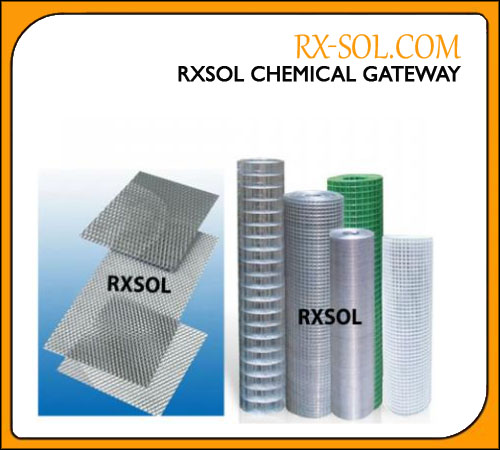
Wire Mesh Fine
Part No: RXSOL-17-1031-030
Antifreeze compound for cooling water systems , It is a Very effective blend of GLYCOL classified chemicals along with CORROSION inhibitor to protects all engineering precious metal including aluminium . Its chemically treated layer protect radiators
Glycol antifreeze - corrosion & scale inhibitors
Antifreeze compound for cooling water systems , It is a high quality effective blend of GLYCOL classified chemicals along with CORROSION inhibitor to protects all engineering precious metal including aluminium . Its chemically treated layer protect radiators and engines, against rust and corrosion. Its proper dose in cooling system gives full protection from corrosion.
It is biodegradable and does not have an environmental problem.
It also contains non-toxic multi-metal inhibitors to protect chillers and their associated cooling systems against corrosion and scale inorder to maximise heat transfer properties of the system. It should be diluted using ultrapure, demineralised, softened water.
An inhibited liquid coolant designed to protect against corrosion attack on base metals and also used to lower the freezing point of water
Application
RXSOL ANTIFREEZE Corrosion Inhibitor
Antifreeze compound for cooling water systems, It is a Very effective blend of GLYCOL classified chemicals along with CORROSION inhibitor to protects all engineering precious metal including aluminium. Its chemically treated layer protect radiators and engines, against rust and corrosion. Its proper dose in cooling system gives full protection from corrosion.
It is biodegradable and does not present an environmental problem.
Dosage
Solution Strength :
25 Ltrs RXSOL-16-4020-025 : 75 Ltrs Water gives freezing protection up to -140C "or" 25% solution (1 part anti-freeze to 3 parts water)
For extra cold / winter climate , increase to a 33% solution (1 part anti-freeze to 2 parts water) to give freezing protection down to -170C.
Technical Specification
| Appearance | : Clear Syrupy Liquid |
| pH | : 7 - 8.5 |
| Freezing Point (50% Vol) | : -35 ºC to -37 ºC |
| Boiling Point | : 195 ºC - 198ºC |
| Odour | : Characteristic |
| Specific Gravity | : 1.112 - 1.115 |
MSDS

| Porduct Name | Antifreeze Liquid |
| Part Number | RXSOL-27-4020-011 |
Company Details:....
RX MARINE INTERNATIONAL
105, A wing , BSEL , TECH PARK.
VASHI ,NEW BOMBAY 400703 INDIA
Branch : Kandla, Mumbai , Chennai, Vizag, Kolkata, UAE , OMAN , CANADA and KENYA
| Phone | +91 22 20871200 - 1400 |
| Fax | +91 22 27612100 :::AOH :0091 9821214367 |
| mail @ rxmarine.com | |
| Website | www.rxmraine.com |

| Chemical Name | CAS No | Weight-% |
| Ethylene glycol | 107-21-1 | 42-98 |
| Proprietary Inhibitors | Proprietary | Proprietary |
| Potassium hydroxide | 1310-58-3 | 0.2 |
**If Chemical Name/CAS No is "proprietary" and/or Weight-% is listed as a range, the specific chemical identity and/or percentage of composition
has been withheld as a trade secret.**

| Appearance | Gold, Red or Green liquid |
| Physical State | Liquid |
Classification
| Specific target organ toxicity (repeated exposure) | Category 2 |
Hazard Statements
Precautionary Statements - Disposal
Dispose of contents/container to an approved waste disposal plant.

First Aid Measures
| Eye Contact | Rinse immediately with plenty of water, also under the eyelids, for at least 15 minutes. Seek medical attention. |
| Skin contact | Wash with soap and water. Take off contaminated clothing. Wash contaminated clothing before reuse. If skin irritation persists, call a physician. |
| Inhalation | Remove to fresh air. If not breathing, give artificial respiration. If breathing is difficult, give oxygen. Call a physician immediately |
| Ingestion | Call a physician immediately. Do not induce vomiting without medical advice. Never give anything by mouth to an unconscious person. |
Most important symptoms and effects
| Symptoms | May cause skin and eye irritation. May cause irritation to the mucous membranes and upper respiratory tract. Ingestion may cause nausea, vomiting, dizziness, and headache. |
Indication of any immediate medical attention and special treatment needed
| Notes to Physician | Persistent eye, skin, and respiratory disorders may be aggravated by exposure to this product. Persons with pre-existing kidney or liver disease may be at an increased risk from exposure to this material. Give sodium bicarbonate intravenously to treat acidosis. Urinalysis may show low specific gravity, proteinuria, pyuria, cylindruria, hematuria, calcium oxide, and hippuric acid crystals. Ethanol can be used in antidotal treatment but monitor blood glucose when administering ethanol because it can cause hypoglycemia. Consider infusion of a diuretic such as mannitol to help prevent or control brain edema and hemodialysis to remove ethylene glycol from circulation. |

| Suitable extinguishing media | Foam. Dry chemical. Carbon dioxide (CO2). |
| Unsuitable extinguishing media | Water or foam may cause frothing. Do not scatter spilled material with high pressure water streams. |
| Specific Hazards Arising from the Chemical |
Highly flammable liquid and vapor. Runoff to sewer may create fire or explosion hazard.
In a fire or if heated, a pressure increase will occur and the container may burst, with the
risk of a subsequent explosion. The vapor/gas is heavier than air and will spread along
the ground. Vapors may accumulate in low or confined areas or travel a considerable
distance to a source of ignition and flash back.
Highly flammable liquid and vapor. Runoff to sewer may create fire or explosion hazard.
In a fire or if heated, a pressure increase will occur and the container may burst, with the
risk of a subsequent explosion. The vapor/gas is heavier than air and will spread along
the ground. Vapors may accumulate in low or confined areas or travel a considerable
distance to a source of ignition and flash back.
Highly flammable liquid and vapor. Runoff to sewer may create fire or explosion hazard.
In a fire or if heated, a pressure increase will occur and the container may burst, with the
risk of a subsequent explosion. The vapor/gas is heavier than air and will spread along
the ground. Vapors may accumulate in low or confined areas or travel a considerable
distance to a source of ignition and flash back.
Toxic products of combustion. Collect contaminated fire extinguishing water separately. Do not allow it to enter drains or surface water.
|
| Protective equipment and precautions for firefighters |
As in any fire, wear self-contained breathing apparatus pressure-demand, MSHA/NIOSH (approved or equivalent) and full protective gear. Use water spray to keep fire-exposed containers cool. Water spray will also reduce fume and irritant gases. |

Personal precautions, protective equipment and emergency procedures
| Personal Precautions | Ventilate affected area. |
| Environmental Precautions | Do not allow into any sewer, on the ground or into any body of water. |
Methods and material for containment and cleaning up
| Methods for Containment |
Stop leak if without risk. Move containers from spill area. Use spark-proof tools and
explosion-proof equipment. Dilute with water and mop up if water-soluble. Alternatively,
or if water-insoluble, absorb with an inert dry material and place in an appropriate waste
disposal container. Dispose of via a licensed waste disposal contractor.
Prevent further leakage or spillage if safe to do so.
|
| Methods for Clean-Up | Soak up with inert absorbent material. Recover free liquid. Discard any product, residue, disposable container or liner in full compliance with federal, state, and local regulations. US regulations (CERCLA) require reporting spills and releases to soil, water and air in excess of reportable quantities. The toll free number for the US Coast Guard National Response Center is (800)-424-8802. |

Precautions for safe handling
| Advice on Safe Handling | Handle in accordance with good industrial hygiene and safety practice. Protect container from physical damage. Emptied container retains product residue. Observe all labeled safeguards until container is cleaned, reconditioned or destroyed. Do not breathe dust/fume/gas/mist/vapors/spray. |
Conditions for safe storage, including any incompatibilities
| Storage Conditions |
Keep containers tightly closed in a dry, cool and well-ventilated place. Store away from incompatible materials. |
| Incompatible Materials | Strong oxidizing agents. Reacts violently with chlorosulfonic acid, oleum, sulfuric acid, and perchloric acid. Causes ignition at room temperature with chromium trioxide, potassium permanganate and sodium peroxide. Also avoid contact with oxidizers such as chlorates, nitrates, peroxides, etc. |

Exposure Guidelines
| Chemical Name | ACGIH TLV | OSHA PEL | NIOSH IDLH |
| Ethylene glycol 107-21-1 | Ceiling: 100 mg/m3 aerosol only |
(vacated) Ceiling: 50 ppm
(vacated) Ceiling: 125 mg/m3
|
|
|
Potassium hydroxide
1310-58-3
|
Ceiling: 2 mg/m3 | (vacated) Ceiling: 2 mg/m3 | Ceiling: 2 mg/m3 |
Appropriate engineering controls
| Engineering Controls | Apply technical measures to comply with the occupational exposure limits. Ventilation systems. Eyewash stations. Showers. |
Individual protection measures, such as personal protective equipment
| Eye/Face Protection | Wear safety glasses with side shields (or goggles) |
| Skin and Body Protection | Chemical resistant protective gloves. If potential for significant exposure to liquid exists, use full protective clothing and chemical boots. |
| Respiratory Protection | No respiratory protection is necessary during normal use conditions. In the case of insufficient ventilation or if exposure limits are exceeded, use a suitable NIOSH/MSHA respiratory device. |
| General Hygiene Considerations | Handle in accordance with good industrial hygiene and safety practice. |

Information on basic physical and chemical properties
| Physical state | Liquid. |
| Appearance | Gold, Red or Green liquid |
| Colour | Gold, Red or Green |
| Odor | Mild |
| Odor Threshold | Not determined |
| Property | Values | Remarks • Method |
| pH | Not determined | |
| Melting Point/Freezing Point | Not available | |
| Boiling Point/Boiling Range | 163-171 °C / 325-340 °F | |
| Flash point | 121-123 °C / 250-254 °F | TOC |
| Evaporation rate | Not determined | |
| Flammability (solid, gas) |
n/a-liquid
materials.Extremely flammable in the presence of the following materials or conditions: oxidizing
materials.
|
|
| Upper Flammability Limits |
15.3 |
|
| Lower Flammability Limit | 3.2 | |
| Vapor pressure | Not available | |
| Vapor density | Not available | |
| Specific Gravity | 1.115-1.133 | |
| Water Solubility | Completely soluble | |
| Solubility in other solvents | Not determined | |
| Partition Coefficient | Not determined | |
| Auto-ignition Temperature | 398 °C / 748 °F | |
| Decomposition Temperature | Not determined | |
| Kinematic Viscosity | Not available | |
| Dynamic Viscosity | Not available | |
| Explosive Properties | Not determined | |
| Oxidizing Properties | Not determined |

| Reactivity | Not reactive under normal conditions. |
| Chemical Stability | Stable under recommended storage conditions. |
| Possibility of Hazardous Reactions | None under normal processing. |
| Hazardous Polymerization | Hazardous polymerization does not occur. |
| Conditions to Avoid |
Heat, flames, ignition sources and incompatibles.
|
| Incompatible Materials | Strong oxidizing agents. Reacts violently with chlorosulfonic acid, oleum, sulfuric acid, and perchloric acid. Causes ignition at room temperature with chromium trioxide, potassium permanganate and sodium peroxide. Also avoid contact with oxidizers such as chlorates, nitrates, peroxides, etc. |
| Hazardous Decomposition Products | Carbon monoxide. Carbon dioxide (CO2). Acrid smoke and fumes emitted if heated to decomposition. |

Information on likely routes of exposure
Product Information
| Eye Contact |
Avoid contact with eyes. |
| Skin Contact | Avoid contact with skin. |
| Inhalation | Avoid breathing vapors or mists. |
| Ingestion | Do not taste or swallow. |
Component Information
| Chemical Name | Oral LD50 | Dermal LD50 | Inhalation LC50 |
|
Ethylene glycol
107-21-1
|
= 4000 mg/kg ( Rat ) | = 9530 µL/kg ( Rabbit ) | - |
|
Potassium hydroxide
1310-58-3
|
= 214 mg/kg ( Rat ) | - | - |
Information on physical, chemical and toxicological effects
| Symptoms | Please see section 4 of this SDS for symptoms. |
Delayed and immediate effects as well as chronic effects from short and long-term exposure
| Carcinogenicity | This product does not contain any carcinogens or potential carcinogens as listed by OSHA, IARC or NTP. |
| STOT - repeated exposure | May cause damage to organs through prolonged or repeated exposure. |
| Numerical measures of toxicity | Not determined |

Ecotoxicity
The LC50/96 hour values for fish are over 100 mg/L.
| Chemical Name | Algae/aquatic plants | Fish | Toxicity to microorganisms | Crustacea |
|
Ethylene glycol
107-21-1
|
6500 - 13000: 96 h
Pseudokirchneriella
subcapitata mg/L EC506500 - 13000: 96 h
Pseudokirchneriella
subcapitata mg/L EC50
|
41000: 96 h Oncorhynchus
mykiss mg/L LC50 14 - 18:
96 h Oncorhynchus mykiss
mL/L LC50 static 27540: 96
h Lepomis macrochirus mg/L
LC50 static 40761: 96 h
Oncorhynchus mykiss mg/L
LC50 static 40000 - 60000:
96 h Pimephales promelas
mg/L LC50 static 16000: 96
h Poecilia reticulata mg/L
LC50 static
|
EC50 = 10000 mg/L 16 h
EC50 = 620 mg/L 30 min
EC50 = 620.0 mg/L 30 min
|
46300: 48 h Daphnia magna
mg/L EC50
|
| Potassium hydroxide 1310-58-3 | 80: 96 h Gambusia affinis mg/L LC50 static |
| Persistence/Degradability | When released into the soil, this material is expected to readily biodegrade. It also has the potential to leach into the groundwater. When released into water this material is expected to readily biodegrade. In water, this material is expected to have a half-life between 1 and 10 days. |
| Bioaccumulation | This material is not expected to significantly bioaccumulate. |
Mobility
| Chemical Name | Partition Coefficient |
|
Ethylene glycol
107-21-1
|
-1.93 |
|
Potassium hydroxide
1310-58-3
|
|
| Other Adverse Effects | Not determined |

Waste Treatment Methods
| Disposal of Wastes | Whatever cannot be saved for recovery or recycling should be managed in an appropriate and approved waste disposal facility. Processing, use or contamination of this product may change the waste management options. State and local disposal regulations may differ from federal disposal regulations. Dispose of container and unused contents in accordance with federal, state and local requirements. |
| Contaminated Packaging | Disposal should be in accordance with applicable regional, national and local laws and regulations. |
California Hazardous Waste Status
| Chemical Name | California Hazardous Waste Status |
|
Potassium hydroxide
1310-58-3
|
Toxic
Corrosive
|
| Chemical Name | California Hazardous Waste Status |
|
Potassium hydroxide
1310-58-3
|
Toxic
Corrosive
|

| Note | Regulated only in packages that contain 5000 lbs or greater of ethylene glycol. DOT information must be accompanied by the "RQ" notation. |
|
DOT
UN/ID No
|
UN3082 |
| Proper Shipping Name | Environmentally hazardous substance, liquid, n.o.s. (Ethylene glycol) |
| Hazard Class | 9 |
| Packing Group | III |
| Reportable Quantity (RQ) | 5000 lbs |
| IATA | Not regulated |
| IMDG | Not regulated |

International Inventories
| TSCA | Listed |
US Federal Regulations
CERCLA
| Chemical Name |
Hazardous Substances RQs |
CERCLA/SARA RQ | Reportable Quantity (RQ) |
|
Ethylene glycol
107-21-1
|
5000 lb |
RQ 5000 lb final RQ
RQ 2270 kg final RQ
|
|
|
Potassium hydroxide
1310-58-3
|
1000 lb |
RQ 1000 lb final RQ
RQ 454 kg final RQ
|
SARA 311/312 Hazard Categories
| Acute Health Hazard |
Yes |
| Chronic Health Hazard | Yes |
| Fire Hazard | No |
| Sudden Release of Pressure Hazard | No |
SARA 313
| Chemical Name |
CAS No |
Weight-% | SARA 313 - Threshold Values % |
| Ethylene glycol - 107-21-1 | 107-21-1 | 42-98 | 1.0 |

| Other Information |
The information above is believed to be accurate and represents the best information currently available to us. However, we make no warranty of merchantability or any other warranty, express or implied, with respect to such information, and weassume no liability resulting from its use. Users should make their own investigations to determine the suitability of the information for their particular purposes. In no event shall be liable for any claims, losses, or damages of any third party or for lost profits or any special, indirect, incidental, consequential or exemplary damages, howsoever arising, even if Rx Marine International has been advised of the possibility of such damages. DISCLAIMER OF LIABILITY :The information in this SDS was obtained from sources which we believe are reliable. However, the information is provided without any warranty, express or implied, regarding its correctness. The conditions or methods of handling, storage, use or disposal of the product are beyond our control and may be beyond our knowledge. For this and other reasons, we do not assume responsibility and expressly disclaim liability for loss, damage or expense arising out of or in any way connected with the handling, storage, use or disposal of the product. This MSDS was prepared and is to be used only for this product. If the product is used as a component in another product, this MSDS information may not be applicable. |