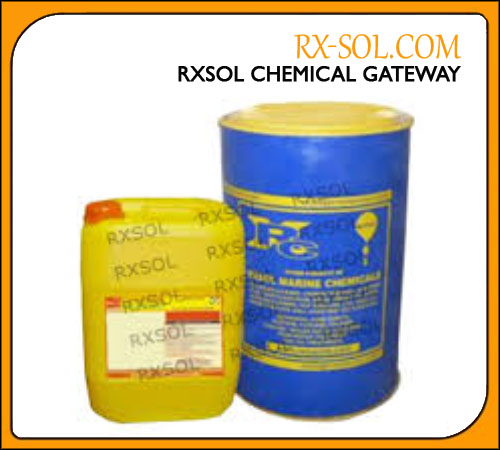
Drilling Liquid Synergistic Polymer
Part No: RXSOL-81-8133-210
A colorless to yellow liquid tertiary amine compound with an ammonia-like odor. It is completely soluble in water.
Methyldiethanolamine is an alkyl alkanolamine that is used in gas treatment applications and serves as an intermediate in the synthesis of numerous products. Methyldiethanolamine is a low hazard material and risk of adverse health effects associated with both occupational and consumer use of this chemical is anticipated to be low.
Application
Methyldiethanolamine is used as an intermediate in the synthesis of numerous products. Its unique chemistry has resulted in its use in diverse areas, including coatings, textile lubricants, polishes, detergents, pesticides, personal-care products, pharmaceuticals, urethane catalysts, and water-treatment chemicals. Methyldiethanolamine is also used in gas treatment.
Dosage
Methyl Diethanolamine MDEA-based solvent designed for the selective removal of H2S from H2S and CO2 containing gas streams. The removal of sour or acid gas components such as hydrogen sulfide (H2S) or carbon dioxide (CO2) from gas streams is a common process, known as acid gas removal or gas sweetening. These impurities have to be eliminated or reduced to a specified level, for a variety of reasons: toxicity (H2S), corrosiveness of the gas, low caloric value, environment or other reasons depending on the application of the gas.
Technical Specification
|
Property |
Value |
|
|
|
||
|
Physical state |
Liquid |
|
|
Color |
Colorless |
|
|
Odor |
Ammonia-like |
|
|
Density |
1.04 g/cm @ 20°C |
|
|
Melting / boiling point |
-21.3 / 243.3 °C |
|
|
Explosive properties |
No data available |
|
|
Self-ignition temperature |
280 °C |
|
|
Vapor pressure |
0.1 hPa @ 54.8°C |
|
|
Mol weight |
119.16 g/mol |
|
|
Water solubility |
Soluble |
|
|
Flash point |
138°C |
|
| Molecular Formula | C5H13NO2 |
| Molecular Weight | 119.16 g/mol |
| Autoignition Temperature | 280 °C |
| Critical Pressure | 37 000 hPa |
| Critical Temperature | 404 °C |
| Dissociation constant | 25°C 8.68 |
| Freezing Point | 21.3 °C |
| Heat Capacity | 20°C 1.72 kJ/kg·K |
| Heat of Formation | 91 649 kJ/kmol |
| Heat of Vaporization | 418.7 kJ/kg |
|
Octanol-water partition coefficient, log Pow
(pH 10.5; at 23°C)
|
1.16 |
| Refractive Index | 20°C 1.4642 |
| Vapor Density | (air = 1) 4 |
| Vapor Pressure | 20°C 0.0031 hPa |
| Viscosity | 20°C 99.05 mm2 |
MSDS

| Porduct Name | Methyl Diethanolamine MDEA |
| Part Number | RXSOL-81-8205-140 |
Company Details:
RX MARINE INTERNATIONAL
105, A wing , BSEL , TECH PARK.
VASHI ,NEW BOMBAY 400703 INDIA
Branch : Kandla, Mumbai , Chennai, Vizag, Kolkata, UAE , OMAN , CANADA and KENYA
| Phone | +91 22 20871200 - 1400 |
| Fax | +91 22 27612100 :::AOH :0091 9821214367 |
| mail @ rxmarine.com | |
| Website | www.rxmraine.com |

| Product name | Cas No | EC No | Weight | Formula |
| N-Methyldiethanolamine | 105-59-9 | 203-312-7 | 119,16 g/mol | C5H13NO2 |

| Signal Word | Warning |
| Hazard Statements | H319 Causes serious eye irritation. |
| Precautionary statements | P264 Wash skin thoroughly after handling. P280 Wear eye protection/ face protection. P305 + P351 + P338 IF IN EYES: Rinse cautiously with water for several minutes. Remove contact lenses, if present and easy to do. Continue rinsing. P337 + P313 If eye irritation persists: Get medical advice/ attention. |
| Classification of the substance or mixture | No data available |
| Supplemental Hazard Statements | No data available |
| Other hazards | This substance/mixture contains no components considered to be either persistent, bioaccumulative and toxic (PBT), or very persistent and very bioaccumulative (vPvB) at levels of 0.1% or higher. Contact with liquid or refrigerated gas can cause cold burns and frostbite. Lachrymator. |

| General advice | Show this material safety data sheet to the doctor in attendance |
| If inhaled | After inhalation fresh air. |
| Eye Contact | After eye contact rinse out with plenty of water. Immediately call in ophthalmologist. Remove contact lenses. |
| Swallowed | After swallowing immediately make victim drink water (two glasses at most). Consult a physician. |
| Skin Contact | In case of skin contact Take off immediately all contaminated clothing. Rinse skin with water/ shower |
| Inhalation | No data available |
| Ingestion | No data available |
| Most important symptoms and effects, both acute and delaye | The most important known symptoms and effects are described in the labelling (see section 2.2) and/or in section 11 |
| Indication of any immediate medical attention and special treatment needed | No data available |

| Flammability | No data available |
| Suitable extinguishing media | Water Foam Carbon dioxide (CO2) Dry powder |
| Unsuitable extinguishing media | For this substance/mixture no limitations of extinguishing agents are given. |
| Special hazards arising from the substance or mixture | Carbon oxides Nitrogen oxides (NOx) Combustible. Vapors are heavier than air and may spread along floors. Forms explosive mixtures with air on intense heating. Development of hazardous combustion gases or vapours possible in the event of fire. |
| Further information | Suppress (knock down) gases/vapors/mists with a water spray jet. Prevent fire extinguishing water from contaminating surface water or the ground water system. |
|
Hazardous combustion products |
No data available |
| Advice for firefighters | In the event of fire, wear self-contained breathing apparatus. |
| Protective Equipment | No data available |
| Specific Hazards Arising from the Chemical | No data available |

| Personal precautions, protective equipment and emergency procedures | Advice for non-emergency personnel: Avoid inhalation of dusts. Evacuate the danger area, observe emergency procedures, consult an expert. For personal protection see section 8. |
| Spillage | No data available |
| Personal Protection | No data available |
| Enviromental Precaution | Do not let product enter drains. Risk of explosion. |
|
Methods and materials for containment and cleaning |
Cover drains. Collect, bind, and pump off spills. Observe possible material restrictions (see sections 7 and 10). Take up dry. Dispose of properly. Clean up affected area. Avoid generation of dusts. |
| Reference to other sections | For disposal see section 13. |

| Advice on protection against fire and explosion | No data available |
| Incompatible materials | No data available |
| Hygiene measures | No data available |
| Advice on safe handling | No data available |
| Conditions for safe storage including any incompatibilities |
No data available |
| Storage conditions | Tightly closed. |
| Storage class | Storage class (TRGS 510) 10 Combustible liquids |
| Specific end use(s) | Apart from the uses mentioned in section 1.2 no other specific uses are stipulated |
| Advice on general occupational hygiene | No data available |

| Exposure controls | Personal protective equipment |
| Engineering Control | No data available |
| Eye/face protection | Use equipment for eye protection tested and approved under appropriate government standards such as NIOSH (US) or EN 166(EU). Safety glasses |
| Body Protection | Protective clothing. |
| Skin protection | This recommendation applies only to the product stated in the safety data sheet, supplied by us and for the designated use. When dissolving in or mixing with other substances and under conditions deviating from those stated in EN 16523-1 please contact the supplier of CE-approved gloves (e.g. KCL GmbH, D-36124 Eichenzell, Internet: www.kcl.de). Full contact Material: butyl-rubber Minimum layer thickness: 0,7 mm Break through time: 480 min Material tested:Butoject® (KCL 898) This recommendation applies only to the product stated in the safety data sheet, supplied by us and for the designated use. When dissolving in or mixing with other substances and under conditions deviating from those stated in EN 16523-1 please contact the supplier of CE-approved gloves (e.g. KCL GmbH, D-36124 Eichenzell, Internet: www.kcl.de). Splash contact Material: Nitrile rubber Minimum layer thickness: 0,4 mm Break through time: 60 min Material tested:Camatril® (KCL 730 / Aldrich Z677442, Size M) |
| Respiratory protection |
Recommended Filter type Filter A (acc. to DIN 3181) for vapours of organic compounds The entrepeneur has to ensure that maintenance, cleaning and testing of respiratory protective devices are carried out according to the instructions of the producer. These measures have to be properly documented.
|
| Other Protection Measure | No data available |

| Physical state | Clear, viscous liquid |
| Colour | Light yellow |
| Odour | Ammoniacal |
| Odor Threshold | No data available |
| pH | 11,5 at 100 g/l at 20 °C |
| Melting Point | 246 - 248 °C - lit |
| Boiling Point | No data available |
| Flash Point | 127 °C - closed cup |
| Evaporation Rate | No data available |
| Flammability (solid, gas) | No data available |
| Explosive limits | No data Available |
| Upper/lower flammability or explosive limits | Upper explosion limit 8,8 %(V) Lower explosion limit 1,4 %(V) |
| Autoignition temperature | 280 °C at 1.013 hPa - DIN 51794 |
| Decomposition temperature | No data available |
| Vapour pressure | 0,01 hPa at 20 °C |
| Viscosity | Kinematic99,05 mm2/s at 20 °C Dynamic 101 mPa.s at 20 °C |
| Density | 1,038 g/cm3 at 25 °C - lit |
| Relative Density | No data available |
| Specific Gravity | No data available |
| Partition coefficient | Log Pow -1,08 at 25 °C - Bioaccumulation is not expected. |
| Explosive properties | No data available |
| Solubility | 1.000 g/l at 20 °C - completely miscible |
| Ignition temperature | No data available |
| Particle characteristics | No data available |

| Reactivity | Forms explosive mixtures with air on intense heating. A range from approx. 15 Kelvin below the flash point is to be rated as critical |
| Chemical stability | The product is chemically stable under standard ambient conditions (room temperature) |
| Possibilityof hazardous reactions | Exothermic reaction with acid halides acids Strong oxidizing agents |
| Conditions to avoid | Strong heating. |
| Incompatible materials |
No data available
|
| Hazardous decomposition products | In the event of fire: see section 5 |

| Acute toxicity | LD50 Oral - Rat - male and female - 4.680 mg/kg (OECD Test Guideline 401) Symptoms: Possible damages:, mucosal irritations LD50 Dermal - Rabbit - 6.230 mg/kg |
| Skin corrosion/irritation | Skin - Rabbit No skin irritation (OECD Test Guideline 404) |
| Serious eye damage/irritation | Eyes - Rabbit Irritating to eyes. (OECD Test Guideline 405) Classified according to Regulation (EU) 1272/2008, Annex VI (Table 3.1/3.2) |
| Respiratory or skin sensitization | Maximization Test - Guinea pig |
| Carcinogenicity | No data available |
| Germ cell mutagenicity | Test Type Ames test Test system: Salmonella typhimurium Metabolic activation: with and without metabolic activation Method: OECD Test Guideline 471 Result: negative Test Type: Chromosome aberration test in vitro Test system: rat hepatocytes Metabolic activation: without metabolic activation Method: OECD Test Guideline 473 Result: negative Test Type: In vitro mammalian cell gene mutation test Test system: Chinese hamster ovary cells Metabolic activation: with and without metabolic activation Method: OECD Test Guideline 476 Result: negative Test Type: Micronucleus test Species: Mouse Cell type: Red blood cells (erythrocytes) Application Route: Intraperitoneal Method: OECD Test Guideline 474 |
| Reproductive toxicity | No data available |
| Specific target organ toxicity - single exposure |
No data available
|
| Additional Information | The substance/mixture does not contain components considered to have endocrine disrupting properties according to REACH Article 57(f) or Commission Delegated regulation (EU) 2017/2100 or Commission Regulation (EU) 2018/605 at levels of 0.1% or higher. Repeated dose toxicity - Rat - male and female - Dermal - 13 WeeksCough, Shortness of breath, Headache, Nausea, Vomiting To the best of our knowledge, the chemical, physical, and toxicological properties have not been thoroughly investigated. Handle in accordance with good industrial hygiene and safety practice. |

| Persistence and degradability | Biodegradability aerobic - Exposure time 18 d Result: 96 % - Readily biodegradable. (OECD Test Guideline 301A) |
| Toxicity to fish | static test LC50 - Leuciscus idus (Golden orfe) - 1.466 mg/l - 96 h (DIN 38412 part 15) |
| Toxicity to daphnia and other aquatic invertebrates | Static test EC50 - Daphnia magna (Water flea) - 233 mg/l - 48 h (Regulation (EC) No. 440/2008, Annex, C.2) |
| Toxicity | No data available |
| Toxicity to bacteria | EC50 - Pseudomonas putida - 410 mg/l - 17 h (External MSDS) |
| Toxicity to algae | Static test ErC50 - Desmodesmus subspicatus (green algae) - > 100 mg/l - 72 h (DIN 38412) |
| Products Biodegradation | No data available |
| Mobility in soil | No data availalble |
| Results of PBT and vPvB assessment | This substance/mixture contains no components considered to be either persistent, bioaccumulative and toxic (PBT), or very persistent and very bioaccumulative (vPvB) at levels of 0.1% or higher. |
| Endocrine disrupting properties | The substance/mixture does not contain components considered to have endocrine disrupting properties according to REACH Article 57(f) or Commission Delegated regulation (EU) 2017/2100 or Commission Regulation (EU) 2018/605 at levels of 0.1% or higher |
| Other adverse effects | Biological effects: Neutralise before sewage disposal. Discharge into the environment must be avoided. |

| Product | No data available |
| Contaminated packaging | No data available |
| Waste treatment Method | No data available |

| UN number | ADR/RID: | IMDG: |
IATA: |
| UN proper shipping name | ADR/RID:Not dengerous goods | IMDG:Not dengerous goods | IATA:Not dengerous goods |
| Transport hazard class(es) | ADR/RID: | IMDG: | IATA: |
| Packaging group | ADR/RID: | IMDG: | IATA: |
| Environmental hazards | ADR/RID:No | IMDG:No | IATA:No |
| Special precautions for user | No data available | ||
| Further information | No data available |

| Safety, health and environmental regulations/legislation specific for the substance or mixture | This material safety data sheet complies with the requirements of Regulation (EC) No. 1907/2006. |
| Other regulations | No data available |
| Chemical Safety Assessment | A Chemical Safety Assessment was not carried out for this substance. |

| Other Information |
The information above is believed to be accurate and represents the best information currently available to us. However, we make no warranty of merchantability or any other warranty, express or implied, with respect to such information, and weassume no liability resulting from its use. Users should make their own investigations to determine the suitability of the information for their particular purposes. In no event shall be liable for any claims, losses, or damages of any third party or for lost profits or any special, indirect, incidental, consequential or exemplary damages, howsoever arising, even if Rx Marine International has been advised of the possibility of such damages. DISCLAIMER OF LIABILITY :The information in this SDS was obtained from sources which we believe are reliable. However, the information is provided without any warranty, express or implied, regarding its correctness. The conditions or methods of handling, storage, use or disposal of the product are beyond our control and may be beyond our knowledge. For this and other reasons, we do not assume responsibility and expressly disclaim liability for loss, damage or expense arising out of or in any way connected with the handling, storage, use or disposal of the product. This MSDS was prepared and is to be used only for this product. If the product is used as a component in another product, this MSDS information may not be applicable. |