|
Product Code |
|
|
Product Name |
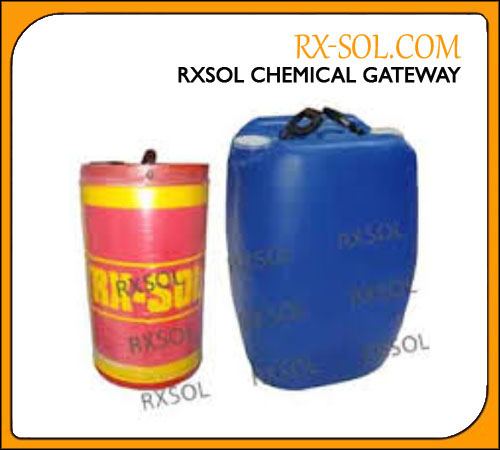
Potable Water Corrosion Inhibitor |
Company Details:
RX MARINE INTERNATIONAL
105, A wing , BSEL , TECH PARK.
VASHI ,NEW BOMBAY 400703 INDIA
Stock Point : Mumbai, Kandla, Chennai, Visakhapatnam, Kolkata, Fujairah, Muscat Barka, Kenya, Canada
|
Phone |
+91 22 27815541 / 42 |
|
Fax |
+91 22 2781 1318 :::AOH :0091 9821214367 |
|
Email |
mail @ rxmarine.com |

Proprietory blend of polyphosphates and polysilicates.
Substance. Contains no other components or impurities which will influence the classification of the product.
3.1. Classification of the substance or mixture
Classification EC 67/548 or EC 1999/45
Classification : Xi; R36/37/38
Hazard Class and Category Code(s), Regulation (EC) No 1272/2008 (CLP)
Health hazards : Specific Target Organ Toxicity - Single exposure - Respiratory tract
irritation - Category 3 - Warning (CLP : STOT SE 3) H335
Eye irritation - Category 2A - Warning (CLP : Eye Irrit. 2) H319
Skin irritation - Category 2 - Warning (CLP : Skin Corr. 2) H315
3.2. Label elements
Labelling EC 67/548 or EC 1999/45
Symbol(s) : Xi : Irritant
R Phrase(s) : R36/37/38 : Irritating to eyes, respiratory system and skin.
S Phrase(s) : S26 : In case of contact with eyes, rinse immediately with plenty of water
and seek medical advice.
S36 : Wear suitable protective clothing.
Labelling Regulation EC 1272/2008 (CLP)
Hazard pictograms
Signal words : Warning
Hazard statements : H319 : Causes serious eye irritation.
H315 : Causes skin irritation.
H335 : May cause respiratory irritation.
Precautionary statements
• Prevention : P280: Wear protective gloves, protective clothing, eye protection, face
protection.
P271: Use only outdoors or in a well-ventilated area.
P261: Avoid breathing dust, fume, gas, mist, vapours, spray.
P264: Wash thoroughly after handling.
• Response : P302+P352: IF ON SKIN : Wash with plenty of soap and water.
P332+P313: If skin irritation occurs : Get medical advice.
P305+P351+P338: IF IN EYES : Rinse cautiously with water for several minutes.
Remove contact lenses, if present and easy to do. Continue rinsing.
P304+P340: IF INHALED : Remove to fresh air and keep at rest in a position
comfortable for breathing.
P363: Wash contaminated clothing before reuse.
• Storage : P403+P233: Store in well-ventilated place. Keep container tightly closed.
P405: Store locked up.
• Disposal considerations : P501: Dispose of this material and its container to hazardous
or special waste collection point, in accordance with local, regional, national and/or
international regulation.
3.3. Other hazards
Other hazards : The substance does not fulfil the criteria to be identified as PBT
substance or vPvB substance according to Annex XIII of Regulation REACH.
4.1. Description of first aid measures
Inhalation : Call a POISON CENTER or doctor if you feel unwell. Remove to fresh air and keep at rest in a position comfortable for breathing.
Skin contact : If skin irritation occurs : Get medical advice. Specific treatment (see on this label). Wash contaminated clothing before reuse. Wash with plenty of soap and water.
Eye contact : Rinse cautiously with water for several minutes. Remove contact lenses, if present and easy to do. Continue rinsing. If eye irritation persists : Get medical advice.
Ingestion : Obtain emergency medical attention. Do NOT induce vomiting. Rinse mouth.
4.2. Most important symptoms and effects, both acute and delayed
Symptoms relating to use : Causes serious eye irritation.
Causes skin irritation. May cause respiratory irritation.
4.3. Indication of any immediate medical attention and special treatment needed : General information : Never give anything by mouth to an unconscious person. If you feel unwell, seek medical advice (show the label where possible).
5.1. Extinguishing media
Suitable extinguishing media : Foam. Dry powder. Carbon dioxide. Water spray. Sand.
Unsuitable extinguishing media : Do not use a heavy water stream.
Surrounding fires : Use water spray or fog for cooling exposed containers.
5.2. Special hazards arising from the substance or mixture
Hazardous combustion products : Under fire conditions, hazardous fumes will be present.
5.3. Advice for fire-fighters
Protection against fire : Do not enter fire area without proper protective equipment, including respiratory protection.
Special procedures : Exercise caution when fighting any chemical fire. Avoid (reject) fire-fighting water to enter environment.
6.1. Personal precautions, protective equipment and emergency procedures
For emergency responders : Equip cleanup crew with proper protection. Ventilate area.
For non-emergency personnel : Evacuate unnecessary personnel.
6.2. Environmental precautions
Environmental precautions : Prevent entry to sewers and public waters. Notify authorities if product enters sewers or public waters.
6.3. Methods and material for containment and cleaning up Clean up methods : On land, sweep or shovel into suitable containers. Minimize
generation of dust. Store away from other materials.
6.4. Reference to other sections See section 8. Exposure controls/personal protection
7.1. Precautions for safe handling
Handling : Use only outdoors or in a well-ventilated area. Wash thoroughly after handling. Wash thoroughly after handling.
Technical protective measures : Provide good ventilation in process area to prevent formation of vapour.
Special precautions : Avoid breathing dust, fume, gas, mist, vapours, spray.
7.2. Conditions for safe storage, including any incompatibilities
Storage : Keep only in the original container in a cool, well ventilated place. Keep container tightly closed.
Storage - away from : Strong bases. Strong acids. Sources of ignition. Direct sunlight.
7.3. Specific end use(s) Specific end use(s) : None.
8.1. Exposure controls
Personal protection : Avoid all unnecessary exposure.
• Respiratory protection : Wear approved mask.
• Hand protection : Wear protective gloves.
• Skin protection : Wear suitable protective clothing.
• Eye protection : Chemical goggles or safety glasses.
• Others : When using, do not eat, drink or smoke.
8.2. Control parameters
Occupational Exposure Limits : No data available
9.1. Information on basic physical and chemical properties
Physical state at 20 °C : Liquid.
Odour threshold : No data available.
pH value : 5-8
Decomposition point [°C] : N/A
Critical temperature [°C] : N/A
Auto-ignition temperature [°C] : N/A
Flammability (solid, gas) : N/A
Flash point [°C] : N/A
Initial boiling point [°C] : N/A
Final boiling point [°C] : N/A
Evaporation rate : N/A
Vapour pressure [20°C] : N/A
Vapour pressure mm/Hg : N/A
Vapour density : N/A
Density [g/cm3] : 1.1
Relative density, gas (air=1) : N/A
Relative density, liquid (water=1) : N/A
Solubility in water [% weight] : Soluble in water
Solubility in water : N/A
Log Pow octanol / water at 20°C : No data available.
Viscosity at 40°C [mm2/s] : N/A
9.2. Other information
Explosive properties : N/A
Explosion limits - upper [%] : N/A
Explosion limits - lower [%] : N/A
Oxidising properties : No data available.
10.1. Reactivity : Not established.
10.2. Chemical stability : Stable under recommended storage conditions.
10.3. Possibility of hazardous reactions
Hazardous reactions : Not established.
10.4. Conditions to avoid : Direct sunlight. Extremely high or low temperatures.
10.5. Incompatible materials Materials to avoid : Strong acids. Strong bases.
10.6.Hazardous decomposition products : Fumes. Carbon monoxide. Carbon dioxide.
11.1. Information on toxicological effects
Acute toxicity
• Inhalation : Based on available data, the classification criteria are not met.
• Dermal : Based on available data, the classification criteria are not met.
• Ingestion : Based on available data, the classification criteria are not met.
Corrosion : Based on available data, the classification criteria are not met.
Irritation : Causes serious eye irritation. Causes skin irritation. May cause respiratory irritation.
Sensitization : Based on available data, the classification criteria are not met.
Mutagenicity : Based on available data, the classification criteria are not met.
Carcinogenicity : Based on available data, the classification criteria are not met.
Toxic for reproduction : Based on available data, the classification criteria are not met.
STOT-single exposure : Based on available data, the classification criteria are not met.
STOT-repeated exposure : Based on available data, the classification criteria are not
met. Aspiration hazard : Based on available data, the classification criteria are not met.
12.1. Toxicity
Toxicity information : Not established.
12.2. Persistence - degradability
Persistence - degradability : Biodegradable.
12.3. Bioaccumulative potential
Bioaccumulative potential : Not established.
12.4. Mobility in soil
Mobility in soil : Not established.
12.5. Results of PBT and vPvB assessment
Results of PBT and vPvB assessment : The substance does not fulfil the criteria to be
identified as PBT substance or vPvB substance according to Annex XIII of Regulation
REACH.
12.6. Other adverse effects
Environmental precautions : Avoid release to the environment.
13.1. Waste treatment methods
General : Avoid release to the environment. Dispose in a safe manner in accordance with
local/national regulations.
14.1. Land transport (ADR-RID)
General information : Not regulated.
14.2. Sea transport (IMDG) [English only]
General information : Not regulated.
14.3. Air transport (ICAO-IATA) [English only]
General information : Not regulated.
15.1. Safety, health and environmental regulations/legislation specific for the
substance or mixture
Safety, health and environmental : Ensure all national/local regulations are observed.
regulations/legislation specific for the substance or mixture
REACH Restrictions - Annex XVII : The components of this product are not subject to
restrictions.
REACH Authorisation - Annex XIV : The components of this product are not subject
to authorization.
15.2. Chemical Safety Assessment
Chemical Safety Assessment : It has not been carried out.
Abbreviations and acronyms : PBT: persistent, bioaccumulative and toxic. vPvB: very persistent and very bioaccumulative
Sources of key data used : REGULATION (EC) No 1272/2008 OF THE EUROPEAN PARLIAMENT AND OF THE COUNCIL of 16 December 2008 on classification, labelling and packaging of substances and mixtures, amending and repealing Directives
67/548/EEC and 1999/45/EC, and amending Regulation (EC) No 1907/2006
Further information : None.
In accordance with REACH Regulation (CE) Nº 1907/2006 and with CLP Regulation (CE) Nº 1272/2008 DISCLAIMER OF LIABILITY The information in this SDS was obtained from sources which we believe are reliable. However, the information is provided without any warranty, express or implied, regarding its correctness. The conditions or methods of handling,storage, use or disposal of the product are beyond our control and may be beyond our knowledge. For this and other reasons, we do not assume responsibility and expressly disclaim liability for loss, damage or expense arising out of or in any way connected with the handling, storage, use or disposal of the product. This MSDS was prepared and is to be used only for this product. If the product is used as a component in another product, this MSDS information may not be
applicable.
DISCLAIMER OF LIABILITY :The information in this SDS was obtained from sources which we believe are reliable. However, the information is provided without any warranty, express or implied, regarding its correctness. The conditions or methods of handling, storage, use or disposal of the product are beyond our control and may be beyond our knowledge. For this and other reasons, we do not assume responsibility and expressly disclaim liability for loss, damage or expense arising out of or in any way connected with the handling, storage, use or disposal of the product. This MSDS was prepared and is to be used only for this product. If the product is used as a component in another product, this MSDS information may not be applicable.